Walking Down Toronto’s Old Yonge Street – Before It’s Gone! Yorkville to Dundas

Related Posts: See the Toronto folder for more posts and pix of my hometown.

Yonge Street is Toronto’s main north-south street.  The downtown stretch of Yonge Street from just north of Bloor down south to the Harbour – and especially the section above and below Dundas –  has historically been the city’s leading retail, restaurant, and entertainment strip. Underneath the street is Line 1 of Toronto’s subway system.  When it opened in 1954, it went from Eglinton to Union Station.

However, times change – and so is Yonge Street!

There are all sorts of reasons why Yonge Street dropped off the map of my Toronto in the past decade or two!

  • My music collection went the MP3 route,
  • and all the bars and clubs with live blues, folk, and rock music closed their doors.
  • My bookstore – digital as well as analogue – changed to amazon.ca
  • . The restaurant meal I wanted to order had become vegan
  • . The Danforth in my Riverdale neighbourhood has most of what I need
  • I am not twenty-five – or even thirty-five! – anymore

While I remember with fondness that 18-year-old kid from a mining town of 10,000 walking down the freak show that was Yonge Street in 1969,  those days are gone!   And so, as the following pix will make clear to anyone over 40, there is an increasing number of the street’s tired and dilapidated buildings – and even some entire blocks.

downtown-t-o-from-broadview-avenue

Standing on Broadview Avenue across from Riverdale’s The Rooster Café, I can look west over the Don River Valley and see the new buildings on Yonge that are changing the skyline.

walking from Jarvis towards Yonge and Bloor - with One Bloor East standing above all

walking from Jarvis towards Yonge and Bloor – with One Bloor East standing above all

I had some research to do at the Toronto Reference Library on Yonge near Yorkville Avenue – the street which, back in the sixties, was hippy central! –  and figured that afterwards, I would do something I hadn’t done in maybe fifteen years – walk down Yonge Street!  Along with my laptop, I put my Fuji X20 in my backpack and walked over the Bloor Street Viaduct towards Yonge.

the Toronto Reference Library on Yonge

The Toronto Reference Library on Yonge

the inside of the Raymond Moriyama designed Toronto reference library

The inside of the Raymond Moriyama-designed Toronto Reference Library opened in 1977

The Reference Library – Toronto’s third-largest, after the main libraries of the U of T and York – has been there for almost 40 years, long enough for it to undergo a $40,000,000 renovation a few years ago! My research done – I think I was reading up on Ojibwe pictographs – I figured I would make use of the 4th-floor vantage point for some shots of Yonge Street. Looking south toward Bloor Street, here was the view –

looking S to the corner of Yonge and Bloor

Looking S to the corner of Yonge and Bloor

Next year at this time, there will be a  998′ high condo/retail tower filling the space where you see the sign The One – as in 1 Bloor W.  It will be about 150′ higher than the 1 Bloor E tower across the street. Here is a satellite image from two years ago, when construction on the 1 Bloor E. tower was just starting.  Keep on scrolling to see what is there now!

yong-and-bloor-before-either-of-the-the-two-new-towers-went-up

the-promo-copy-for-1-yorkville

I looked west over the row of buildings that once included The Cookbook Store. It closed in 2014 after thirty years at the corner of Yonge and Yorkville.

While the front facade of the buildings is still up, a cavity behind will eventually be filled by a 601-foot condominium tower with 580 units.  The “heritage’ facade is staying! To the right is an image from the developers’ promo book. See here for the source.

looking over the 1 Yorkville site/corner of Yonge and Yorkville

Looking over the 1 Yorkville site/corner of Yonge and Yorkville

looking south down Yonge Street from N of the Toronto Reference Library

Looking south down Yonge Street from north of the Toronto Reference Library

One of my favourite bars on Yonge was the Morrissey Tavern at 817, just a few steps north of the library at 789. ( The tavern was named after the original owner, Willie Morrissey, who ran it from its opening in 1936 to 1971. Then, a good friend of Willie, Eva Dongas-Talbot, would keep it going until 1997.

In the late 70s, it featured excellent live music – rock, folk, and country and sometimes all three merged into one! Fergus Hambleton is one performer I can still recall!

817 Yonge Street – bye-bye, Morrissey Tavern!

817 Yonge is now the address of the Toronto Islamic Center, housed in a new building on the site of the old Morrissey, now gone.  A decade before the Morrissey closed, I had quit smoking and hanging out in bars like the Morrissey had become much less desirable!

See here for another WordPress blogger’s account of the Morissey Tavern’s history.

Dundas Square - not so public on this day

The excavation stage of the site across from the Reference Library

The Cookbook Store at the corner of Yonge and Yorkville - only the facade remains.jpg

The Cookbook Store at the corner of Yonge and Yorkville – only the facade remains

the saved fronts of buidlings from Yorkville down towards Cumberland.jpg

the saved fronts of buildings from Yorkville down toward Cumberland

I briefly spoke with a guy wearing a hard hat and holding a clipboard about the excavation behind the facade you see in the picture above. I asked him why they were bothering to save such a shabby stretch of brickwork. Even creating a fake 1880s facade would be easier than working around the original one. He said it certainly wasn’t the architects’ or the builders’ idea, and that sometimes you have to make concessions to get permits.

the saved facade at Yonge and Yorkville

The saved facade at Yonge and Yorkville

2024 Update: Google Earth view of the preserved heritage front with the 56-storey               1 Yorkville Condo Tower behind it.  Visible in the image is what looks like a swimming pool and a couple of smaller pools on the repurposed roof of the old buildings. It’s now a terrace!

1 Yorkville Avenue Condo Tower – 555 units

Looking S towards Bloor from Yorkville Avenue.

Looking S towards Bloor from Yorkville Avenue.

the NE corner of Yonge/Cumberland slated for development

The NE corner of Yonge/Cumberland slated for development

The corner building – the one with Pizza Pizza on the first floor and the “Live right here” sign on the second – is slated for demolition.  Safe for now is the Pilot Tavern, a few steps off Yonge on Cumberland, another favourite watering hole back in the day.  It is admittedly looking a bit tired too!

the old Britnell's Book Store just N of the Bay Buidling

The old Britnell’s Book Store just N of the Bay Building

Britnell’s was THE upscale bookstore in Toronto for decades, but by the end of the 1990s, the current generation of the family decided it was time to move on to other things. Visit the Starbucks in the space now, and you will see the same solid bookshelves and the eye-catching black-and-white tiled floor.

standing at Yonge and Bloor - NW corner.jpg

standing at Yonge and Bloor – NW corner

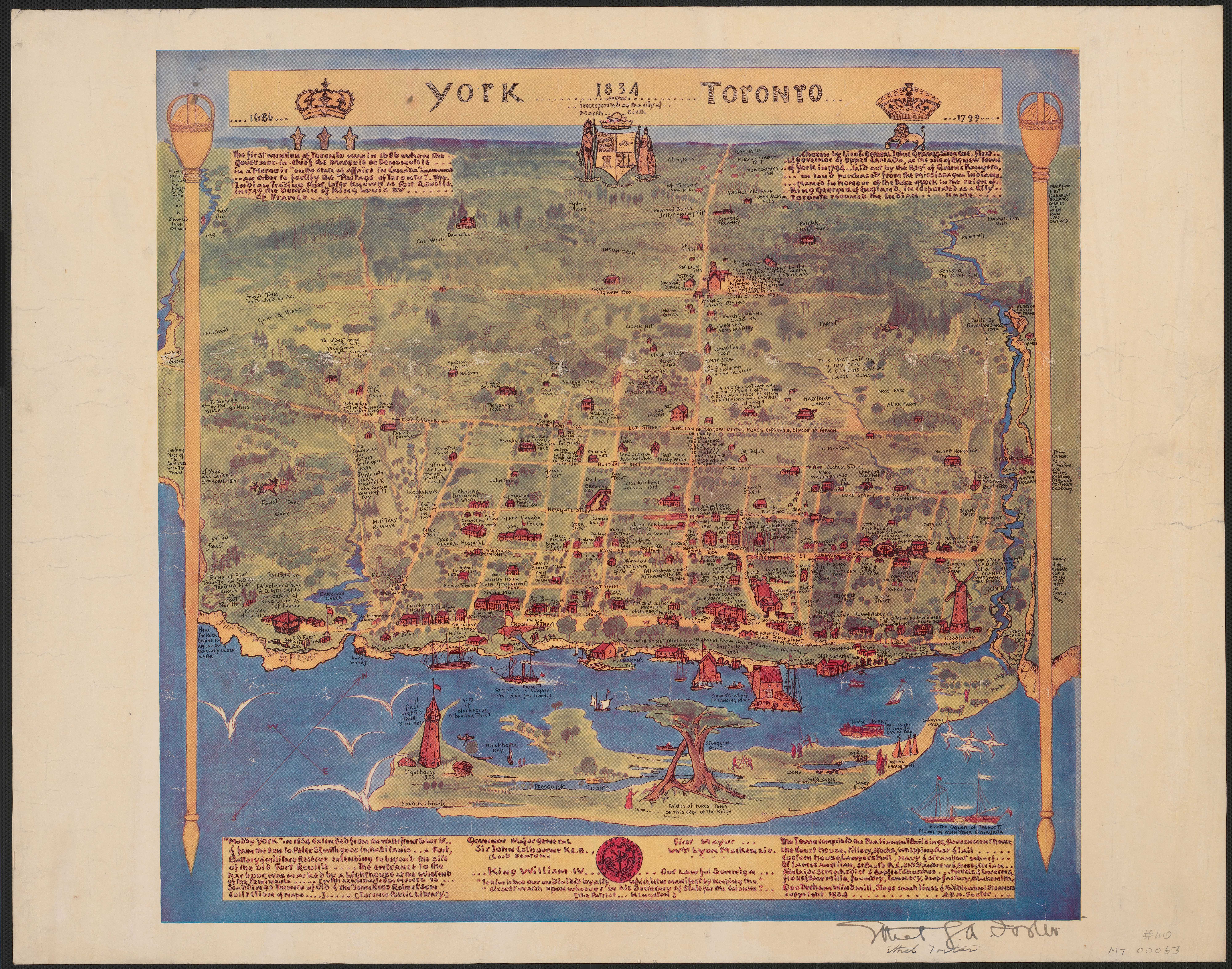
Bloor-Yonge in the 1830s – see here for full map.

Bye, Bye Stollery's - the SW corner of Yonge at Bloor

Bye-bye Stollery’s – looking at the SW corner of Yonge and Bloor

The other day, as I walked past the Necropolis next to Riverdale Farm, I noticed a historical plaque honouring “The Early Settlers.”  It was mentioned that the remains of these early Toronto citizens had been moved from Potter’s Field to the Necropolis in the 1850s. And where was Potter’s Field?

corner of Sumach and Winchester – Potters’ Field plaque

I was standing in it at the northwest corner of Yonge and Bloor! Across the street was where Stollery’s – a conservative men’s clothing store – used to be.  I may have purchased a tweed jacket or two and a Burberry trench coat there before devolving to Mountain Equipment Co-Op’s  “urban camper” style.

One Yonge Street - view from the west

One Yonge Street – view from the west

Formerly One Bloor East and now just One Bloor, it is a dramatic addition to the skyline.  When 1 Bloor West – billed as The One on the signboard above – is up, they can argue about which is truly The One!

Later that week,  I was walking along the Danforth about 3.5 kilometres from the Bloor/Yonge intersection. From this distance, you notice how much taller than the CIBC Building or the Bay Building, the newest addition.

a view of One Bloor from The Danforth near Carlaw Avenue

a view of One Bloor from The Danforth near Carlaw Avenue

Now the CIBC “Tower” is just a mid-sized high-rise that will soon be even more overwhelmed when One Bloor West is up.  Perhaps its owners are already calculating the feasibility of a teardown and rebuild more in keeping with the Bloor/Yonge intersection that Toronto haters across the country will say we think of as “the centre of the universe.”

the first block south of Bloor - east side of Yonge.jpg

the first block south of Bloor – east side of Yonge

The House of Lords still stands!

The House of Lords still stands!

a-tired-stretch-of-yonge-street-near-irwin-avenue

looking south down a tired stretch of Yonge Street near Irwin Avenue

Yonge Street as construction site!

Yonge Street as a construction site!

SE corner of Yonge/Gloucester demolition - Bye, Bye Aida's Felafels!

SE corner of Yonge/Gloucester demolition – Bye-bye Aida’s falafel!

another-block-of-vintage-yonge-street-north-of-college-st

Another block of vintage Yonge Street north of College St.

construction site between Maitland and Alexander

Construction site between Maitland and Alexander

As I walked toward College Street, I saw something I’d never seen before from Yonge Street – The Buddies In Bad Times building!  Taking out an entire block’s worth of buildings along Yonge can really change the view!

an entire block between Maitland and Alexander - gone!

An entire block between Maitland and Alexander – gone!

I checked out the Google satellite view to remind myself what had been there before, which helped a bit. What it shows is an entire nondescript block of vintage two-storey brick buildings.

Yong Street east side from Maitland to Alexander - before the demo crew showed up!

Yong Street east side from Maitland to Alexander – before the demo crew showed up!

A block further down and more demolition – the buildings at the SW corner are gone. The billboard on the scaffolding reads “Canderel.” Underneath, I see the phrase “Project of the Year”.

SW corner of Yonge/Grenville - one block N of College Street

SW corner of Yonge/Grenville – one block N of College Street

I turn to Google again to refresh my fading memory! While the satellite image predates the demolition, already on the doomed building is the tag “Condominium Residences”.

the new Canderel space on Yonge - before the demolition

the new Canderel space on Yonge – before the demolition

looking N up Yonge Street from south end of the old Eaton's College Street Store

Looking N up Yonge Street from the south end of the old Eaton’s College Street Store

the new look of the old Eaton's College store

The College Park Suites to the south of the old Eaton’s College store

Across the street from the College Park Suites is a parkette created by closing the last twenty meters of McGill Street from Sheard Street to Yonge.  The result is a bit of empty space and a few trees on a brick terrace right off Yonge Street. Across the street is the Aura,  currently the highest condo tower in Canada (but soon, I am sure, to be replaced by another Toronto tower holding the same distinction).

The McGill Street Arch and Parkette across from The Aura

The McGill Street Arch and Parkette across from The Aura

The McGill Street Arch historical plaque

The McGill Street Arch historical plaque

a-stretch-of-heritage-yonge-street

a stretch of “heritage” Yonge Street

a classic Yonge Street Building in the heart of downtown!

a classic Yonge Street building in the heart of downtown!

I can hear the arguments for preserving the historical facade of this slice of the old Yonge Street just north of Aden Camera. “It’s a part of our heritage!”

approaching Dundas from the north on Yonge Street

approaching Dundas from the north on Yonge Street

Yonge Street north of the Ryerson Student Learning Center

Yonge Street north of the Ryerson Student Learning Center

I looked across the street from the west side to a spot where I spent hours in my younger years. Given my obsession, it was almost like a weekly pilgrimage – sometimes on Friday nights, sometimes on Saturday afternoons.  And no – not the Zanzibar strip club!

The Zanzibar Club and the Ryerson U's Student Learnng Center

The Zanzibar Club and Ryerson University’s Student Learning Center

The Ryerson building sits where it used to be;  the iconic sign is gone, but from my mid-twenties to my mid-thirties, I spent more time than I should have leafing through the record bins at Sam the Record Man’s.  Occasionally, I’d also visit A & A’s next door.  Now I just have to wonder – just what was  I looking for?

The Zanzibar, A&A's and Sam's in the 1970's

The Zanzibar, A&A’s and Sam’s in the 1970s – see here for internet source –  City of Toronto Archives

—————–

July 2025 Update – this image on the Blog Toronto webpage (July 26) caught my attention. It shows what will be replacing the tired buildings north of the Ryerson Student Center (its name has changed since I wrote this post). It has been nine years since I put it together, and the Yonge Street it captures has clearly changed even more in the meantime.

The red arrow indicates the Ryerson Student Services Building.

Along with destroying old buildings and replacing them with new ones, the Ryerson name change points to another kind of renovation that has taken place in the past nine years. I would finish this post at Yonge-Dundas Square, now renamed Sankofa Square, because of the view that Henry Dundas (1742-1811), a British parliamentarian, was not sufficiently pro-abolitionist when it came to slavery.

The term Sankofa comes from the Akan language, spoken by the people of the Ashanti Empire, based in what is today Ghana.  The choice of the name was unfortunate, given that the Ashanti were active slave traders who supplied the Europeans (e.g. Portuguese and English) with non-Ashanti people they captured in their conquests.  Clearly, material space is not the only thing that undergoes constant alteration and reconstruction!

—————–

I walked up the steps of the Ryerson building and tried to guess if I was anywhere near the space that used to hold the blues and folk sections in Sam’s Record Store.  Memories of walking into the University of Waterloo’s Campus Centre in 1969 as a first-year student flashed by as I walked up these Ryerson steps, looking very much like a securely tenured professor who was contemplating imminent retirement!

the view from the front steps of the Ryerson Student Buidling

the view from the front steps of the Ryerson Student Building

the empty lot across the street from the Ryerson building

the empty lot across the street from the Ryerson building – SE corner of Yonge/Gould

a-view-of-the-ryerson-student-center-entrance

a view of the foyer of the Ryerson Student Building entrance

a wall of advertisement across from Ryerson's Student Learning Center

a wall of advertisements across from Ryerson’s Student Learning Center

yonge-street-across-from-the-ryerson-building

Yonge Street across from the Ryerson Building

Just off Yonge on Edward Street was maybe The World’s Biggest Bookstore. In the days before Amazon and its massive online book selection, which you can have delivered to your front door within days, The World’s Biggest was one of the regular stops in my ongoing quest for interesting reading – along with BMV next door and Britnell’s and Book City and some used bookstores along Spadina and on Queen.  Now it is that empty lot to the west of BMV.  Initially slated for development as a low-rise row of restaurants, revised plans call for a 30-storey condominium tower with some retail at the base.

the empty lot that once was The World's Biggest Bookstore

The empty lot that once was The World’s Biggest Bookstore

A block down from the Ryerson building is Dundas Street and the north end of the Eaton Centre. This 1970s redevelopment profoundly altered at least the west side of the stretch of Yonge Street from Dundas all the way down to Queen and the old Simpson’s store (which was bought by the Hudson Bay Co. in 1978 and recently sold by them to Cadillac Fairview, the entity that owns the Eaton Center complex).

the-public-square-at-dundas-and-yonge

the public square on the SE corner of Yonge and Dundas

looking-north-up-yonge-from-dundas-the-milestone-restaurant-patio

looking up Yonge Street from the 4th-floor Milestones Restaurant patio at Dundas

Dundas Square - not so public two days later

Dundas Square – not so public two days later – a large tent and barriers

I ended my day when I got to Dundas and hopped on the 505 streetcar back to my Riverdale neighbourhood.  A few days later, I would return to Yonge Street to finish my walk down to the harbour.  While the stretch of Yonge from Dundas down to the lake always seemed to have more substantial buildings, there were still more surprises in store!

Riverdale view of downtown Toronto - from Bloor To Dundas

Riverdale view of downtown Toronto – from Bloor To Dundas

Check out the urban Toronto map to appreciate the level of redevelopment going on in the city. It helps make clear why Toronto, over the past few years, has equalled or surpassed New York as  #1 in North America for high-rise construction projects

Next Post: Toronto’s Main Street In Transition – Yonge From Dundas To The Harbour

Toronto’s Main Street In Transition – Yonge From Dundas To The Harbour

Posted in Toronto | 10 Comments

Cycling Around Tasmania: Day 5 – From Bicheno To St. Helens

——————–

Previous Post: Day 4 – From Swansea To Bicheno

Cycling Around Tasmania: Day 4 – Swansea To Bicheno

——————–

I had covered less than 200 kilometres in the first four days of my round-Tasmania tour!  Day 5 would be more ambitious, thanks to the fact that there really aren’t any great accommodation options between Bicheno and St. Helens!

bicheno-st-helens

In terms of ocean views, it would also be the best single day, as the photos below will hopefully show.  While the elevation chart above may look rather daunting with all those jagged peaks, the thing to remember is the very narrow range in elevation – i.e. only between 4 and 73 meters.  It was actually a delightful ride!

The beach at the Denison River Conservation Area, about ten kilometres north of my  Bicheno Holiday Park tent spot, was my first of many spots to get off the bike and go for a little shoreline walk.  The path going down to the beach came complete with a reminder to be aware that the immediate shoreline is a bird breeding area.

coservation-area-sign-above-beach-near-bicheno

path down to the beach north of Bicheno

path down to the beach north of Bicheno

beach view south of Bicheno on Tasmania's east coast

beach view north of Bicheno on Tasmania’s east coast

looking into the afternoon storm cluds near Bicheno

Looking north into the afternoon storm clouds near Bicheno

Bicheno beach - Tasmania

Bicheno Beach – Tasmania

Bicheno beach - Tasmania east coast

Bicheno beach – Tasmania’s east coast

I spent a half-hour at the most beautiful east coast beaches I had come across so far.  Back on the saddle, I got to do a more inland stretch of the A3 before coming close to the seashore again in the Chain of Lagoons area.

the road to St. Helens from Bicheno.jpg

The road to St. Helens from Bicheno – an inland stretch of the Tasman Highway

path to Tasmania east coast beach off A3

path to Tasmania’s east coast beach off A3

beach near Chain of lagoons north of Bicheno

beach near the Chain of Lagoons north of Bicheno

Another stunning beach area – and since it was autumn, like most of the others I had stopped at, no one was there.  I sat on the rocks below and had an apple and some sugared water.  A look at the map told me I could have lunch at Scamander within the hour, so it was back up to the road for some more eye-popping beach views before the A3 turns sharply west to the junction with the A4.

East coast Tasmania - beach scene

East coast Tasmania – beach scene near Chain of Lagoons off Hwy A3

cycling right along the shore on Tasmania's east coast

cycling right along the shore on Tasmania’s east coast

a3-runnning-close-to-the-shore-just-south-of-scamander

looking back at a nice stretch of the A3

Looking back at a nice stretch of the A3

Just north of the Four Mile Creek Conservation Area, the road runs right along the shoreline for a couple of kilometres before turning inland to the junction with Hwy A4.  When I got to the junction, the distance markers told me that I had cycled 50 kilometres from Bicheno since setting off four hours before. This was not the Tour de France!

the signs at the A3/A4 Junction on east coast Tasmania.jpg

the signs at the A3/A4 Junction on the east coast Tasmania.jpg

As I cycled through Scamander, I was looking for an eatery of some sort. I finally found one just before I reached the bridge over the Scamander River. It was a takeaway with all the usual fast – and fried – foods.

Scamander News Agency and take-away

Scamander News Agency and Take-Away

After lunch, I had another 23 kilometres to do and some extra motivation. Some bad weather was coming in, and I wanted to settle in somewhere before the rain began.  As I approached St. Helens, the first option I passed was the  Big 4 St. Helens Holiday Park.  It is on the south side of the town, just across the bridge from the downtown area.  However, the thought of spending the night in my tent in a rainstorm was an option I figured I’d pass on.

Over the bridge, there is also a Backpacker’s hostel on the town’s main street, Cecilia Street.  It would put me closer to restaurants and grocery stores. When I got to the hostel, I found that it was closed and had a “For Sale” sign on it!  Yikes! What now?  Cycle the 1.5 km back across the bridge and up to the campground?

Across the street from the closed hostel was the Bayside Inn.  It was already starting to rain as I pushed my loaded bike across Cecilia Street.

st-helens-tasmania-satellite-shot

Within a few minutes, I had my room at the Bayside Inn – not in the new addition but in the original 1950s motel structure on the side of it. At $80 for the night, I was not complaining!  My bike and gear and I would be dry for the night! I rolled my bike inside the room and checked the facilities – a shower, a small kitchenette area complete with pots and utensils, and wi-fi!  It would definitely do!

St Helens - the Bayside Inn - shelter from the storm

St Helens – the Bayside Inn – shelter from the storm

St. Helens Bayside Inn - the original motel structure

St. Helens Bayside Inn – the original motel structure

It rained all night, and it was still raining the next morning when it was time to set off for Scottsdale.  By then, I had come up with a solution to spending a morning and maybe more cycling in the rain up to my next day’s destination – I would just put my bike on the bus and miss the rain completely!

On the next street over (Circassian Street) from the Bayside Inn is a BP station.  It also serves as the pick-up spot for the Calows Coaches intercity bus that goes from St. Helens to Launceston.  Putting bikes on buses in Tasmania is a remarkably easy thing to do, unlike here in Canada.

St. Mary's to Launceston schedule (2017)

I even left the front and rear panniers on the bottom side of the bike so the bike would be cushioned if the ride was at all bumpy. (I put a piece of cardboard under each of the rented panniers so they would not get all scruffed up and smudged from rubbing!)

map-of-tasmania

We left St. Helens at 8:30, and at 11:00 I was in Launceston, Tasmania’s second-biggest town.  Thanks to my revised schedule, I was also there a day early. Since  I already had paid for the next night at the Backpackers’ Hostel,  I figured my best bet would be to see if they had a room available for this day too. They did – and that is how I got to spend two days in beautiful Launceston, in some ways a more interesting town than Hobart to the south.

Next Post: Day Seven – Checking Out Launceston, Tasmania  

….this one has yet to be written, but check out the posts below for more of my journey!

Day Eight – From Launceston To Deloraine

Cycling Around Tasmania – Launceston To Deloraine

Day Nine – From Deloraine To Gowrie Park Via Sheffield

Cycling Around Tasmania – From Deloraine To Gowrie Park via Sheffield

Day Ten – From Gowrie  Park To Cradle Mountain

Cycling Around Tasmania – Gowrie Park To Cradle Mountain

Day Eleven – A Day Off the Saddle: Rambling Around Dove Lake

Cycling Around Tasmania – Rest Day at Dove Lake & Cradle Mountain

Day Twelve – Cradle Mountain To Zeehan

Cycling Around Tasmania – Cradle Mountain to Zeehan

Days Thirteen & Fourteen – Zeehan to Stahan to Queenstown

Cycling Around Tasmania – Zeehan To Queenstown Via Strahan

Bicycling From Hobart To Bruny Island

Bicycling From Hobart To Bruny Island


Posted in bicycle touring, Tasmania | 4 Comments

Cycling Around Tasmania: Day 4 – Swansea To Bicheno

Overnight, clouds and rain moved through the area, and the next morning the sun was back out.  I would have a pretty easy day of it.  Well, perhaps make that “morning”  since I rolled into Bicheno shortly after noon, having covered the 42 kilometres in about three hours of leisurely cycling.  I am enough of an obsessive-compulsive Type A personality that I do remember worrying that I was not covering enough distance each day and that I was spending too much time being a tourist. Noon – and dun? Ya gotta be kidding!


The A3 on this day strayed far from the beaches, and I recall cycling past long stretches of farm fields on fairly flat terrain.  Some of the pix below convey the overall scene. There was one bit of climbing to do; it came up near Apslaw just after the road turn off, but even it – compared to the 600-meter gains in elevation I would be doing a week later on the West Coast – was no big deal. And, of course, if you are hurting on the way up, you’ll have tears flowing out of your eyes as you bomb down the other side of the same bump in the road.

Previous Post: Day 3 – From Triabunna To Swansea

Cycling Around Tasmania: Day 3 – From Triabunna To Swansea


The point I eventually came to realize was that the bump on the graph above is not a 2-D representation of the actual hill, but rather an indication of how much altitude you will gain in a set distance.  The road can only be so steep; what you should really be imagining is an extended series of switchbacks that takes you up from, in the graph above, 8 meters to 183 meters, over a five-kilometre distance. While it still hurts, it gets done!

heading north on A3 from Swansea

heading north on A3 from Swansea

bales of hay on the side of A3 north of Swansea

panorama – bales of hay on the side of A3 north of Swansea

road sign on the way to Bicheno

road sign on the way to Bicheno

Tasmania’s east coast and its incredible beach vistas!  Well, not on the stretch from Swansea to Bicheno!  It is only when you get to Bicheno itself that you are back at the water’s edge. Getting there shortly after noon gave me lots of time to ramble along the seashore after putting up my tent at Caravan Park.

stretch of road S of Bicheno

stretch of road S of Bicheno

looking down more flat road on the A3 to Bicheno

looking down more flat road on the A3 to Bicheno

looking down into a valley and an upcoming set of hills on the way to Bicheno on A3

looking down into a valley and an upcoming set of hills on the way to Bicheno on A3

bicheno-satellite-shot

See here for the Google map view of Bicheno.

Central Business District Bicheno

Central Business District Bicheno

I put up my tent on the cushy grass surface in Caravan Park’s camper section.  Over a dozen fellow bikers were camped around me; these guys and their wives were motorcyclists who belonged to the Ulysses Motorcycle Club. Billed as a club for “mature riders,” I was looking at a crew who looked like they were in the retirement phase of their life journey – kinda like me!

There is a motorcycle museum in Bicheno, which may have been the draw for these riders from the mainland states.  Given their friendliness and generosity with beer bottles, their slogan “growing old disgracefully!” was a bit of wishful thinking!  Later on, I’d shoot the breeze and sip on the supplied beer with some of them – but first, I had a veg-friendly lunch to find a beachfront to explore.

my tent at Bicheno Caravan Park

my tent at Bicheno Holiday Park

bumper sticker collection of a Ulysses member

bumper sticker collection of a Ulysses member

I would end up at Pasini’s, an Italian eatery with a lunchtime pizza that did not have cheese on it. In fact, it was so delicious that I went back again for supper and had the same thing!  Sometimes you have to take what you can get!

bicheno

Bicheno’s Foreshore Footway – my route from the campground

Along the shore is a path called the Foreshore Footway that provides some excellent view – all the way from the Blowhole at the south end.  I spent an hour or more ambling along and pointing my camera in various directions. Some of the pix are below!

Bicheno shore -

Bicheno shore –

Bicheno trail above the beachfront

Bicheno Foreshore Footway just above the beachfront

trail marker on the Bicheno shore

trail marker on the Bicheno shore

Bicheno's rocky shoreline

Bicheno’s rocky shoreline

tourists waiting by the Blowhole on the Bicheno shore

tourists waiting by the Blowhole on the Bicheno shore

As I wandered back to the campground after my lunch at Pasini’s I passed by a shop selling water sports-related gear and supplies – but it had this unexpected item hanging in the window.  There were actually two of them – two dream catchers.  Long associated with Anishinaabe culture in my home province of Ontario in Canada, what were they doing here! Okay, the hoops were plastic and not willow and the threads were plastic too and maybe the feathers were not eagle feathers  – but still!

No doubt someone out there would be offended by this “thoughtless act of cultural appropriation”!

an unexpected bit of Ojibwe culture in a store window in Bicheno

an unexpected bit of Ojibwe culture in a store window in Bicheno

The next day would be my biggest day yet.  Not only would I do more cycling. I would also do more of it on a road closer to the shore than had been the case.  The next post has the pix to prove it!

Next Post: Day 5 – From Bicheno To St. Helens

Cycling Around Tasmania: Day 5 – From Bicheno To St. Helens

Posted in bicycle touring, Tasmania | Leave a comment

The Pictographs of Little Missinaibi Lake

Last update: September 3, 2022.

Table of Contents:

Sources of Information About The Pictographs

The Little Missinaibi Pictograph Sites

Next Post – Missinaibi Lake Pictograph Sites: Fairy Point  & Others

The Anishinaabe Pictograph Sites of Missinaibi Lake

Related Post: Anishinaabe Pictograph Sites In Ontario

Anishinaabe Pictograph Sites In Ontario

———————–

The Allure Of Little Missinaibi Lake:

dewdney-sketch-from-stone-age-painting-1965

  • Running rapids,
  • inhaling the energy of the waterfalls we portage around,
  • observing moose and bear and the eagles watching over us,
  • stopping to embrace majestic white pines,
  • ooh-ing over crimson sunset skies,
  • listening to the sound of a loon breaking the evening stillness –

a canoe trip on the lakes and rivers of the Canadian Shield has much to offer.

Often the most memorable highlight is the time spent gazing into the heart of traditional  Anishinaabe culture that we find painted on the rock face as we paddle by.

Missinaibi Lake and nearby Little Missinaibi Lake are two of the more significant pictograph locations in northern Ontario. Both contain sites visited by generations of Anishinaabe shamans who created images (pictographs) painted with a mix of hematite powder and fish oil that they applied with their fingers to the vertical rock face, usually while seated or standing in their birchbark canoes. These images expressed their culture and values; they offer an entry point to the traditional belief system of one of North America’s most widespread Indigenous cultures.

N.B. The drawing above is by Selwyn Dewdney and comes from his Stone Age Paintings, a brief study of Manitoba’s pictograph sites he did for the Parks Branch of the province’s Department of Mines and Resources. It was published in 1965.

———————–

Entering Little Missinaibi Lake From Its Headwaters:

In mid-June of 2017, my brother and I spent a couple of days on Little Missinaibi Lake on our way to Fairy Point on Missinaibi Lake.   There are easier ways to get there, but we decided to enter the lake by the front door – i.e. the south end of the lake at Lookout Bay. First, we paddled the forty-five kilometers of the upper Little Missinaibi River from our put-in point at Healey Bay on Lake Windermere.

Some work was required as we dealt with log jams, sweepers, beaver dams, and various other challenges on an undocumented stretch of river that attracts few if any paddlers. We were also wowed by two sets of waterfalls on this upper stretch. While they don’t quite rival the river’s Whitefish Falls at the very end of its run into Lake Missinaibi, paddling up to them and inhaling their energy was a bonus to our adventure since we didn’t know exactly what was coming up ahead!

trip-overview

120 km. from Windermere Lake (Healey Bay) to the Missanabie train stop via the Little Missinaibi River, Missinaibi Lake, Crooked Lake, and Dog lake

Another series of posts (see here for the first of them) deals with the details of the trip down the river, especially the upper stretch from the headwaters in Mackey Lake. In this post, I have combined the photos we took at the various pictograph sites on the lake with information available from various print and internet sources. If the lake is on your radar as part of a potential canoe trip, this post will give you a good idea of where to look, what you will see, and perhaps a little of what the pictographs are about.

———————–

Map Information:

Click on the View Larger Map prompt in the top left-hand corner for a full-screen view.

The 1:50000 topo map  (based on 1976 aerial photos!) ) put out by the Federal Government’s Department of Energy, Mines and Resources includes the Little Missinaibi Lake area. It is the 042 B 04 Bolkow  map.  (Click on the link to download an 11.7 Mb  jpg copy from my website.)

The Google Earth satellite view available in the Chrome browser will give you a much more recent look at the area.

ChrisMar’s waterproof 1:50000 Missinaibi 1 map (2008) is also a good investment as it covers both Little Missinaibi and Missinaibi Lakes and provides all the usual canoe-trip-specific information. Included is an excellent summary of the various possible ways of getting to the lake (except for our approach!).

Using info from an earlier Hap Wilson map, the ChrisMar map indicates the location of four pictograph sites on the lake and campsites. Missing are fishing outpost locations, two of which can be found on Little Missinaibi  Lake and one on nearby Cam Lake. (See the map below.)

———————–

Information About The Pictographs

In the early 80s, I paddled the Lake Missinaibi to Mattice stretch four times with my brother and other canoe trippers. On one of those summer trips, we went down to Moosonee; on another trip, we flagged a southbound train at the Moose River crossing.

While we vaguely knew about the Fairy Point pictographs, the weather and mostly our own ignorance about their significance meant that we spent little time at the point. Our manual-focus Nikon SLRs (if we brought them along at all) were not usually out during the day, and few pix were taken. Just being in the bush and the thrills and spills of the rapids were the biggest draws to guys in their late twenties!

———–

Tappan Adney:

In 1930 Tappan Adney visited the Missinaibi area.  His primary focus was undoubtedly to gather more information on birch bark canoe-building techniques and styles. However, in the company of his Ojibwe and Cree guides, he did spend time at various pictograph sites, in particular the one at Fairy Point on Missinaibi Lake and the Pothole site on Little Missinaibi Lake. His sketchbook drawings of various pictograph panels can be accessed at the McCord-Stewart Museum website.  I have incorporated his Little Missinaibi Lake sketches in this post.  Yet more on Adney and his sketches can be accessed here –

Tappan Adney And His 1930 Visit To Missinaibi Lake’s Fairy Point

Selwyn Dewdney:

Indian Rock Paintings of the Great Lakes

The oldest written source I’ve found on the Little Missinaibi Lake pictograph sites is Selwyn Dewdney’s Indian Rock Paintings of the Great Lakes. (Click on the title to access the book.)  The work represents the first systematic recording and analysis of the Anishinaabe rock paintings in the Canadian Shield area. In the first edition, published in 1962, Dewdney very briefly covers the three Little Missinaibi Lake sites he visited at the end of the 1959 season.   The sites are #74, #75, and #76 in the list of pictograph sites in the appendices.

Here is p. 90 of the text –

dewdney-p-90-of-indian-rock-paintings-of-the-great-lakes

———–

Hap Wilson:

wilsonIn 1994 Hap Wilson’s Missinaibi: Journey To The Northern Sky was published. It provided paddlers with essential information on rapids and portages to ensure a safer journey down the entire length of the Missinaibi, still one of North America’s great remaining wilderness rivers.

Included in the book was a section on alternative routes to Lake Missinaibi, the river’s headwaters. As well as entry points at Michipicoten, Missanabie, and Barclay Bay, he detailed a route that begins at Bolkow Lake near the Shumka siding,  a VIA stop on the CPR-owned rail line from Sudbury to White River. (See here for the timetable and stops. ) This route takes you into Little Missinaibi Lake and the pictographs.

Wilson provides much more detail about the pictograph locations than Dewdney’s one-paragraph treatment. Also, Wilson notes four – and not three – sites on the lake. His Little Missinaibi Lake map locates various selected features from north to south.  The four pictograph sites correspond to the letters A, C, E, and F.

———–

Thor Conway

discovering-rock-art-cover_300x454The most recent print source of information on the pictographs can be found in Thor Conway’s Discovering Rock Art: A Personal Journey With Tribal Elders. Published in the fall of  2016, it is a significant revision of the first edition from the 1990s titled Discovering Rock Art In Ontario’s Provincial Parks: Sacred Landscape of the Ojibwa and Algonkians. Included in the coverage of twelve Ontario pictograph sites is a chapter on Lake Missinaibi’s Fairy Point and one on the Little Missinaibi Lake sites.

As the subtitle suggests, Conway highlights the stories and explanations provided by Ojibwa and Algonquin elders familiar with the pictographs and based on their understanding of their ancestors’ pre-European-Contact worldview and myths.

Conway begins the chapter on Little Lake Missinaibi with a retelling of an encounter with a group of American fishermen on the lake, which is reputed to be an outstanding pike and pickerel lake. Conway and his wife were doing archeological work at a site on the lake. The fishermen were staying at one of the two nearby fly-in island outposts at the north end of the lake (see the map below for the locations). They were clearly surprised to see anyone else on the lake; Conway was just as surprised by how little they knew about where they were! He could be talking about me in my youth! He writes –

These fishermen did not have maps or any background information about the area. What a loss it would be to visit the historic Missinaibi countryside so ill-informed. We talked about our rock research, the provincial park, and the nearby Chapleau Crown Game Preserve.

—————–

The Little Missinaibi L. Pictograph Sites:

Map With Site Locations

Dewdney, on his visit, checked out the three sites he had been told about. Wilson, thirty years later, notes the existence of four sites. Another thirty years later and there are reports of further smudges and images. This post will focus on the four sites highlighted in Wilson’s canoe tripper’s guide; I’ll add another site that no one has commented on.

We came into the south end of the lake, but in this post, I’ll follow Dewdney, Wilson, and Conway and order the sites starting at the north end of the lake not far from the Air Dale island outpost.

——————

Pictograph Site #1:  48°14’11” N 83°35’28” W

a view of the Pothole from the south

(Site “A” on Wilson’s annotated lake map; also referred to as the Pothole by Wilson and Conway.)

Wilson describes the site like this –

The most impressive rock site as all paintings are contained within a polished “pothole” depression, clearly depicted in the photograph.  (Wilson, p.51)

The photograph he refers to is on p. 52; it shows a small semi-circular cove with a steep vertical rock wall. I scampered to the top of the rock to get a shot of  the canoe with the stern paddler sitting on the south side of the “pothole.”

A trip report from 2000 posted on the Canadian Canoe Routes website by Scott Warner describes the scene this way –

We pass the fly-in camp and begin to hug the right shore to look for the Pothole pictographs. You couldn’t miss them if you tried. The canoe easily fits into the pothole and we get lots of pictures…. Crossing the lake here we proceed to the next pictograph site which we find without a problem.

The Pothole pictograph site Warner is referring to is Pictograph Site #1, and #2 is the one they crossed the lake to visit.

Concerning the site’s name, Conway quotes an earlier visitor, the canoe historian Edwin Tappan Adney, who visited the lake in 1930  in the company of Cree and Ojibwa guides.

It was on the vertical rock sides of a natural perfectly semi-circular recess which the Indians proceeded to name in Ojibway and Cree, Rock Kettle and Little Kettle – Akikwabik (Ojib.) and Eshikwabish (Cree).  (quoted in Conway 231)

Adney made a sketch of the pictographs at this site, which he labels “The Kettle”.  He also made drawings of other sites on both this lake and at the Fairy Point site on Missinaibi Lake.  (See here for other pages of his Missinaibi sketchbook.)

Adney’s 1930 sketch of the Kettle or Pothole site – overview.

Tappan Adney. 1930 drawing of the Pothole – detail of preceding page – see Circle 1

Dewdney’s brief treatment of the lake’s three pictograph sites included sketches of various images. While he does not identify which of his three sites they are from, we would find that all of Dewdney’s image sketches come from The Pothole.

dewdney-sketch-of-little-lake-missinaibi-pictographs

Dewdney, from p. 90 of Indian Rock Paintings of The Great Lakes

Unfortunately, lichen had covered the higher-up images – everything from the bird footprint. It left us wondering about ways of getting rid of the lichen and whether it would be right for us to scrape it off.

another view of the core of the Pothole site

Of the pictographs on the section of rock below, Adney only recorded the bottom left one, which could be a Maymaygweshi figure. Above and to the right of it is what is often interpreted as a thunderbird image. Large sections of the rock face have flaked off over time,  leaving us to wonder if they are sitting in the water with pictographs on them.

Pothole Pictographs – evidence of rock flaking

Adney took the photograph below in 1930.  It does not seem to show the flaking evident in the above photo.  Zoom in on the source photo to see some of the images!

Tappan Adney. Kettle or Pothole site Little Missinaibi Lake. 1930

Tappan Adney. Kettle or Pothole site Little Missinaibi Lake. 1930. image source

looking north from inside the Pothole pictograph site

the north end of the Pothole – some indistinct images

a few markings from the north end of the site

Some of the above pictographs can be seen in Adney’s 1930 sketch –

Adney.Little Missinaibi Lake Pothole or Kettle sketch

Some of Adney’s sketches show images we did not see. Here is one from the Pothole site –

Thor Conway discusses the Pothole site extensively in his chapter on Little Missinaibi Lake. In fact, it is the only site on the lake that he deals with.

He draws on his conversations with various Anishinaabe elders across northern Ontario over the past forty years and the time he and his wife Julie spent there doing archeological work in the mid-1970s. He provides a list of some 72 different pictographs, although he mentions 64 as the number elsewhere. The difference in numbers may be because he has counted the remains of images painted underneath later ones.

Three figures receive special attention in Conway’s coverage of Site #1:

  • the hunchback figure holding a stick said to be connected with the Ojibwe mythical figure Bokwawigan
  • the so-called Dancer and what is either an unrelated slash of ochre or one impressive penis!
  • The Great Turtle, Mikinak, who is associated with the “Shaking Tent” ritual. The image on the bottom right of Dewdney’s sketch page looks like a turtle. It leads Conway to suggest an interpretation of the Pothole itself as a sort of Shaking Tent, given Mikinak’s customary presence as a messenger and go-between connecting the manidoos (manitous) and the shaman who has come for guidance or answers.

Norval Morrisseau painting of Mikinak and the Shaking Tent

paddling away from the Pothole Pictograph Site

In the image above, we are heading north towards the fishing outpost after our Site #1 visit. If this site is your first one after entering the lake from the north, you would be heading in the opposite direction – i.e. south – and to the other shore for Picto Site #2.

our route in red- we were travelling from south to north

———————

Picto Site #2: 48°13’33” N 83°35’48” W (the main panel)

a view of Little Missinaibi Lake Site #2 from the south

(Site “C” on Wilson’s map of the lake) is a bit less than two kilometers south of the lake’s major site. It gets this write-up from Wilson –

The second pictograph site, unusual and interesting as the paintings have been accomplished while standing on the rocks instead of the customary canoe perch. There is also a prominent “conjuring rock” or pillar that often signifies particular deities. One morph drawing is similar to the “sun-face” found at Fairy Point.  (Wilson, 51)

Wilson provides a sketch of the overall rock face and of eight individual pictographs, including a canoe with three paddlers, a moose, three or four thunderbird images, and the “sun face” referred to above. Conway does not use any of the pictographs at this site in his chapter dedicated to the lake.

Approaching the site from the north, you will first see some other rock paintings before you get to the south end and the main and most well-known panel of pictographs. Here are a few of them:

the most northerly stretch of pictographs at Little Missinaibi Lake’s Site #2

badly faded pictographs – north end of Site #2 Little Lake Missinaibi


a detail from the rock section in the previous image – note the loop image

more ochre markings as we head south at Picto Site #2 on Little Missinaibi

looking north along a section of Picto Site # at Little Missinaibi Lake

a detail from the rock section in the previous image

detail from the above image – Little Missinaibi Lake Picto Site #2

Adney. Little Missinaibi Lake 17 -at “Second Rock”

Little Missinaibi Picto Site #2 – towards the south end

The page below from Tappan Adney’s sketchbook shows what he saw in 1930!

Adney sketch of a panel at Little Missinaibi Picto Site #2 – source

Little Missinaibi Lake – Picto Site #2 – various figures

Tappan Adney made a sketch of this pictograph panel in 1930. The almost 100-year-old drawings below make some of the fading images more visible.

detail of the upper section of the previous shot

Little Missinaibi Site #2 – rock paintings.

Little Missinaibi Lake – Picto Site #2 – looking back at the rock face so far examined

As we paddled to the south end of the site, we noted the rock tower, said by Wilson to be a “conjuring rock” connected with specific manitous. If so, it would have parallels with a similar rock pillar in the Temagami area on Cheeskon Lake, also said to have been a place of spiritual power in the traditional Ojibwe world. We would find the main panel of the site on the rock face just behind the tower.

approaching Picto Site #2’s most well-known panel of images – Little Missinaibi Lake

In the photo below, the rock tower (missing its top!) is on the left, and the main panel is on the vertical rock face bathed in the sunlight that I am looking at. Animals, canoes, thunderbirds, and a few other markings can be found. Most people will remember the circle with a series of lines attached to the bottom and what looks like eyes and a mouth inside the circle.

Little Missinaibi Lake – checking out the main pictograph panel at Site #2

Little Miss Site #2 – main panel in context

My first thought on seeking the circle with what looks like eyes and mouth inside and four or more “legs” below was that someone had recently put in the facial features.

That did leave me to explain how they could get the colour so close to that of the rest of the image and how their paint could be so durable!

A 1930 drawing by Tappan Adney shows the circle with the three dots or dashes looking much like it does today. So much for that idea of a recent addition!

Tappan Adney. 1930 drawing. See here for more

Tappan Adney. 1930 drawing. See here for more at the McCord-Stewart Museum

Fairy Point image – Note that the red. colour has been exaggerated

However, a better explanation came to mind after seeing a similar pictograph at Fairy Point a couple of days later. On the assumption that both images once had the same inner half-circle within the larger one,  what has happened at this site is that some of it has eroded even before Adney’s 1930 drawing to create the “eyes and mouth” that we think we see.

The Fairy Point semi-circle is still intact though I have exaggerated the colours in the image to make the shape more apparent. The two circles do not have the same number of “legs” or “rays” or whatever is being represented by the lines underneath the circle. The Fairy Point image has seven; this one has four definite and maybe one or two more.

————–

A Possible Explanation of the “Circle” or the “Face”:

In her book, Reading Rock Art, Grace Rajnovich includes a Selwyn Dewdney illustration of  Agawa Rock’s Panel X. It shows a horse and rider and in front of them a megis (cowry shell) presumably leading the way. On my visit, the megis image was not visible. At most, it was a faint smudge to the horse’s right.

Agawa Rock – Panel X – Horse and Rider

However, having seen Dewdney’s sketch (and Thor Conway’s), I am reminded of the Missinaibi and Little Missinaibi circles and a possible explanation. The relative proximity of Agawa Rock to Fairy Point and Little Missinaibi Lake makes the connection even more compelling.

Conway tracing – the 1970s

Dewdney sketch – late 1950s

It may be that what the circle actually represents is the Megis shell. This cowrie held a special place in the Ojibwe religion and the ceremonies of the Midewiwin, the secret society of “medicine men.” According to one of the Midewiwin’s central myths, the Megis led the Anishinaabeg from their homeland on the Atlantic coast to the Lake Superior region. William Warren, in his History of The Ojibway People, published in 1885, recounts a speech he heard delivered in a Midewiwin lodge which began like this –

While our forefathers were living on the great salt water toward the rising sun, the great Megis (sea-shell) showed itself above the surface of the great water, and the rays of the sun for a long period were reflected from its glossy back. It gave warmth and light to the An-ish-in-aub-ag (red race)… 

The white shell with the inner line to indicate the opening and the lines on the bottom as rays of light – as an explanation, it sure beats the happy face emoji  I first saw! Chapter IV of Warren’s book has the best account of the Anishinaabeg migration I found. You can download a copy of Warren’s essential study of the Ojibway here and read the entire account of the Great Migration. (Note: the book is an 8 Mb download in pdf format.)

close up of the main panel at Little Missinaibi Picto Site #2

After visiting Picto Site #2, we headed for an island campsite about 700 meters west. Early that evening, I looked back with my zoom lens and got this image of the extended stretch of rock face that makes up the pictograph site.

Little Missinaibi Lake’s Site #2 as seen from an island campsite to the west

———————

Picto Site #3: 48°12’42” N 83°36’14” W

(Site “E” on Wilson’s annotated map of the lake)

The site is located on the island’s southwest end, indicated in the overview map above – or on the close-up map below. The Chrismar map labels it Eagle Island, a name not found elsewhere – e.g. on the 1:50000 Natural Resources Canada Bolkow map (042 B 04)  or The Atlas of Canada’s Toporama.

Wilson deals with this site in a few words –

…typical west exposure and barren rock face. (Wilson, 51)

He also provides a sketch of the rock face and of individual images. Three of them are a human figure with outstretched arms, a moose, and four oblique lines. The lines are often described as tally marks. The pictographs, as well as others, are easy to find as you paddle along.   Approaching the site from the north, you will see the first pictographs on the rock face below.

the northernmost of Site #3’s pictograph panels

the northernmost pictograph panel of Little Missinaibi’s Site #3

detail from the above image of the northern section of Little Missinaibi Site #3

moose and tally marks – detail from the above shot

Moving on, other faded images appear, often impossible to “read.”

faded rock paintings at Site #3 on Little Lake Missinaibi

As we came to the site’s southern end, we finally saw the human figure with raised arms. Along with the two of three moose and the various oblique slash marks – often referred to as tally marks on the guess that something is being counted – this is Site #3.

a human figure at Little Missinaibi Lake Picto Site #3

———————–

Site On the Way To Grave Bay: 48°12’30” N 83°35’45” W

From Picto Site #3 to Unreported Site

As you paddle south to the Grave Bay site, the last of the sites mentioned in the Wilson guidebook, you will pass a minor site with a half-dozen images. I must thank a reader of my pictograph posts for giving me the site’s location.

an undocumented site on Little Missinaibi Lake

A couple of canoes, a moose (?), a human figure with outstretched arms, some slash marks, and a few other indecipherable figures –

close-up of a newly recorded site north of Grave Bay

Here is another shot of the site. The 1/50 sec shutter speed was too slow to compensate for the rocking canoe, resulting in a blurry mess. However, it shows the human figure on the bottom right reasonably clearly. Next to it are a couple of slash marks.

another angle of Site X on Little Missinaibi Lake – human figure on the bottom right

I’d take another shot of the human figure, but the shutter speed is even slower at 1/20th of a second, so you can guess what’s coming!

the winning shot – 1/10th of a second!

Another shot – this time at 1/40th of a second. I would eventually notice the shutter speed problem! Get in touch if you visit the site and come up with sharper pix. I’d be happy to post them here!

the core of the site north of Grave Bay

———————

Picto Site #4? – Grave Bay 48°11’18” N 83°36’38” W

looking out of Grave Bay

(Site “F” on Wilson’s annotated lake map). The photo above was taken from 400 meters within Grave Bay,  a 1.6-kilometer-long and narrow bay at the south end of Little Missinaibi Lake.

We are looking out towards the entrance to the bay and the three rock faces on the left (i.e.west) side and one rock face on the right side. We checked the west side rock faces both coming and going and could not find anything. This is not to say that there is nothing here. We may not have even been looking in the right spot.   Wilson has this to say of the site:

The fourth pictograph site, barely visible under layers of lichen, is located at the entrance to Grave Bay. (Wilson, 51)

The rock face with the Grave Bay pictograph(s) on it? – the second from the entrance

grave-bay-entrance-picto-site-4

snippet from Wilson’s map of Litle Missinaibi Lake (p.46)

And that’s it for Wilson’s treatment of Site “F”!   There are no accompanying sketches to add to the words above.

A fellow paddler spent an hour last summer looking for this site on both sides of the small point on the west side. He came up empty. Given Wilson’s cursory treatment of the site, it is unclear what is under those “layers of lichen.”

We got excited as we approached a likely location on the first rock face as we paddled into the bay – but that would have been too easy to find given Wilson’s 20-year-old warning!

Grave Bay – first rock face with overhang and ochre-like look

a closer-up view of what we thought might be a few images

the third and last Grave Bay entrance rock face we checked out

We turned around to the entrance of the bay. We had paddled about 400 meters into the bay and checked out anything likely to attract an Anishinaabe shaman or vision quester-

  • a crack in the rock, an entrance to the rock face for the ones who lived in it
  • an overhang that shielded a vertical section of rock
  • a ledge to leave an offering to the maymaygweshiwuk for favours or medicines received

On the way, we paid another visit to the bit of rock colour that had caught our attention.

picto fever on Little Lake Missinaibi

Given all the actual pictographs on Little Missinaibi Lake, we recognized that the desire to turn the above into a pictograph was just a case of “picto fever” waiting to take hold. We resisted and paddled away!

The Adney Site at the Far End of Little Missinaibi Lake

In 1930 Tappan Adney visited Little Missinaibi Lake and made drawings of some of the pictograph panels.  He also took photographs, including this one labelled “Rock paintings, second location, far end of Little Missinabie Lake”.

The paddler is standing on a rock ledge and examining what looks like a simple thunderbird figure and perhaps one or two other images.

Adney photo 1930 – little Missinaibi Lake — “far end”

“Far end” may imply Grave Bay but in our paddle into the bay, we did not see such a dramatic rock face. Perhaps we should have gone in another half-kilometer but Wilson’s map locates the site in the area we searched.

Adney’s second location may be referring to the south end of the lake. This satellite image shows a prominent rock face that seems to better fit the “far end” description. If that is the location, we paddled right past it on our trip down the Little Missinaibi River from Windermere Lake. A return visit is in order!

picto site at the “far end” of Little Missinaibi?

———————–

Up Next – Fairy Point On Missinaibi Lake!

Little Missinaibi Lake reminded us of other Anishinaabe pictograph lakes we have paddled into. Like Cliff Lake on the Pikitigushi and Artery Lake on the Bloodvein, there is an admission fee – i.e. the work required to get there. But once there, all the portages and obstacles are forgotten as you paddle from site to site in the company of Ojibwe shamans and vision questers of old. And while other sites – like the two I just mentioned – have more skillfully executed – and expressive –  images on display, the sites on Little Missinaibi Lake still add to the overall picture. We’re glad to have made the journey.

Fourteen kilometers of paddling, lining,  and portaging down the Little Missinaibi River from the lake, and you are on Missinaibi Lake itself. Coming up – perhaps the single most famous rock painting site in north-eastern/north-central Ontario – Fairy Point.

Fairy Point Mishipeshu and Caribou Panel

Fairy Point Mishipeshu and Caribou Panel

Pictograph Sites On Missinaibi Lake

Next Post – Missinaibi Lake Pictograph Sites: Fairy Point  & Others

The Anishinaabe Pictograph Sites of Missinaibi Lake

Posted in Pictographs of the Canadian Shield, wilderness canoe tripping | Tagged , , , , , , , , , | 17 Comments

Cycling Around Tasmania: Day 3 – From Triabunna To Swansea

For a full-screen map view, click on the More options prompt in the box on the top left.

triabunna-swansea-elevation-chart

A sunny morning in Triabunna – my fortified oatmeal breakfast and two cups of coffee done, it was time to hit the road for the ride to Swansea.  I said goodbye to my Aussie neighbour who was off to Maria Island and then checked in with the American cyclist who had arrived late the previous evening and set up his tent near the entrance.  He too was off to the island – but he was taking his bicycle, which he had rented from the same Long Haul Tasmania bike rental service that I had. He said was on his way to St. Helens and I would amazingly bump into him two weeks later in Strahan on the West Coast!  It turns out that by the time he got to St. Helens, he decided he had spent enough time on the bike saddle.  So – he had the bike rental company pick him and the bike up in St. Helens and he returned to Hobart where then rented a car to see the island in comfort!

Previous Post: Day 2 – From Richmond To Triabunna

Cycling Around Tasmania: Day 2 – From Richmond to Triabunna

Meanwhile, I would spend the morning on an inland stretch of the A3.  Not a lot of pix from the first couple of hours.  It is only when you come out at Mayfield Bay – thirty-four kilometres from Triabunna – that you get some nice beach views. I took every opportunity to get off the bike and walk down to the beach.  While it is still not the open ocean crashing in on the sand – I was cycling along the west shore of Great Oyster Bay – it was still a scenic treat.  [The best single day of east coast cycling would have to wait for a couple of days until the 74-km stretch from Bicheno to St. Helens.]

my bike on the side of A3 as I set off to walk the beach between Triabunna and Swansea

my bike on the side of A3 as I set off to walk the beach between Triabunna and Swansea

the beach at Mayfield Bay on Tasmania's east coast

the beach at Mayfield Bay on Tasmania’s east coast

sand-and-rock-on-tasmanias-east-coast

tasmania-east-coast-great-oyster-bay

A bit further down the road from Mayfield Bay – a very nice stretch of scenic cycling – was the Kelvedon Beach Conservation Area. It gave me a reason to get off the bike and frame something other than pavement in my photos!

Kelvedon Beach sign - Watch Your Step!

Kelvedon Beach sign – Watch Your Step!

Kelvedon Beach East Coast Tasmania

Kelvedon Beach East Coast Tasmania

seashells on the seashore - Kelvedon Beach Tasmania

seashells on the seashore – Kelvedon Beach Tasmania

After Kelvedon Beach on to another conservation area – Spiky Beach.  There is a turn-off that takes you down steeply a pot-holed gravel road to a parking lot from where you can walk the rest of the way down to the beach.  I cycled down, leaned my bike against a post, and wandered down the water. Thanks to the 15mm wide-angle lens I used for the shot below, my rear wheel looks much bigger than the front one!

bike park at Spiky Beach on Tasmania's east coast

bike park at Spiky Beach on Tasmania’s east coast

path to the beach east coast Tasmania near Swansea

path to  Spiky Beach on the  east coast of Tasmania near Swansea

swansea-and-great-oyster-bay-satellite-view

Like Triabunna, Swansea had a population of about 800 and its economy also relies heavily on tourism.  I had planned to head for the Swansea Holiday Park and put up my tent but it had clouded over dramatically in the last hour as I approached the village. I figured that the Swansea Backpackers’ Hostel would be a better place to spend a rainy night – so that’s what I did.  I found it at the far end of town right next to the Barkmill Tavern and Bakery – convenient! After checking in and dumping my stuff in my room – it was a room with four beds but since the hostel wasn’t really busy I would have the entire room to myself. I also kept my bike in the room. Then I headed back “downtown” in search of a restaurant.

Swansea's main street

Swansea’s main street

Perhaps the end of high season is the explanation for a large number of local businesses with “For Sale” signs. Take a look at the following establishments – maybe one of them will strike your fancy as an investment opportunity.  Even the Backpackers’ Hostel was up for sale! In fact, when no one answered my initial ringing of the doorbell I thought it might be closed. Someone did eventually come to the door – I was the first visitor of the day and a bit early!

I eventually found a meal at the Amos House’s High Point Café.  It was off-hour but the owner was good enough to make something – it may have been a pita sandwich with hummus and tahini.

swansea-ugly-duckling-closed-and-for-sale

closed and for sale

the-horny-cray-in-swansea-for-sale

For sale

swansea-bear-cottage-for-sale

swansea-all-saints-opportunity-shop-for-sale

another Swansea building for sale

another Swansea building for sale

Swansea's Amos House and Viewpooint Café - for sale

Swansea’s Amos House and Viewpoint Café – for sale

Swansea Backpackers - for sale!

Swansea Backpackers – for sale!

I cycled back to the hostel from the Amos House in the rain. Other travellers had arrived and I was able to put my German – as rusty as it is! – to use as I talked to a couple from Chemnitz and a guy from Hamburg who was motorcycling Tasmania. I would bump into them again a week or two later. Given that Tasmania as a total population of 500,000,  I guess it’s not that unusual!

my room at the Swansea Backpachers - with three empty beds

my room at the Swansea Backpackers – with three empty beds

It rained most of that night and I was glad not to be in my tent at the campground on the other end of the village.  By the next morning, the rain had stopped and I would have sunshine with a bit of wind as I made my way 43 kilometers up the coast to Bicheno and a tent spot at the Bicheno East Coast Holiday Park.

Next Post: Cycling Around Tasmania: Day 4 – From Swansea To Bicheno

Cycling Around Tasmania: Day 4 – Swansea To Bicheno

Posted in bicycle touring, Tasmania | Tagged , , , , , , , | Leave a comment

Cycling Around Tasmania: Day 2 – From Richmond to Triabunna

Previous Post: Day 1 –  From Hobart To Richmond 

Click here to zoom in or out of the Google interactive map.

richmond-to-triabunna

Leaving the  Caravan Park around 8,  I rolled down Richmond’s main street and stopped at the one open gas station and bought a bottle of sugar water for the ride.  In my brief chat with the attendant I learned that the Prossers Road that I was headed for was not the best choice; he recommended the somewhat longer but paved B31 to C350 (Fingerpost Road)  and then along C350 to the junction with the Tasman Highway (A3).  So that is what I did.  The pix below show the relatively flat terrain for at least the first hour of the day’s ride.

richmond-to-fingerpost-road-c350

the road not taken – Prossers Road – on the advice of the gas station guy!

b31-c350-junction-richmond-tasmania

B31/C350 junction north of Richmond, Tasmania

looking east down C350 near Campania

looking east down C350 near Campania

pastoral-scene-on-the-side-of-c350-on-the-way-to-buckland

pastoral scene on the side of C350 on the way to Buckland

I got to Buckland for lunch, having done what would turn out to be the two biggest climbs of my east coast ride to St. Helens. From the top of Bust-Me_Gall Hill, it was a rewarding downhill roll to the Buckland Roadhouse and a veggie burger and fries.  As the pix make clear there is not a lot of paved shoulder for a cyclist to claim as his own.  However, I saw maybe a dozen cars until I hit the A3.  I pretty much had these secondary roads to myself while the nearby A3 – the main highway – was undoubtedly much busier.

flat stretch of C350 on the way to Black Charles Opening and Buckland

flat stretch of C350 on the way to Black Charles Opening and Buckland

the top of the day's first bump - Black Charles Opening at 296 m

the top of the day’s first bump – Black Charles Opening at 296 m

at the top of the second of the day's two hills on C350 north of Richmond

at the top of the second of the day’s two hills on C350 north of Richmond

After lunch, I continued on the A3, known as the Tasman Highway.  It serves as the alternative coastal route between Hobart and Launceston, the state’s two biggest towns.  Finally, as I approached Orford, I got to see some major water!

Orford sits on Prosser Bay. As I stood there and looked east beyond the bay across the Tasman Sea,  I imagined New Zealand’s South Island, specifically the West Coast highway I had cycled down a couple of years ago.

orford-tasmania-to-new-zealand-south-island-west-coast

1800 kilometers or more separate the two coasts but as raw and wild as N.Z.’s West Coast is, Tassie’s east coast would prove to be tame and gentle. [Click here to access my  N.Z. “Down The West Coast” post.]

my bike on the side of A3 at Prosser Bay

my bike on the side of A3 at Prosser Bay

my first beach shot on Tasmania's east coast near Orford

my first beach shot on Tasmania’s east coast near Orford

view from the side of A3 at Prosser Bay.jpg

view from the side of A3 at Prosser Bay

My introduction to the beaches of the east coast would be short. From Orford, the road cuts inland across a small peninsula before running along the west shore of Spring Bay to my target for the day – Triabunna (population: 800). Given the dependably mild east coast weather and the scenery, it is a popular tourist destination as well as a retirement community. Triabunna harbour serves as the home dock for a small fishing fleet as well as the departure point for the ferry over to Maria (Mah-rye-ah) Island, a national park and nature sanctuary.

Just off of the A3 is the Triabunna Cabin and Caravan Park. I would make myself at home under the tree you see in the photo below.  My fairly lightweight Kelty Zen tent up and my gear put inside, I went for a walk down the two blocks that make up the main street. At the local IGA (a grocery store chain) I got some fresh fruit, bread, and other consumables

satellite-view-of-triabunna-tasmania

my tent spot at the Triabunna Cabin and Caravan Park -east coast Tasmania

my tent spot at the Triabunna Cabin and Caravan Park

A couple of hours later a solo motorcyclist pulled up and set up a hammock and tarp next to me.  He was from Melbourne and was on a one-week ramble in Tasmania and was headed over to Maria Island the next morning – without his bike, which he would leave at the Caravan Park.  We wandered down to the Fish Van; he oohed and aahed about the fried fish while I made do with an order of fries! It was slim pickings for someone intent on being vegan in a fishing town!

Triabunna cottage on Main Street

Triabunna cottage on Main Street

warehouses by the Maria Island ferry stop at Triabunna

warehouses by the Maria Island ferry stop at Triabunna

Maria island Ferry dock in Triabunna

Maria Island Ferry dock in Triabunna

looking north down Spring Bay from the Triabunna Ferry landing

looking north down Spring Bay from the Triabunna Ferry landing

Triabunna-Maria Island Satellite shot

Triabunna-Maria Island Satellite view

With more time – or without the commitments I had created by pre-booking my accommodation in a few of the upcoming towns – a visit to Maria island would certainly have been worth it.  Here is the enticing write-up in the Lonely Planet guide-book I had with me –

“Maria is laced with impressive scenery: curious cliffs, fern-draped forests, squeaky-sand beaches and azure seas. Forester kangaroos, wombats and wallabies wander around; grey-plumed Cape Barren geese honk about on the grasslands; and an insurance population of Tasmanian devils has been released and is thriving. Below the water there’s also lots to see, with good snorkelling and diving in the clear, shallow marine reserve.”

Excerpt From: Lonely Planet. “Lonely Planet   Tasmania.”

Sounds pretty neat, eh!   There is camping available on the island and bicycles (“push bikes”) are allowed. It looks like an enchanting spot to explore for a couple of days. Maria Island is just one of perhaps a half-dozen parks and nature preserves along Tasmania’s east coast around which you could fashion a fantastic two or three-week retreat. With your own tent and gear, you’d be all set.  If you didn’t have a bike at the ready, the bus connections from town to town are adequate so there would be no need to rent your own vehicle.   It would only sit around unused most of the time!  Maybe there is another visit to Tasmania forming in my mind!

Instead, my next day to Swansea on the A3 would be a mix of coastal scenery, ending with a nice ride from the Rocky Hills to my room for the night at the Swansea Backpackers Hostel,  getting there just in time to beat the first rainstorm of the trip. See the details in the next post!

Next Post: Day 3 – Triabunna To Swansea (51 km.)

Posted in bicycle touring, Tasmania | Leave a comment

Cycling Around Tasmania: Day 1 – From Hobart To Richmond Via Bonorong

Previous Post:   Doin’ Time In Van Diemen’s Land –  Tasmania By Push Bike!

 Day 1: Morning – From Hobart to The Bonorong Wildlife Sanctuary

Click on the blue More Options prompt for a full-screen view of Google Map

hobart-bonorong

Sunday morning is my favourite time to start a bike trip.  Since I usually start from one of the biggest towns on my route, I get to escape it before most people are even up.  It makes for traffic-free roads as I leave the city center.

I was up and ready to go by 8:00 from my Narrara Backpacker’s room, having left behind a duffel bag with a change of clothes and street shoes and some other items (my own panniers which did not fit on the Tubus racks !) for my return in three weeks.

my loaded Surly bike in front of the Narrara Backpackers' Hostel in Hobart

my loaded Surly bike in front of the Narrara Backpackers’ Hostel in Hobart

Every time I end a bike tour, I tell myself – “Never again with so much stuff!” Well, here I was – yet again!   The solidly built steel-frame Surly Long Haul Trekker bike weighed 15 kg. (33 lbs.), and I had another 22 kg. (48 lbs.) of gear, most in the four Ortlieb panniers clipped onto their respective racks. [The panniers themselves probably weighed about 3.5 kg. (8 lbs.)!]

The panniers I had brought with me would just not fit onto the Tubus  racks, so the afternoon before I set off, I had to arrange for the Ortliebs to be delivered to the Backpacker’s hostel.)  My tent, poles, and sleeping bag were inside that plastic bag on top of the rear panniers.  My camera gear, wallet, sunglasses, sun cream, and cycling gloves were in the handlebar bag.  In the map case on top of the bag, I also had a GPS tracking device – the Spot Connect – so the folks back home could follow me!  Stuff, stuff, stuff!  I dream of the day I set off with a credit card and nothing more!

close-up of my loaded Surly bike in front of the Narrara Backpackers' Hostel in Hobart

close-up of my loaded Surly LHT (Long Haul Trekker) bike with 26″ wheels and Ortlieb panniers

The previous afternoon I had cycled down to the harbour and followed the first ten kilometers or so of the Intercity bike path that follows the River Derwent from the Harbour area pictured below all the way up to Clairmont, an easy if not terribly scenic first 15 kilometers.

intercity-bike-train-hobart-to-clairmont

See here for a downloadable pdf file of the path, as well as gpx and kml files

hobart-harbour-8-a-m-sunday

Hobart Harbour on a Sunday morning at 8:00

The bike path ends at Claremont, where it runs into Main Road, which  I followed all the way to Grafton.  Now on Highway 1,  I crossed the bridge and made use of some service roads to get to Highway C321. It was a bit confusing, so I was relieved when I saw the direction signs at the Brighton intersection below!  My goal for the morning was the Bonorong Wildlife Sanctuary. I figured it was only right that I see some Tasmanian Devils on the very first day of my tour.

the road to Richmond via Bonorong

the road to Richmond via Bonorong Wildlife Sanctuary

The sanctuary sits on top of a hill, and I actually got off and pushed the bike up the potholed, dusty gravel road to the entrance. Storing my bike in a shed reserved for tools and equipment, I spent the next hour on a quick tour of the sanctuary, home to all sorts of animals I had never seen live before – wombats, quolls, koalas, as well as those Devils! I was also given a bag of kangaroo feed for the Foresters roaming freely in a fenced-off area.

a view of Bonorong Wildlife Sanctuary near Hobart

a view of Bonorong Wildlife Sanctuary near Hobart

While it would have been better to be there a bit earlier – the sun was almost directly overhead for most of my visit – I still got to see a few of the locals.  It was a nice diversion from an admittedly short first bit of cycling.

Bonorong local on the fence

Bonorong local on the fence

same-bird-different-angle-at-bonorong-sanctuary

wombat in the arms of one of the guides at Bonorong

wombat in the arms of one of the guides at Bonorong

a couple of Tasmanian devils sniffing about their enclosure

a couple of Tasmanian devils sniffing about their enclosure

Bonorong kangaroo with snout way too close to my lens!.jpg

Bonorong Forester kangaroo with snout way too close to my lens!

Bonorong kangaroo chillin' in the shade

Bonorong kangaroo chillin’ in the shade

Tasmanian devil tugging at a piece of meat and bone

Tasmanian devil tugging at a piece of meat and bone

The Tasmanian Devil above put aside whatever concerns it had about the heat and the sun to put on a little show for the visitors – and to get the raw meat that the park staff person made him play tug for.  I learned that the Tassie Devil is an endangered animal whose overall numbers are as low as 10,000 because of facial cancer that has devastated the population.

On a more depressing note – perhaps the single-most negative thing I can say about cycling in Tasmania – is that most days, I cycled by one or two dozen carcasses of wallabies, wombats, possums,  and Tassie Devils. While I had experienced a similar thing on South Island, New Zealand, it was lesser carnage and on fewer days.

Tasmanian Devil up close

Tasmanian Devil up close

My tour of the sanctuary done, it was back to the bike and another 18 kilometers to the Richmond Cabin and Tourist Park, where I got a tent spot for the night.

bonorong-richmond

The elevation chart above shows an easy ride with a nice gentle downhill at the end. On the way, I passed the Coal Valley Golf Links on Middle Tea Tree Road (C322), where I filled my water bottles and sat in the shade for a while.  It was hot out there on the road!

pit stop on the way to Richmond from Bonorong

pit stop on the way to Richmond from Bonorong

The Tourist Park is on the edge of the village of Richmond, population 750, which figured large in the island’s early history as a military post and as a convict station. A few buildings – a couple of churches, the courthouse, a jail, and a post office –  date back to the 1820s and 1830s. The Lonely Planet guide generously bills it as “arguably Tasmania’s premier historic town”.

That’s the campground in the satellite image below; my $15. a night tent spot was in the clump of trees near the centre of the image.  I joined a few other tenters though I was the only one who had arrived on a “push bike”, the Aussie term for a bicycle.  Many had rented camper vans or cars.

richmnond-cabin-and-tourist-park

richmond-tasmania

Click here if you want to see where I got the two above Google satellite images.

My tent up and gear stashed inside, I cycled into the village.  It was a Sunday afternoon at about 4, and everything – what little there is! – was pretty much shut. I finally found a restaurant attached to a gas station at the far end of the village and – to no surprise – found very slim pickings for someone intent on keeping a vegan diet.  I ended up having a cup of coffee – with soy cream – and postponed supper until I got back to the campground. I did cycle down to the bridge crossing the Coal River to see Australia’s oldest still-in-use road bridge.  The satellite image above shows the bridge on the top right-hand side as it crosses the river.

Richmond Bridge over the Coal River

Richmond Bridge over the Coal River

Richmond, Tasmania - road bridge over the Coal River

Richmond, Tasmania – road bridge over the Coal River

Back at the campground, I rehydrated a serving of vegan-friendly Pad Thai noodles, which I had packed as an emergency item for those evenings when  I couldn’t come up with anything acceptable. Here it was – Night #1 – and I was already using it!

Chatting with my immediate neighbours later that evening – a young couple from Chartres in France who had just finished a one-month stint of work on a farm in West Australia and were now doing some travelling – I listened as the Frenchman expressed a sort of bemusement at the fuss the locals make over a few buildings that were less than two hundred years old.  Given the way that the history of my home province of Ontario in Canada mirrors that of Australia and Tasmania, I also get the Aussie perspective. To really get excited about Richmond, it probably helps a lot to be born and bred in Tasmania!

The east coast of Tasmania draws rave reviews from all who travel along its roads and take in the views of the Pacific shore as they walk its beaches.  I was looking forward to those beaches but still had a bit of inland travel to do before I got there.  The next post details the route –

Next Post: Cycling Around Tasmania: Day 2 – From Richmond To Triabunna

Posted in bicycle touring, Tasmania | Leave a comment

The Last of Autumn’s Colours – A Walk Up Toronto’s Don Valley And Mud Creek

looking back down our street as we walk to Broadview Avenue

looking back down our street as we walk to Broadview Avenue

Yesterday was a beautiful fall day in Toronto – a gift I figured I’d acknowledge by grabbing my camera – and our dog Viggo – and going for a long walk up the Don River Valley and then over to the Brickworks and up Mud Creek.  I knew I’d catch the last of the fall colours since the leaves have already reached their peak.  In a couple of weeks from now, we will be into that drab part of the year – it goes from mid-November all the way to April! – when our city does not really look its best.

shooting up into the leaves

shooting up into the leaves

Broadview Avenue has one of the great views of downtown Toronto.  We passed by the Rooster Café and walked up the Avenue a bit to get a clear view to the west.  The Don River flows through that band of trees you see in the middle of the pic below.  We’d be walking up it for a couple of kilometers before a bit of bushwhacking would take us to another Top Ten view of the city, the one from above the Brickworks off Bayview Avenue.

Downtown Toronto skyline from Broadview Avenue

Downtown Toronto skyline panorama from Broadview Avenue – click to enlarge and scroll

downtown Toronto closeup from the Riverdale Bridge

downtown Toronto closeup from the Riverdale Bridge

looking at Bloor & Yonge from Broadview

looking at Bloor & Yonge from Broadview

Back down Broadview Viggo and I went, passing the Rooster Café again.  We also walked past the Chinese elders who gather here each morning to do their Tai Chi and other exercise routines.  The folks below had pretend-swords in their hands and were waving them around in a coordinated fashion!

looking up Broadview to the Rooster Café

looking up Broadview to the Rooster Café

Sun Yat Sen and the Chinese tai chi parcticisioners at Riverdale Park

Sun Yat Sen and the Chinese Tai Chi crew at Riverdale Park East

a wave from one of the regulars at Riverdale Park East

a wave from one of the regulars at Riverdale Park East

Down to the Don River on the Riverdale Foot Bridge and then we headed north to Pottery Road, stopping occasionally to take in the river views or to have a water break.  Viggo was mostly off-leash given the scarcity of bicycle traffic and joggers on a Friday morning.  However far I walked, I’m sure he did an extra 30% as he monitored his pasture with serious dedication.

looking south on the Don River from the Riverdale Foot Bridge

looking south on the Don River from the Riverdale Foot Bridge

Viggo on the banks of the Don

Viggo on the banks of the Don – “Don’t jump in, Buddy!”

the Don River below Pottery Road

the Don River below Pottery Road

Luckily no ducks in the water when we passed by.  Viggo has been known to jump in and give chase – or perhaps that should be interpreted as herding.  Below he is watching some seagulls a few rocks over.

Viggo studying a set of Don River rapids south of Pottery Road

Viggo at a set of Don River rapids south of Pottery Road

At Pottery Road Viggo is back on the leash as we deal with cars and traffic.  Across the bridge pictured below and then a bit of bushwhacking on a shortcut trail that takes us over Bayview Avenue and then up to the top of the ridge to the north slope of the Brickworks.

map source here – scroll down to the second page

Slipping on the muddy slopes is almost always guaranteed – but so too is one of the great views of our city!  It is a fair deal – muddy shoes for a wow moment.

bushwhacking our way to the ridge above the Brickworks

bushwhacking our way to the ridge above the Brickworks

looking south from the top of the Brickworks ridge

looking south from the top of the Brickworks ridge

We had another water break on a flat rock I call Viggo’s Stone. To encourage him to drink up I crumple the doggy treat and he licks it all up, intent on getting all the pieces. Then it is down and into the ravine.

the view from above the Brickworks

the view from above the Brickworks

A creek – Mud Creek – flows down from north of Saint Clair Avenue.  There is also a multi-use path, the Beltline, which runs down along the creek.  On a Friday morning, it is usually fairly quiet so Viggo can continue his explorations off-leash.  Meanwhile, I am looking around for cyclists and joggers while also pointing my camera at the various splashes of colour we walk into.

the Moore Park Ravine behind the Brickworks

the Moore Park Ravine behind the Brickworks

I love this little slice of Toronto.  I get the same feeling when I enter it as I do when I enter a temple, a cathedral, a place of contemplation. Thanks to the steep banks of the ravine, even the lighting is subdued – the images show that! – as we walk the path up to Moore Avenue.

Trail construction north of Heath Avenue means that we turned back a little early and headed back south, saying hello again to some of the same people and their dogs that we met on the way up.

a small stretch of Mud Creek below Heath Avenue

a small stretch of Mud Creek below Heath Avenue

Mud Creek view

Mud Creek view

Viggo focussed on a squirrel on the banks of Mud Creek

Viggo focussed on a squirrel on the banks of Mud Creek

Mud Creek above the Brickworks

Mud Creek Cathedral above the Brickworks

Mud Creek - fall view

Mud Creek – fall view

And then – a scamper up the muddy side of the ravine to get back to the ridge above the Brickworks. And predictably – another wow!

another-panorama-of-the-great-view-of-toronto

another Brickworks panorama of the Great View of Toronto

We made our way home and Viggo flaked out on the living room carpet. Given the 12 kilometers we had walked, he was okay with no mid-afternoon outing while I worked on my Spanish lessons.  However, at 8:00 p.m. we were back out there for our nightly forty-minute patrol of the neighbourhood. If Viggo’s mornings are usually all about squirrels, then evenings are centered on raccoons.  We didn’t see any last night.

A Few Days Later…

This morning we headed across the River to Cabbagetown.  Last Saturday we had by accident met Viggo’s half-sister Scout (and of course her owner!)  at the small park just north of the Necropolis and they had played together so nicely.   I was hoping that our arrival this morning would coincide with Scout’s morning outing.  It was not to be – but I did see yet more nice fall colour in the immediate neighbourhood.

looking down Wellesley Street from Wellesley Park

looking down Wellesley Street from Wellesley Park

the end of Wellseley Street E. in Cabbagetown

the end of Wellesley Street E. in Cabbagetown

Hogarth Avenue fall leaves

Hogarth Avenue fall leaves

looking down Ingham Avenue from Hogarth

looking down Ingham Avenue from Hogarth

Withrow Park off-leash area for dogs

Withrow Park off-leash area for dogs

Logan Avenue from the soccer field bleachers

Logan Avenue from the soccer field bleachers

the front of our home.jpg

the front of our home.jpg

Already the leaves are starting to dry up and shrivel. A good wind or two and we’ll be looking at the bare branches – and we’ll be one step closer to the stage in the cycle that our Icelandic Sheepdog Viggo really enjoys.  It’s the one with ten centimeters of snow!


See this post for the winter-time version of the same walk!  No colours but lots of white!

A Winter Morning’s Ramble Up The Don Valley And The Moore Park Ravine

A Winter Morning’s Ramble Up the Don Valley & Moore Park Ravine

Posted in Ramblin' With Viggo, Toronto | 4 Comments

Canoeing Quebec’s Coulonge River System – Introduction, Planning, Maps

Table of Contents:

Maps

Logistics

Esprit Rafting: Shuttle Service – And More

Day-By-Day Trip Reports – Maps, Satellite Images, Photos, Campsites, Rapids

1. The Headwaters In La  Vérendrye Park

2. The Coulonge R. from Lac Ward To The Ottawa R.

——————–

INTRODUCTION:

Sandwiched between Ontario’s Algonquin Park and Quebec’s Réserve Faunique La Vérendrye is the upper Ottawa Valley, the core of the traditional homeland of the indigenous people known to us as the Algonquins. It was an early source of beaver pelts for the fur trade, but from the early 1800s onwards, it became a region associated with the lumber industry. In time, hunting and fishing camps were added to the Canadian Shield landscape.  In the past generation or two, it has also attracted other visitors, including those with canoes strapped on top of their vehicles and with back seats filled with gear, canoe packs, and enough food for a week or two of downriver adventure.

wilson-upper-ottawa-valley-2004Hap Wilson’s 1993 guidebook Rivers of the Upper Ottawa Valley: Myth, Magic, and Adventure (and a 2004 reprint)  was my introduction to the various possible canoe trips in the region. As well as information about some rivers on the Ontario side, the book has a chapter on each of the three great canoe-tripping rivers that tumble down to the Ottawa River from the boreal Shield on the Quebec side – the Dumoine, the Noire, and the Coulonge. The book has sat on my bookshelf for over a decade, waiting for my full attention!

Sometimes called “The Three Sisters,” these three rivers have attracted paddlers keen on whitewater play, and wilderness feel over the past few decades.  Since the mid-1980s, the rivers have no longer been used for logging runs. Looking at the Google satellite images of the region, you can see that logging continues with the rough logging roads taking the place of the fast-moving waters of the springtime rivers. These same roads also give paddlers shuttle access to various points on the river of their choice.

———————————-

Why The Coulonge?

This August (2016), we finally got to the Pontiac region on the Quebec side.  Having to choose one, we settled on the Coulonge.

overview-of-la-verendrye-park-down-to-ottawa

The length of the river was, for us, a major attraction.  Of the Three Sisters, it is the longest. Our 271-kilometer paddle started in La Vérendrye Park (officially named La Réserve Faunique La Vérendrye), where Highway 117 passes by Lac Larouche. Lac au Barrage, the official headwaters of the river system, is about ten kilometers west of the put-in at the boat launch on Lac Larouche.  La Vérendrye Road #28 takes you from Hwy 117 to a put-in on Lac Au Barrage if you would rather start at the headwaters.

Another positive feature is the 260-meter (850 feet) drop that the Coulonge makes from its headwaters in Lac Au Barrage to the Grand Chute just before Fort Coulonge on the Ottawa River. It has extensive sections of fast water and swifts (estimated at 52 kilometers by Wilson) and 69 runnable rapids (70% of which Wilson grades as Class I).  Given that the more technical rapids are easy to portage around, the Coulonge makes for an excellent river to introduce “newbies” to the adrenaline-pumping aspect of canoe tripping.

Yet one more “plus” was this: the portages are mostly around ledge-type rapids, so they tend to be short. Again, Wilson’s estimate for the total portage distance, if all 19 are done, is a mere 3.5 kilometers. This makes the Coulonge a relative piece of cake compared to, for example,  the 16 kilometers of portage trail (and 32 kilometers of actual walking!) we had to deal with on our 350-kilometer trip around the perimeter of Wabakimi Provincial Park.

———————————-

Layers of History To Contemplate:

close-up-of-champlains-1643-map-algonquins-noted

an extract from Chaplain’s 1634  map with the name “La Rivière des Algommequins”

Of interest to us since our immersion in the world of Canadian Shield pictographs some three years ago is this –  the region is the traditional heartland of the Anishinaabe people known to us as the Algonquins. With their great river as the spine – they called it the Kitchi Sibi (or Sipi), but we know it as the Ottawa – their traditional territories reached inland on the various tributaries that make up the Kitchi Sibi watershed. The Coulonge is right in the center of that world.

from Bonita Lawrence. Fractured Homeland. UBC Press. 2012.

from Bonita Lawrence. Fractured Homeland. UBC Press. 2012.

They were among the first indigenous peoples Champlain met while exploring the lands up the St. Laurence River from Quebec. In a map from 1634, Champlain labelled the great river, which runs through their lands, La Rivière des Algoumequins and noted their presence on both sides of this river. Before contact with the Europeans in the early 1600s, this hunter/gatherer culture may have numbered 3000 to 6000. (Estimates seem to vary wildly.)  The terms Algoumequins or Algonquins derive from what Champlain heard when he asked his Micmac hosts who they were.  The term translates as “they are our allies” in their Algonquian language.

Mazinaw Rock - Dewdney's Face II

Mazinaw Rock – Mishipeshu and war canoes painted with ochre

The Algonquins are associated with such sites as Oiseau Rock, the dramatic pictograph site on the Ottawa River on the Quebec side across from Deep River.

The Mazinaw Rock pictograph site on the headwaters of the Little Mississippi River on Mazinaw Lake in what is now Bon Echo Park is yet another significant Algonquin cultural site.

The petroglyph site on the north shore of Stoney Lake near Peterborough, Ontario is a third site that drew generations of Algonquin shamans and vision questers before the arrival of the French in the early 1600s.

Check out these two posts for more info and pix of the above –

The river would see its name changed perhaps fifty years after Champlain’s time and the decimation of the various Algonquin bands in the war against the Iroquois and by smallpox. With the loss of an Algonquin presence, the river’s use by the Odawa fur traders from further west to access Montreal would mean the river would come to be associated with them.

ottawa-area-map-from-1714

Admittedly our trip down the Coulonge did leave us wondering about the extent of the Algonquin presence. There are very few Anishinaabe echoes to be heard along the river in the form of names of rapids, falls, and other noteworthy landmarks.  It may be another example of the ethnic scrubbing of any Anishinaabe place names from the maps created by the Canadian Shield’s new masters. However, even this Anishinaabe website, The Land That Talks (see here), while providing names for locations elsewhere in the upper Ottawa Valley, leaves the Coulonge untouched.

My brother and I were born In Noranda on the west shore of Lake Osisko at the Hôpital Youville. Just two short portages away is the Kinojevis River, a tributary of the Ottawa.  Another one hundred kilometers west and the Ottawa reaches Notre Dame du Nord at the north end of Lac Temiskaming.  Mattawa is a few days further to the south.  Somehow travelling up Highway 117 to our put-in was like going home – while we were not quite up in the Abitibi, the topography was very familiar.

———————————-

Maps:

1. Hap Wilson’s  Rivers Of The Upper Ottawa Valley: Myth, Magic and Adventure

wilson-upper-ottawa-valley-2004

The obvious starting point for any canoe tripper planning to spend time on the Coulonge River system is Hap Wilson’s  Rivers Of The Upper Ottawa Valley: Myth, Magic and Adventure.  Like his tripping guidebooks to the Missinaibi, the Temagami area, and Manitoba, it has remained the definitive and most reliable source of information and advice since it was published in 1993.

My 2004 copy is a reprint and has the cover pictured here.  In the Preface of the reprint, Wilson notes:


Aside from a few obvious changes to the appearance of the book, I present Rivers of the Upper Ottawa Valley  as it originally appeared when it was released a decade ago.

We take it as a good sign when a canoe-tripping guidebook is still accurate and relevant a quarter-century later.  If nothing else, we see our series of posts as a visual accompaniment for the Wilson maps.  These posts may give potential canoe trippers a better idea of what they will see when they embark on their adventure on the Quebec side of the upper Ottawa Valley.  It is definitely a journey worth making.

—————-

2. Federal Government Topographic Maps (1:50000)

The 1:50,000 Canadian Federal Government topo maps are available for a free download if you want to print them – or parts of them – yourself.  The maps can be accessed at this government site – here. All the maps for this trip are in folder 031 –  open it and use the specific letters and numbers for each map to get what you want.  Even better – click on the specific map below for the direct link!

The 1:50,000 topos you would need for the entire Coulonge River system are the following:

  1. Lac Jean-Péré  031 N 02
  2. Lac Nichcotéa  031 N 03
  3. Lac Brûlé           031 K 14
  4. Lac Bruce          031 K 11
  5. Lac Doolittle    031 K 10
  6. Lac Duval          031 K 07
  7. Lac Usborne    031 K 02
  8. Fort-Coulonge 031 F 15

At $20. for a sheet, the cost of having professionally produced copies of the maps quickly becomes very expensive!  It is also unnecessary.  We just printed copies of those parts of the topo maps relevant to us.  Kept inside a waterproof map case, they served as our main map set in the canoe.

—————-

3. GPS Devices and Topo Canada maps

We also had a Garmin eTrex 20 with a copy of the Garmin Topo Canada (version 4) map set.  We used it to track our route daily, record points of interest and potential campsites, and other details.  It also provides another perspective on those occasions – there may be one or two! – when you might be unsure about your exact location.

topo-maps-canada

I also took my iPhone 4S for its GPS capability.  I had already downloaded the  David Crawshay ios app Topo Maps Canada and the various 1:50000 topos.   You can find the app here at the iTunes site.)  There is a German-developed Android app that seems to do the same thing. See here for details.

While battery concerns would limit smartphone use, it complements the paper maps if you only want the occasional confirmation of your location and do not want or need all the other stuff that a dedicated GPS device offers.

—————-

3. Our GPX File …for what it’s worth!

It has the campsites indicated but not the rapids and portages. It may save you a bit of time.  Download the Dropbox file here or click on the title below –

2016_Mid-August _Coulonge_River to Ottawa.GPX

Note that the Dropbox notice does not mean you cannot download the file! Just click on the download prompt to access!

Our 14 campsites are indicated and the track for each day opens up to provide an every-5-second progress location. You can use this to figure out where the complications come up!

—————————————

Logistics:

The biggest headache is figuring out how to return to your vehicle(s) at the end of a down-the-river trip.  Recent solutions for some of our canoe trips have included: $2400. de Havilland Beaver pick-up on Lake Winnipeg to get us back to Red Lake;  and a trip down the Steel River system, which amazingly ends up close to where it starts.

For the Coulonge, our friend Cyril in Ottawa made it easy.  He rode up with us to the put-in point at Lac Larouche off Highway 117, about 60 kilometers NW of Le Domaine and then drove the car back to Ottawa.  Then we spent the next two weeks paddling back to Ottawa, knowing he was okay with coming to get us at Fort Coulonge or Renfrew or Arnprior if things didn’t work out.

Click on the More options prompt in the top left-hand box to enter a full-screen view of the Google map. The route indicated goes right to Lac Au Barrage, the actual headwaters of the Coulonge River system. We started about 10 kilometers to the east on Lac Larouche.

Esprit Rafting Shuttle Service – And More

esprite-rafting-website-header.png

There are also some outfitters’ shuttle services available.  For example,  Jim Coffey’s whitewater rafting and canoeing company, Esprit Rafting,  is based in Davidson, Quebec, just north of the mouth of the Coulonge. Its website has a web page dedicated to canoe trip shuttles.  (See here.)  For the Coulonge, several possible insertion points are listed in the table below. Prices are from 2016…

2 days put in • above Chutes a L’Our 2 hrs $250
3-4 days put in • Rapides Enragé 3 hrs $350
5-7 days put in • Bryson Lake bridge or 
   Chutes Gauthier
5 hrs $650
7-10 days put in • Meanders 8 hrs $950
10-12 days put in • Bridge above Lac Pompone 10 hrs $1500
12-14 days put in • Lac Barrage or 
   Hwy 117 (Lac Nichcotéa)
9 hrs $1350
 Note: The price includes the use of their vehicle.  

Obviously, the more canoes and paddlers you have, the lower the “per person” price goes.  For example, a four-paddler/two-canoe shuttle to Lac Barrage would cost $1350. / 4 = 340., which is not a huge price to pay for dealing with the biggest headache of non-loop canoe trips, the logistics of getting back to your vehicle.

All this shuttle talk brings back memories of  an early 1980’s trip down the Missinaibi.  It began with a ride on the Sudbury-White River train from Sudbury, where we left our car.  We got off the train just before Missanabie at the west end of Dog Lake’s Fifty Seven Bay.  Then we  did the Height of Land portage, and canoed down the Missinaibi  to the Moose Factory Island campsite.  One morning before dawn we paddled over to Moosonee and took the Polar Express back to Cochrane.

While I did the Ontario Northland train with the canoe and gear down to North Bay,  Max set off from Cochrane for Sudbury  to get the car.  He hitchhiked!  At 2:00 a.m. as the train pulled into the North Bay station, there he was waiting. We loaded up the car and headed down to Toronto, coming into town at dawn, having started our day 24 hours before on James Bay.  An epic shuttle!

———————————-

Our Day-By-Day Trip Report –

                   Maps, Satellite Images, Photos, Campsites, Rapids

1. The Headwaters In La  Vérendrye Park

2. The Coulonge R. from Lac Ward To The Ottawa R.

When we got to the Ottawa River, we turned left and continued on down to Ottawa and the Rideau Canal Locks.

Canoeing The Ottawa River From fort Coulonge To Ottawa’s Rideau Canal – Introduction, Maps, Campsites and More

———————————-

Other Sources:

Trip Report At the Canadian Canoe Routes Forum

The Canadian Canoe Routes site has a 2009 trip report by Robert Pavlis, which covers the Coulonge from Lac Pomponne down to the Chutes Coulonge and has many excellent observations, especially about campsite possibilities. See here for the report. I only found it after the trip – it would have been good to have had a copy come along for the ride.

——————-

A Great Book For Context of the Region

last-of-the-wild-riversA book we read in the early spring after we had decided to do the Coulonge was an ebook version of  Wallace Schaber’s The Last of the Wild Rivers: The Past, Present, and Future of the Rivière du Moine Watershed.  While the book’s main focus is the Dumoine River, Schaber provides all sorts of historical background and personal reminiscences to make it an enjoyable read for anyone interested in the upper Ottawa Valley in general. Along the way, you also get the story on the origins of the famous canoe-tripping company Black Feather and the canoe gear retail store Trailhead! The book added a bonus element to the seed-time part of this year’s canoe trip.

——————-

Black Feather Wilderness Adventure Company

black-feather-home-page-header

Black Feather, the wilderness adventure company started by Schaber,  has a massive list of offerings. [ I’m considering one of their Nahanni trips next summer.] It offers a Coulonge canoe trip – a nine-day one from Lac Pomponne to the Chutes Coulonge. (See here for details.)  It would make a great introduction to wilderness canoeing for someone short on time and willing to spend some money.  What they would get in return is a fantastic canoe trip where someone else takes care of all the details and experienced guides take them down a river they have often done. They’ll know the story of the river and all the great campsites and places to play in the rapids.

——————-

Esprit Whitewater – Rafting and Canoe Trips

screen-shot-2016-10-22-at-8-15-10-pm

Esprit Whitewater (aka Esprit Rafting) does not just do shuttles up to various points on the river.  Their website also lists several organized Coulonge trip possibilities: a two-day, a four-day, and a ten-day like the Black Feather one.

You’d be getting a trip guided by locals who are very knowledgeable and passionate about their rivers.  For first-timers, a guided trip makes a lot of sense and would allow them to learn camping and canoeing skills which will soon have them organizing their own increasingly ambitious trips.

——————-

Posted in wilderness canoe tripping | 4 Comments

Down The Coulonge – Day 11: From Chutes Coulonge (Km 13) To The Ottawa River (km 0)

Previous Post- Day 10: From Chute A L’Ours (Km 43) To Chutes Coulonge (Km 15)

  • distance: 14 km (missing about 2 km from power station in-take to power station outflow
  • time:  start – 8:45 a.m. ; finish – 11:20 a.m.
  • portages/rapids: 0/0
  • weather: Sunny all day, some clouding over in the late p.m. when we were on the Ottawa River
  • campsite: Esprit Rafting take-out spot at Baie de Letts in Rocher Fendu’s Middle Channel
  • Natural Resources Canada topo map sheet: Fort-Coulonge 031 F 15

cr_d10b

We had arranged an 8:00 a.m. departure time with Dennis the evening before so set the alarm for 6 a.m. to make sure we’d be ready.  We walked up to the cottage that serves as a spot where the river guides gathered for breakfast. Lots of coming and going and chitchat going on!  It was 6:15 and in a back room Jim Coffey was already at work on emails.  We made use of the kettle and the kitchen supplies to prepare our usual oatmeal breakfast and filtered coffee.

That done we went to see Jim with the day’s maps. I had dug up some information on the rapids and falls of the Middle Channel of Rocher Fendu and just wanted to confirm some details with him.  He had also made a canoe trip down to Ottawa a few years ago and recalled for us some details of the final section from the Deschenes Rapids through Chaudiere Falls to the Rideau Canal. We definitely appreciated the time he took to confirm and correct the info we had.

We were off at 8. It was about a twenty-minute drive to the bottom of the Chutes Coulonge. Watching Dennis acknowledge the driver of one passing vehicle after another, we joked that he would seem to know pretty much everyone on the road. He didn’t disagree!

The satellite image below shows at least the first bit of the ride with the chutes being somewhere beyond the top right of the image. The total distance is about 10 kilometers.

esprit-rafting-in-davidson-and-the-mouth-of-the-coulonge-river

sunrise on the Ottawa at Esprit Rafting base camp

sunrise on the Ottawa at Esprit Rafting base camp

Dennis dropped us off not far from the outflow station you see in the photo below. It sits at the end of the gorge section about 1.5 kilometers below where we had taken out our canoe the afternoon before.

the Generating Station building below the Chutes Coulonge

the Generating Station building below the Chutes Coulonge

chutes-coulonge-take-out-and-put-in

the entrance to the Coulonge gorge from below

the entrance to the Coulonge gorge from below

We paddled up the gorge a short way but soon saw that we wouldn’t be going very far.  Lack of water meant we were looking at a rocky walk if we wanted to go further up. Another day and we may have done so but waiting for us were the portages of the Rocher Fendu section of the Ottawa River.  Back we went – past the outflow station and on down the Coulonge to the Ottawa.

looking up the Coulonge Gorge from the bottom

looking up the Coulonge Gorge from the bottom

flora and fauna in the sand on Cologne shores near Fort Coulonge

flora and fauna in the sand on Coulonge shores near Fort Coulonge

As this post’s first map above makes clear, the Coulonge does some serious meandering in its final ten kilometers.  Surprisingly there are very few signs of development along the tree-lined banks and sandy shoreline.

Soon we came to the Marchand Covered Bridge, which dates back to 1898 and stretches five hundred feet (152 meters) across the river. A key Pontiac country landmark, it is famous for being one of the few remaining bridges of this type in Quebec.  Its barnyard rusty red colour certainly makes it stand out!

the Marchand Covered Bridge over the Coulonge near its mouth

approaching the Marchand Covered Bridge over the Coulonge near its mouth

the Marchand Covered Bridge - now closed - over the Coulonge

the Marchand Covered Bridge – now closed – over the Coulonge

view of the bridge from river left

view of the bridge from river left

Unfortunately, it is closed to traffic.  For the past half-century, another more modern cement bridge downstream of the Marchant has handled the heavy vehicles that the Marchant was never meant to deal with. Not clear is how long the bridge has been closed or if it will ever open to light traffic again.

staring into the Marchand Covered Bridge - malheuresement fermé!.jpg

staring into the Marchand Covered Bridge – malheureusement fermé!

marchand-bridge-details

And then we scampered back down to the river and our canoe.  Over the next thirty minutes, we’d finish our Coulonge River trip. In the pic below we are just about to pass Coulonge Beach on the left; on our right is Île à Arnold.  And on the far shore on the other side of the Ottawa River?  That would be Ontario!  We had done the Coulonge…but there was little time to celebrate.  We were already thinking about the next bit and in particular, the possible complications of the rapids and falls of the Middle Channel of Rocher Fendu.

the mouth of the Coulonge!

the mouth of the Coulonge!

Next Post –  Canoeing The Ottawa Day 1: The Rocher Fendu’s Middle Channel

See Also – Canoeing The Ottawa River  From Fort Coulonge  To Ottawa’s  Rideau  Canal  – Introduction, Maps, and More

Posted in wilderness canoe tripping | 7 Comments