Upper Mustang-Phu Valley Traverse Via Saribung La: Day 8 – Luri Gompa To Ghuma Thanti

Last revised on October 26, 2022.

 Previous Post: Day 7 – Yara To Luri Gompa Via Tashi Kabum

Day 8 – Luri Gompa to Ghuma Thanti

  • Time: 7:10 – 1:00 … about five hours with lunch out of our backpacks
  • Distance: 9 km.
  • The high point of the day: 4930 m.
  • Campsite: Ghuma Thanti (4750)
  • Maps: Himalayan Map House Upper Mustang Trek Map.  
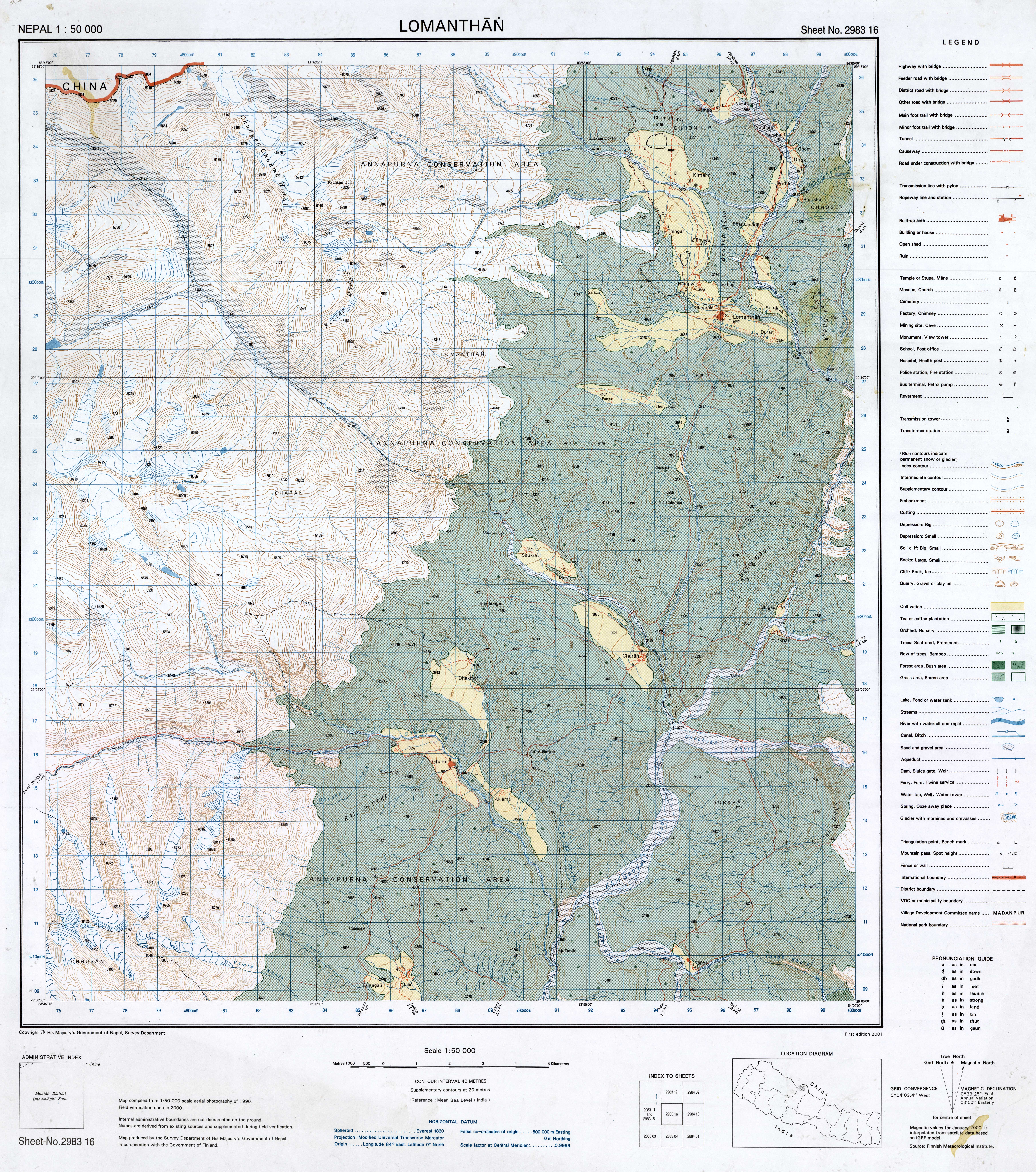
  • Nepal Govt 1:50000 topo maps: 2984 13 Damodar Kunda

Today was one of those days I had been apprehensive about since signing up for the trip.  The reason? The gain in altitude from one campsite to the next.  With the Luri Gompa site at about 3840 meters, the one at Ghuma Thanti represented an increase of 910 meters to 4750, definitely beyond the oft-mentioned 300 meters a day guideline for ascending at altitude.

effective-amount-of-oxygen-at-different-altitudes1

The logistical problem is this –  there is no good intermediate spot to camp that would make the altitude gain for the day less drastic.  All the other trekking agency itineraries I looked at had the same sequence of campsites.  Our trip itinerary made the problem seem less of an issue by fudging the numbers.

  • YARA TO LURI GOMPA (4005M), WALK APPROX. 2‐3HRS
  • LURI GOMPA TO GHUMA THANTI (4600M), WALK APPROX. 7‐8HRS

While the Luri Gompa campsite altitude is overstated by 160 meters,  the Ghuma Thanti one is 150 meters low.  As a  result,  it appears to be less than a 600-meter altitude gain instead of the actual 910 meters.  [The Luri Gompa figure used – 4005 m – is that of the cave complex above the campsite.]

Here is what happened when another group of 12 clients on what sounds like a KE Adventure Travel trek (Saribung Peak and the Damodar Himal Reconnaissance)  came to this part of the route. Not content with dealing with an already large increase in altitude,  their trek leader unbelievably compounded the problem!  A fellow blogger, the Vagabond Hiker, provides an account in his trip report here.  He writes:

Departing Lo Manthang, we trekked to the village of Yara, the last habitation before heading into the Damodar Himal, where we planned to camp for 7 nights as we made the crossing of Saribung Pass…

That’s where everything went south.

The decision was made to combine two trekking days, eliminating one camp. Thus we ascended more than 1100 meters in a single day, from 3600 m at Yara to 4745 m at the pilgrims’ shelter at Ghuma Thanti, crossing a 4900 m pass on this epic 9-hour day.  We arrived at camp as the twilight gave way to a starry, cold night.  By 9 PM the last of the porters finally arrived, completely shattered.   The next day we continued over an unnamed 5300 meter pass and then down to the Bharche Khola (4900 m) [Batsyak Khola on the map above but also labelled as Parsye Khola on others] where we set up our second camp.

After a cold night (-12C) we were anticipating the tough hike over the Damodar Kund Ridge and a 5500 m pass before descending down to the sacred lake of Damodar Kund (4890m).  Then an emergency medical situation arose with one of the camp porters in the early hours of the morning. Suffering from pulmonary edema, three times he had to be revived when his heart stopped.  After calling in a helicopter with our sat phone and fashioning a makeshift stretcher, he was carried up to a nearby plateau where the chopper arrived to take him and another porter to Kathmandu for treatment.  (Eventually we heard that both porters had fully recovered).

The cold nights, combined with the near death of one of their friends, spooked some of the other porters, who refused to continue the trip.  The decision was made to spend a second night at the Barche Khola before retracing most of our steps back to Kagbeni where Jeeps would take us to Jomson for the dramatic flight back to Pokhara.  It would take a week to get back to Jomson, a disappointing, though understandable, conclusion to our trip.

The events are a harsh reminder of what can happen when disregarding the basic guidelines of hiking at high altitude.  In comparison, our itinerary from Yara to Ghuma Thanti in the customary two days didn’t sound so bad!  [On a less positive note, we would have our own crisis and helicopter rescue three days later below Saribung La at the Japanese Base Camp at 5250 meters. See Day 11 – Damodar Kunda To the Japanese Camp for the details!]

looking back at our Luri Gompa tent site from the south side of the Puyun Khola

We walked down to the river bed and crossed over to the other side. Then the uphill work began slowly following the switchbacks as they made their way up.  The images above and below – one with people and one without but essentially the same perspective – show the uphill with a view of the campsite we had just left with Ghara higher above.

a look back at the north side of the Puyun Khola – our tent spot, Ghara, and to the right, Luri Gompa

members of our crew walking along the ridge to the saddle on the ridge to the left

Here is a Google-derived satellite view of the topography we were crossing this day. [Note: the route is my best estimate. It is a bit off.  If you take a look at Google Earth, you can see some of the trails.]   The average altitude was in the mid to high 4000s with a 4930-meter pass in there somewhere. The terrain is fairly desolate, with scrub being the only vegetation.

One of the supposed 4900+ m passes we crossed is missing from all my shots of the day! I remember thinking – “You mean this is it?” The usual prayer flags and rock cairn were not there to highlight the fact.

The pass may be the reason why we all stopped in the image below!  We had been on the move for a couple of hours by this time.

9:15 a.m. – break time on the trail to Ghuma Thanti

our donkeys coming up the trail on the way to Ghuma Thanti

donkey caravan on the way to Ghuma Thanti

looking back at fellow trekkers coming up on the trail from Luri to Ghuma Thanti

Looking back, looking ahead – in each case, the trail scratched out of the mountains of sand.  Easy to see on clear sunny days like this – but add a snowstorm, and it would become a challenge, even with the occasional cairn that marks the way.  The Yara villagers have worked on the trail in this section to make the path more obvious for the hoped-for pilgrim tourists.

more of the trail to Ghuma Thanti from Luri Gompa

And finally – it was noon, and we had been on the move at a moderate pace since shortly after 7:00, there was the blue-coloured corrugated tin sheeting of the Ghuma Thanti pilgrim shelters.  It would take us another hour to descend down to the flat area where they were located.

our first view of Ghuma Thanti

the trail to Ghuma Thanti – the home stretch

Ghuma Thanti is a stop on the Hindu pilgrims’ trail to the Damodar Kunda, the eyedrop-sized “lakes” we would reach in a couple of days.  The blue shelters are there for the use of those hardy Hindu and Buddhist pilgrims.  This is not the Camino de Santiago!   Arriving in Yara from Jomsom, they will often hire a guide and a donkey and go on to Damodar Kunda from there.

The Hindi term for pilgrimage is “yatra,” and in researching our route, I found an account of a yatri’s visit to Damodar.  Details of Gopal Gubbi’s WordPress post came to mind more than once as I walked this stretch of our own yatra. (See here for his trip report.)

Ghuma Thanti is on a plateau with ample space to accommodate several campers.  (See the image below.) On the left is our toilet tent. The green tent is our dining tent. The blue-roofed buildings are permanent shelters that have been there since 2012.   One serves as a horse shelter, one as a cooking/storage shelter, and the third as a dormitory which can accommodate 20. The buildings are the work of a few Nepalese Hindu associations keen on making the yatra a bit less difficult. (BTW – Thanks to Gopal for the pilgrim’s perspective and the details!)

our campsite at Ghuma Thanti

That is my tent in the foreground on the right.  My boots are sitting out in the sun.  Not yet visible is a helicopter landing sign that was placed later that afternoon on a place spot not far from my tent!

Shortly after we had set up camp, another trekking party arrived.  It was made up of a guide, a cook, and a couple of porters, and one lone client!

They were returning to Jomsom from the Japanese Camp at the bottom of the Khumjungar Glacier, having decided to abort their planned ascent of Saribung Peak.  And now the client, a woman in her late 30s, having done the return walk from the glacier back to Ghuma Thanti, decided she would just helicopter out from here to Jomsom.  The guide called Kathmandu for a helicopter and set up the landing marker just to the right of my tent in the photo above.

an internet-sourced image of a helicopter landing in the Himalayas! See here for the source.

I stood there and waited with her for the helicopter. Eventually, I invited her to our dining tent and out of the sun for a cup of tea and some biscuits and got the whole story of her ill-fated trek.

As for the helicopter – it would not arrive that day after all.  After making it to Pokhara, it was decided that it was too windy to consider further progress, so its arrival was postponed until the next morning. From Pokhara, it would fly up the Kali Gandaki valley and then follow the Dhechyang Khola to Ghuma Thanti.   The guide, of course, would also hop in for the ride back. Not clear is what happened to the other members of the crew. We were on a ridge to the south the next morning when we heard the distant sound of a helicopter.

As for why they were not going to Saribung Peak, it did not sound quite right.  Apparently, she spent a day at Japanese Base Camp at 5250 meters at one end of the glacier while her guide, who is said to have summited Everest three times, checked out the route up the Khumjungar moraine to Saribung La. On his return, he told her that it was impassable because of crevasses.  Our experience three days later had us wondering what he was talking about since we got to the pass – Saribung La –  with little drama.

Her very difficult return walk from Japanese Base Camp to Damodar Kunda to Batsyak Camp to Ghuma Thanti had not been made easier by her disappointment in failing to summit a peak she had focussed on for months.

The map below shows the route from Ghuma Thanti to the Japanese Base Camp at the bottom of  Khumjungar Glacier and then what would have been her glacier approach to Saribung La and Saribung Peak.

From Ghuma Thanti To Saribung Peak

Another thing she mentioned had me wondering if the guide(s) were just looking for a polite way to get her to abandon her trek/climb.  She told us of the ten hours it took her to get from the Japanese Base Camp back to the Damodar Kunda, a stretch which took us maybe three hours to do.  She may have been so slow – and/or not fit enough – that the guide doubted she could manage the long ascent up the lateral moraine on the west side of the Khumjungar Glacier and then the ascent up to the Saribung pass at 6040 meters, let alone the additional 300 meters of vertical gain to stand on Saribung Peak.

I also wonder how much that helicopter ride cost and if the guide got a 10% commission from the helicopter company he picked for the flight.  (There are three or four companies to choose from.)

The helicopter would arrive the next morning after we left Ghuma Thanti. We heard it from the hills above as it made its approach to the landing spot near where our tents had been.

Next Post: Day 9 – Ghuma Thanti To Parsye Khola/Batsyak Camp

Upper Mustang-Phu Valley Traverse Via Saribung La: Day 9 – Ghuma Thanti To Parsye Khola

Posted in hiking/trekking, Nepal | Leave a comment

Upper Mustang-Phu Valley Traverse Via Saribung La: Day 7 – Yara To Luri Gompa Via Tashi Kabum

Most recent Update: January 31, 2024

Table of Contents:

Previous Post: Day 6 – Tsarang To Yara Via Dhi

—————–

The Day’s Basic Data

Yara to Luri – satellite image  (red dot is our tent site)

We walked on the ridge above the river valley from Yara and descended to the dry river bed just before Tashi Kabum. Google Earth has the river labelled as the Kali Gandaki; other maps label it the Puyon Khola.

—————–

Dawn Views of Yara Below Our Tent Site

6:45 a.m. – early morning sun on Yara

We were usually on the trail by 7:00 but today’s goal – Luri Gompa – was an easy walk only 3.5 kilometers away. By 6:30 I had already had my first cup of tea and walked behind the Rooftop Guesthouse for its great view of Yara. Down below the herder was releasing the animals from the pens for their daily rounds.  The whitewashed Saribung Hotel was nicely lit up by the rising sun.

Yara – herders releasing animals from their pens for the day

downtown Yara – the Saribung Hotel below our Rooftop tent spot basked in the early morning light

—————–

A Corner Shrine To Sakya Trizin Rinpoche

a-corner-shrine-at-the-rooftop-guesthouse

In the corner of our Yara guesthouse dining room was the shrine area you see above. On the left-hand side was a thangka depicting the Eight Manifestations of Guru Rinpoche. It is a common theme that we had already seen a few times in our walk up the Kali Gandaki.  Here it was again, emphasizing the place held in Tibetan Buddhism by Padmasambhava, the Lotus-Born Second Buddha.  He was the one who had come from India in the 700s with a new tantric formulation of  Buddhist doctrine and with the magical powers to subdue the local malevolent spirits.

On the right-hand side was a poster of someone unknown to me.  When I got home I somehow googled my way to this image and his identity.  The poster is of Sakya Trizin Rinpoche, who was the 41st head of the Sakya lineage, one of the four major schools of Tibetan Buddhism.

After serving as Trizin since his formal enthronement in 1959, his role as Trizin passed on to his son in 2017.  A few years before,  a new format of succession had been adopted which allows a living Trizin to step aside and allow his son to be the throne holder.

On his  son’s webpage, I found this short but fantastical account of his family’s history:

My family is known as the Khön family. The lineage of the Khön family can be traced back for thousands of years. The ancestors of the family were heavenly beings who descended directly from the heavenly realms. After a few generations, one of the Khön family members known as the Yapang Kye subdued the Rakshas and subsequently the family received the name ‘Khön.’

Several generations later, in 1073, a member of the Khön family, a renowned master called Khön Könchok Gyalpo, established the glorious Sakya School, one of the four schools of Tibetan Buddhism. Since that time successive generations of the Khön family have continued in an unbroken lineage. See here for source

Reading this account of his family’s divine origins, I now have a better idea of what those living in the guesthouse see when they look at the poster. I also get to see yet again that the Buddhism in my head –

  • initially informed by multiple readings of Walpola Rahula’s What The Buddha Taught
  • and stripped as it is of all mythological and metaphysical elements, as well as pointless rituals, magic spells,  and secret teachings –

could not be more different than the synthesis of the tantric and esoteric Buddhism of Padmasambhava (i.e.Guru Rinpoche) from north India and the local Bon religion which developed in the Himalayan region 1500 years after the death of the historical Buddha, Siddhartha Gautama.

—————–

The Walk To Tashi Kabum and Luri Gompa

With breakfast done, we hoisted our day packs onto our shoulders grabbed our trekking poles and set off for the day’s walk.  Here is the Google satellite view of the terrain and my attempt to indicate the approximate path we followed –

I  have probably not located Tashi Kabum in the right location! It is on the north side of the river (Puyun Khola) and is probably in that prominent vertical rock face a bit to the west (i.e. left) of my label. In any case, any groups going there will be in the care of a guide who will have made arrangements for the door to be unlocked and he will know the exact location!

looking back at the morning’s first bit of up-valley walking to Tashi Kabum and Luri Gompa

—————–

Approaching Tashi Kabum Cave Temple

Tashi Kabum was the first of two cliff cave temples we would visit that day.  While the existence of the Luri site has been known for some time,  Tashi Kabum entered into public awareness not much more than thirty years ago.   Both it and the one at Luri Gompa date back about seven hundred years and are now in the care of Yara villagers, who have the keys to unlock doors and who have also done things like upgrade access to the caves, as well as other maintenance and repair work.

Both caves have a nominal charge and photography is allowed – 200 rupees for the first of the caves, Tashi Kabum, and 500 rupees for entry to the more famous Luri cave temple and its current gompa 150 meters below.

heading down to the Puyun Khola

rock face where Tashi Kabum is located

a Tashi Kabum view from below

looking up the path to the entrance to the Tashi Kabum caves

looking down at the dry river bed of the Puyun Khola from near the entrance to Tashi Kabum

—————–

Inside Tashi Kabum

The account by Gary McCue of a visit in 1992 (but written up in 2001) is worth reading for the detail he provides.  [Click here for McCue’s article on Tashi Kabum.]  One thing that has clearly changed is the access to the caves. He writes:

Access to Tashi Kabum is quite difficult, involving a steep scramble with precarious hand and footholds. None of my group were willing to climb up through the crumbling layers of packed earth and loose conglomerate rocks…

The Yara villagers have done some work on the path to the cliff and the cave and the drama that McCue mentions is gone.  It is now a visit anyone can do without fear!

The focal point of the inside of the temple cave is a two-meter-at the base chorten. There are at least 1.5 meters of free space around the chorten. On the walls and ceiling, which were covered with mud plaster once the physical space was carved out of the cliff face, you find frescoes of various sorts – mythical or historical figures, important Buddhist symbols, and geometric or floral patterns.

The following internet-sourced image provides an excellent overview of the chorten and the walls and ceiling:

Tashi Kabum overview of chorten and ceiling – source of the image

———-

The Cave Ceiling’s The Eight Astamangala

The ceiling of the cave temple has The Eight Astamangala nicely contained in a circular arrangement.  While the astamangala concept is used in the various Indian-subcontinent religious traditions (Hinduism, Jainism, Buddhism) since this was a Buddhist temple the narrative connects the eight objects to gifts presented to Siddhartha Buddha under the Bodhi Tree when he became the Buddha, the Awakened One. In the image below the following objects are illustrated, beginning with the parasol at the top and going around to the right.

  1. The parasol
  2. The victory banner
  3. the lotus
  4. The endless or glorious knot
  5. The wheel
  6. The golden fishes
  7. The right-turning conch shell
  8. The treasure vase

the ceiling of Tashi Kabum’s main cave

some of the floral detail below the auspicious symbols circle

Lots of lotuses in the transition space between the ceiling and the wall paintings! I’m not sure whom the two wall frescoes below depict. It could be Chenrezig (the Bodhisattva Avalokiteshvara) on the left and a lama or Siddhi master on the right.


———-

The Cave Temple’s Chorten

I have no usable shot of the chorten itself!  McCue mentions that when he was there in 1992 –

Unfortunately Tashi Kabum cave has been vandalized and the chorten is only in fair condition; the upper dome has been broken open, many of the bas-relief decoration pieces encircling the base of the dome are damaged or missing, and prayer text folios from inside the chorten are now lying scattered on the cave floor.

I can’t say I noticed the condition of the upper dome since it was draped so heavily with katas, the Tibetan ceremonial scarves. If the khatas were not hiding the damage then it is likely that the guardians of the cave temple have had it repaired in the past 25 years.

Around the chorten’s base, I noted a couple of paintings of what I take to be another rendition of the eight auspicious symbols. I can’t say for sure if the other six were there too.  (Putting the camera in video mode for a minute or two while I did an overview  walk around the room would have made it much clearer what was there!)


The lighting in the Tashi Kabum cave temple would prove to be better than that in the Luri Gompa later on that day.  In both cases, now that I look at the results of my visit I wish I had taken more time and been more deliberate with my camera settings! Still, along with our visits to the central shrine buildings of monasteries in Kagbeni, Tsarang, and Ghar Gompa, those cliff cave temple visits were the cultural highlights of our trek.

graffiti inside the main Tashi Kabum cave –

After our fifteen-minute visit, we walked back down to the dry river bed and continued on our way to Luri.  The Yara keykeeper headed back to the village; in the afternoon another villager would show up at Luri to open up the door of the cliff temple there.

the key keeper from Yara descends from Tashi Kabum

—————–

Our Campsite Near Luri Gompa

Luri – campsite, cave temple, and the gompa below

approaching our campsite near Luri Gompa – the last bit of uphill

Our camp was set up not far from a herder’s rough shelter and animal pens constructed from boulders and mud.  We had lunch in the dining tent – the green tent you see in the image below – and then relaxed for a while before heading up to the cliff caves for a visit.

our tent site below Luri Gompa at 3840 meters

—————–

Approaching The Luri Cave Temple

The image below shows the path up to the temple.  Some work has been done to make it safer.

the Luri Gompa cliff cave temple

While the Tashi Kabum site did have another cave or two that were not accessible, the Luri site looks even more developed and larger.  It included monks’ living quarters in separate caves though we only visited the temple cave.  It is accessed by a ladder from a lower cave which has a locked door at its entrance.

the path up to the Luri Gompa cave entrance door

—————–

Inside Luri Cave Temple

the chorten in the Luri cave temple

———–

Ceiling Mandala of Akshobhya Buddha

a blurry view of the Luri Gompa temple ceiling – mandala and images of 8 Siddhi masters

The mandala at the center of the dome is that of Akshobhya Buddha seated in the “touching the earth” pose in the middle. He is surrounded by eight goddesses, each representing one of the eight auspicious emblems. It echoes the Astamangala found on the Tashi Kabum ceiling.  See here for a full description of the mandala. Below is another rendition of the image of the core of the Akshobhya mandala which is in the collection of the Rubin Museum of Art in New York.

Surrounding the central mandala image on the dome is a series of eight circles, each containing a portrait of either a mythical or historical tantric master (mahasiddhis). The Lieberman website Tibetan Buddhist Wall Paintings (see here) provides images and names for each of them. It also provides a drawing to make clear the layout of the ceiling.

Luri Cave Temple ceiling – Lieberman drawing

The Mahasiddhi below, for example, is of Luipa, said to be a Siddhi master from East India. The Lieberman page numbers it as C6.

a blurry shot of one of the eight mahasiddhis (Tantric masters) portraits at Luri Gompa

———–

Images of Various Chorten & Wall Details


lotus flower detail from the Luri Gompa ceiling

one of four images on the chorten at the Luri Gompa cave temple – White Tara?

a second image on the base of Luri Gompa chorten

the least intact of the four chorten base images

On the northwest face of the chorten is a painting of Vajrapani, a protector deity meant to look mean and tough. In his right hand (Sanskrit pani) he holds the thunderbolt (vajra) which represents compassion; in his left hand is the bell symbolizing wisdom.

chorten base image at Luri Gompa cave temple

———–

Paintings On The Southwest Wall

The following three paintings are on the Southwest wall – i.e. the wall you are facing as you enter the room.  On the left, at the far end near the SW wall, there is a window that lets in some light.  It may be why I focussed on these particular images!  Lack of light was definitely an issue that I wish I had prepared for better – i.e. with a faster prime lens and better ISO settings!

the historical Buddha in “Touching the Earth” pose

The above painting is the second of the five on the SW wall.  It is of Siddhartha Gautama, the historical Buddha, also known as Sakyamuni.  He is in the “Touching The Earth” mudra or hand gesture associated with the moment he became the Awakened One (i.e. the Buddha) under the Bodhi Tree. In his gesture, he was calling the Earth to be witness to his steadfastness in the face of Mara’s temptations.

The next portrait, #3 in the sequence, is of Vajradhara, the Buddha above all Buddhas.  One of his traits is his dark blue colour, as conveyed in this portrait.  His crossed hand gesture is the diamond (Anjali) mudra and he holds a thunderbolt and a bell, which represent compassion and wisdom.

another of the wall paintings at Luri Gompa cave

The next portrait, #4 in the sequence (and the last I got a decent shot of!) I have not identified. The uncrossed legs and the thunderbolt and bell in the figure’s hands may provide a clue.

Luri Gompa wall painting

Philip and Marcia R. Lieberman’s Tibetan Buddhist Wall Paintings website from 2003 has photos of all of the inner room paintings. See here. This is what it looked like on July 23, 1994 -i.e. 24 years before I took the photo above.

Luri Cave Temple – inner room painting

———–

Outer Chamber Frescoes

On my way out I took some quick shots of the outer chamber’s series of twelve frescoes on the south wall.  As the images below will show, they seem to come from a different time and have a less accomplished look about them.

a wall painting from the Luri Cave temple – Guru Rinpoche?

The two frescoes below are the second and fourth of the sequence.  I wish I had taken the time to put on my 10-18 mm wide-angle lens and spent the minute or two needed to capture the entire set.

Luri Gompa wall painting – Guru Rinpoche in teaching mudra?

Despite the locked doors and the stewardship of the Yara villagers, there was evidence of recent graffiti on the walls of both the Tashi Kabum and Luri caves.  From the names, it appears to be Nepali or Indian in origin.  See below for an example from 2017.

Luri Gompa cave temple painting with fresh graffiti

Here is another Philip and Marcia R. Lieberman image from their website, one of the complete set of 12 they took of the outer room frescoes See here. The above portrait is #4. This is how the Liebermans’ non-digital camera captured the image 20+ years before I took the above photo –

Luri outer room portrait #4

In retrospect, our visit was somewhat rushed and the close quarters of the cave meant that getting shots without someone stepping into them was difficult. Giving the keykeeper an extra 500 rupees so I could spend an extra ten minutes there while the others moved on to the Gompa below is what I should have arranged with our guide.  Maybe next time!

———–

From The Cave Temple To the Gompa

Back outside it was down the staircase and past three crumbling chortens to the modern gompa 100 meters below.

the Yara villager with the key and our guides coming down from the Luri cave temple

crumbling chortens and the lower gompa at Luri Gompa

The info board – similar in style to the one by Ghar Gompa – provides some historical background to the cave complex and the monastery down below. The monks are members of the Kagyu sect of Tibetan Buddhism, specifically the Drukpa lineage. The Dalai Lama’s recent book (2104) Buddhism: One Teacher, Many Traditions only scratches the surface of the dazzling complexity of the Buddhist tradition.  Reading a brief Wikipedia entry on the sect brought home for me yet again how little I know about on-the-ground Buddhism as it is practised by real believers.

central worship area in the lower Luri Gompa building

locked door to a room in the new lower Luri Gompa

Day 7 of our trek had been a special one.  Starting the next morning we would be doing some serious uphill walking and gaining altitude at a faster pace. Instead of our 3840 m campsite at Luri, we were heading for one at 4755 – a 900-meter increase in one day.

It would also mark a shift in our cultural tour of the upper Kali Gandaki region.  From various expressions of Tibetan Buddhism, our route for the next four days was essentially a Hindu pilgrims’ trail to Damodar Kunda,  a collection of three shallow “lakes” with reputed karma-absolving properties.

back to our Luri Gompa tent site near the herder’s corral

———–

More Info on Tashi Kabum and Luri Caves 

Enter Luri or Tashi Kabum in the search window of the Himalayan Art Resources website and get ready to access some excellent images, maps, and articles.

———-

A webpage by Philip and Marcia Lieberman titled Tibetan Buddhist Wall Paintings (click on the title to access) hosted by Brown University was my source for much of the detailed information about the Luri Gompa caves.  It dates back to 2003.  As well as a comprehensive set of images it has excellent floor plans and wall layout that helped me reconstruct my 15-minute visit.  It has even more coverage of the gompas of Lo Manthang and would make an excellent guide for your visit.

———–

Already mentioned is the article from 2001  by Gary McCue – Tashi Kabum: A Cave Temple associated with Luri Gompa in Upper Mustang, Nepal.  He had visited the cave temple in 1992 while working as a guide in the recently opened Mustang district.

———–

Next Post: Day 8 – Luri Gompa To Ghuma Thanti

Upper Mustang-Phu Valley Traverse Via Saribung La: Day 8 – Luri Gompa To Ghuma Thanti
Posted in hiking/trekking, Nepal | Leave a comment

Upper Mustang-Phu Valley Traverse Via Saribung La: Day 6 – Tsarang To Yara Via Dhi

Previous Post: Day 5 – In and Around Tsarang

Himalayan Map House – Upper Mustang Trek Map

  • time: 7:45 a.m. – 1:00 p.m. with one hour + for lunch
  • distance: 11.5 km.
  • high point: Yara (3650)
  • campsite: the tenting area behind the Rooftop Guesthouse in Yara
  • maps: Himalayan Map House Upper Mustang Trek Map.  
  • Nepal Govt Survey Dept 1:50,000 topos: 2983 16 Lomanthan  

Our walk up the Kali Gandaki Valley to Tsarang from Jomsom had introduced us to upper Mustang’s wow-inducing geology and the structures – both ancient and more recent –  of those who have made the valley their home over the past two thousand years. Hundreds of “sky caves” high up in the sandstone cliffs,  dozens of chortens on the trail,  and in the villages there are gompas and dzongs and mani walls to check out.

We had one more day in this world before heading east on the pilgrims’ trail to Damodar Kunda, a set of three small “lakes” with karma-absolving properties that compels the occasional intrepid Hindu to make the difficult journey.

Not for the first time, the official trip itinerary would have me scratching my head.  It reads –

We follow the main trail for approximately 2 hours. We turn right and head downhill for another 2 hours and reach our lunch camp at Dhi. After lunch we cross a suspension bridge which is above the Kali Gandaki River. We arrive in Surkhang and then follow a narrow valley to Yara village. This is a unique area where we find ancient caves set into stone walls.

Instead of following the main trail north of Tsarang we headed down a gully to the south of the monastery and were soon walking along the Tsarang Khola.  (See the satellite map above for the approximate route.)  At the confluence with the Kali Gandaki, we turned left and walked up the broad dry river bed to Dhi.  We never did arrive in Surkhang since we bypassed it both approaching and leaving Dhi.

following a faint trail down from Tsarang to the  Tsarang Khola

making our way down to the Tsarang Khola river bed

one of a couple of “bridges” to cross on our way to Dhi – this one over the Tsarang Khola

walking up the west side of the Kali Gandaki river to Dhi

The walk up the west side of the Kali Gandaki was memorable for the incredible rock formations we passed.  Thanks to the morning sun and the deep shade on the east side my attempt to capture some of the magic was not a success!

from Nepal topo map 2983 16 Lomanthan

approaching Dhi from the south

Entering Dhi sometimes with gao or gaon meaning “village” attached it its name –  was like coming upon an oasis. Fifteen or twenty households, most relying on agriculture,  make it their home.  Fields of lush green spread south from the village to the Puyun Khola; on its east side is the Kali Gandaki with its promise of water later in the year.  On the south side of the Gandaki/Puyun confluence sits Surkhang, a somewhat smaller settlement.

entering the village of Dhi in Upper Mustang

We were headed to the Hotel Potala,  one of the two or three guesthouses in the village where a dining hall on the second floor was ready for our use.

the Hira Hotel entrance in Dhi

the courtyard of the Hotel Potala – our Dhi lunch spot

a corner of the second floor dining room at the Hotel Potala

a column in the Hotel Potala dining hall

While waiting for the cook team to get things ready I struck up a conversation with the owner. We talked for a while about the village and his hope for a few more guests as the Tiji Festival up in Lo Manthang approached.  Then he asked if I wanted to see the family shrine room, an offer I much appreciated.

Among the statues, thangkas, and pictures of lamas, I noticed the words “Dehra Dun” on a couple of them.  I tried to make clear the connection after I returned home with a bit of internet research. I learned that the lama Trichen Jurme Kunzang Wangyal (1935-2008) had fled Chinese-occupied Tibet in 1959 along with a number of other monks from Tibet’s great Nyingma monastery at Mindrolling.  In 1962 he was chosen the eleventh Mindrolling Trichen.  Dehra Dun was to become the location of a new Mindrolling Monastery and he spent much of his time there.

Unfortunately none of the online images of the 11th Trichen look like those I think I saw (I took no photos) in our host’s shrine room!  To complicate matters it turns out that Dehra Dun, like Dharamsala, is a major Tibetan refugee center and it has monasteries belonging to other Tibetan lineages too. So my attempt to figure out what lineage our host belonged to was a failure.  However, as at every shrine in upper Mustang, there was a photo of a lama I did recognize – that of the current leader of the Gelugpa sect, the Dalai Lama!

Surkhang Village on the south side of the Puyun Khola from Dhi

After our early lunch we were back on the trail and, as the images below hopefully will show, were presented with some excellent photo ops of the dramatic landscape we were traversing on the way to Yara.

looking back at Dhi from the top of the concrete steps

we spot more cliff caves as we walk to Yara from Dhi

a staircase up to Yara from the river bed trail

more sky caves as we approach Yara

sky caves  near Yara

There were yet more caves dug out of the cliff sides.  Some were used as burial caves by a little-known culture that may predate the Tibetan Buddhist one by a thousand years. Others may even have been shelters and later used by monks as temples or retreats. The next day we would visit two such temple caves, the ones at Tashi Kabum and Luri Gompa. We could only look at the others and wonder if anyone had checked them out and what they had found.

our first view of Yara village, mostly hidden behind the ridge

Yara would be our last village for seven days until we walked out of Mustang and came to Phu on the other side of the Saribung La.  It has three or four guesthouses. Ours was the one with the dramatic view overlooking the village. In the image below it is the white building just a bit up from the very center.  Rooftop Guesthouse is a fitting name!

entering Yara from the road from Dhi

a view of the Rooftop Guesthouse on the eastern edge of Yara

As we had the previous five days, we made use of the guesthouse’s dining room and toilet facilities. Next to the building was a walled-in animal pen which would become our camping space in the evening. For a part of the afternoon, we shared it with the three locals leashed to a metal post not far from my tent door.

looking over Yara village from our vantage point at the Rooftop Guesthouse

early afternoon Yara view from my tent

our Yara tent site at the Rooftop Guesthouse

front facade of a dzong-like Yara building

end-of-day feed time in one of Yara’s yards

We were now at 3650 m. – just 100 meters higher than the day before at Tsarang.  Always in the back of my mind was Saribung La at 6040 – now the high pass was just seven days away.  So far no one had any acclimatization issues and I hoped my body would have enough time to adapt.

Next Post: Day 7 – From Yara To Luri Gompa Via Tashi Kabum

Posted in hiking/trekking, Nepal | Leave a comment

Upper Mustang-Phu Valley Traverse Via Saribung La: Day 5 – In And Around Tsarang

Table of Contents

—————

Previous Post: Day 4 – Tamagaon To Tsarang

Upper Mustang-Phu Valley Traverse Via Saribung La: Day 4 – Tamagaon To Tsarang

Next Post:  Day 6 – From Tsarang To Yara Via Dhi

Upper Mustang-Phu Valley Traverse Via Saribung La: Day 6 – Tsarang To Yara Via Dhi

—————

The Day’s Basic Data and Maps

Charang/Ghar Gompa/Lo Manthang

  • the high point of the day: Ghar Gompa (3950)
  • campsite: Maya’s Inn – Tsarang
  • Maps: Himalayan Map House Upper Mustang Trek Map.  
  • Nepal Govt Survey Dept 1:50,000 topos: 2983 16 Lomanthan  

—————

What To See In Tsarang

We had taken four days to walk up the Kali Gandaki from Jomsom to Tsarang. Elevation gain was moderate; from 2720 meters we had moved up to Tsarang’s 3560.  We did 2/3’s of our walking in the mornings, thus avoiding the worst of the sun and the wind, which seems to pick up in the afternoon.  We sometimes benefitted from the morning shade created by the sides of steep valleys we walked up.

Now we had a rest day – actually, the only one on our trip! What to do? I had asked about the cost of a jeep to Lo Manthang; US$150.  for the day was the answer, a bit much for the thirteen-kilometre ride up to the capital of the once Kingdom of Lo with its famous village walls and three ancient (well, 500 years old!)  gompas.  Since no one else expressed an interest in making the ride up to Lo Manthang,  I let the possible visit drop.

While it does seem strange to come within a day of Lo Manthang and yet not include it in the itinerary, our day in Tsarang did give us the time to visit the monastery and royal palace and walk up the valley to  Ghar Gompa, said to be one of the oldest in Nepal.  Had I rushed off to Lo Manthang I would have had to miss some of that.   I also walked back to the entrance of the village to take a closer look at the entrance chorten.

—————

The Western Entrance Chorten To Tsarang

The west face of the entrance chorten to Tsarang with the village in the background

the west face image – Thanks to fellow trekker Muz for the shot!

the north face of the Tsarang entrance chorten

Of all the chortens we saw in our almost three-week walk in upper Mustang and then the Phu/Naar valley, this one was the most elaborate.  We approached it on the road coming down from Tsarang La.   A barbed-wire fence surrounded the base and it looked like some less-than-urgent repair work was underway. Cracks in the crumbling plaster, peeling paint – it needs some attention.

On each of the four sides of the base of the chorten was a double image of some figure from Tibetan Buddhist myth.  in this case, they seem to be associated with the four cardinal directions. Walking around the Chorten, I got a photo of each of the following –

  • north – Windhorse
  • east – elephant
  • south – garuda
  • west – dragon? peacock?

the Windhorse with the Three Jewels of Buddhism on its back

Tsarang entrance chorten –  the east face

elephant and garuda figures with Yama at the corner

the south face of the entrance chorten to Tsarang

—————

The Monastery Complex in Tsarang:

Thubten Shedrup Dhagyeling 

a view of Tsarang’s monastery complex from the Royal Palace

chortens at the entrance to Tsarang’s monastery

Both the monastery and the dzong/royal palace are a short walk from Maya’s Inn.  We went up in the early evening.  First, the monastery. It seemed all but abandoned as we walked into the compound.  In the image below you see the gateway we came through.  On the left is the main temple, whose doors are hidden by the black curtain. The building wing on the right-hand side seemed shut down. Nearby was a pile of lumber and other construction material, but it wasn’t clear what was being worked on.

looking back to the entrance to the Tsarang monastery from the interior courtyard

Administrative offices were on the south side of the courtyard and the living quarters are on the west side as shown in the image below.  In front of a couple of the doors were shoes and other indications of human presence but, all in all, the place seemed empty.  Our guide did find a monk whose English was good enough to make for an interesting visit to the main temple.  He pulled back the black curtain, unlocked the doors,  and in we went.

Unfortunately, no photography was allowed. We spent about 15 minutes making our way around the large room, marvelling at the artwork – the thangkas, the wall paintings, and the statuary. Short of having a voice recorder to note your observations as you take it all in, there is no way most can remember the scene.  Not only was I overwhelmed by what I was seeing, but  I only half-understood most of it!  Now add to my memory visits to the monastery in Kagbeni and the one at Lo Gekar and, other than an overall WOW feeling for having visited, I could not tell you exactly what was there!

—————

Snellgrove’s Himalayan Pilgrimage

When I got back home after the trip, I did find a copy of David Snellgrove’s Himalayan Pilgrimage: A Study of Tibetan Religion By A Traveller Through Western Nepal.  It is a detailed recounting of his 1956 travels through a Nepal which had just been opened to foreigners a few years before.

That it describes a Himalayan culture as it existed sixty years ago adds another layer of fascination to an already-readable account. Click on the book title to access a digital and downloadable copy of the book from The Internet Archive.

Here is Snellgrove’s remarkably detailed account of the inside of the monastery temple as he saw it in 1956.

You have to wonder how much of what Snellgrove saw all those years ago is still in the temple. Statues and thangkas are easy enough to remove and sell off to buyers in search of exotic Tibetan Buddhist artifacts. Hard times would give the monks themselves a reason to sell off an item or three to keep their monastery alive.

monks-quarters-at-Tsarang-monastery

Tsarang Monastery – identification board

a display of stone, bone, and plastic on a ledge near the central shrine room

See here for a pdf extract (1.5 MB) of Snellgrove’s account of his visit to Tsarang’s monastery.

—————

The Royal Palace (Samdrup Gedphel) 

There was a 200 rupee entrance fee charged at the monastery.  It would be another 200 at the dzong, the fort-like royal palace across the way and, again, no photography was allowed.

In the case of the palace, it really didn’t matter given that it is all but empty of the things that would have been there when it was a living building and the all-in-one political, military, and religious administrative center for the area.  Our guide translated what little the watchman had to say as he took us on a brief tour of the various rooms.

looking from the Tsarang monastery’s entrance chorten over to the dzong/royal palace

Built in the 1370’s and once the palace of the ruler of the Kingdom of Lo as well as holding an impressive collection of manuscripts in the kingdom,  the dzong now is empty and sorely in need of some maintenance.  The 2015 earthquake only made things worse;  we noticed visible cracks in a few of the walls.

Meanwhile, the “books” are gone as is any of the furniture and decoration which may have made it a royal residence. We did get up to the top floor to view the famous desiccated hand of – depending on the story being told – a monk or a thief or the building’s architect.  The man on duty did pick up a series of random objects – an urn, a knife –  and attach to each an anecdote about some king.  You just knew that this was not a history lesson!

David Snellgrove’s already mentioned Himalayan Pilgrimage has this account of his 1956 visit –

a view of Tsarang’s royal palace – a five-storey dzong

—————

Ghar Gompa (Lo Gekar)

7 km. from Maya’s Guesthouse to Ghar Gompa

The satellite image above shows our  7-kilometer morning walk mostly on a road up the south side of the Tsarang Khola Valley from Tsarang to Ghar Gompa.  The monastery sits right on the trail from Dhakmar to Lo Manthang and visitors to Lo Manthang can pay a visit either coming or going.

destination sign and building housing a gigantic prayer wheel

On the other side of the Tsarang Khola from our south side path is the village of Marang; we would walk through it on our way back to Tsarang.

an overview shot of Ghar Gompa – shot from the east side of the river on our return to Charang

Guru Rinpoche and his 8 manifestations

The monks of Ghar Gompa belong to the oldest of the four major schools of Tibetan Buddhism, the Nyingma (“The Ancient Ones”).

It is said that the lineage was established by the Indian Buddhist Padmasambhava (“the Lotus-Born”) in the 700s C.E.  He is known in Tibet as Guru Rinpoche and is considered the Second Buddha following the historical figure (560-480 B.C.E.) we know as Siddhartha Gautama. 1000 years separate the two, as does the infusion of esoteric tantric elements in Guru Rnpoche’s version of Buddhism.

The following info board connects Rinpoche to the building of this gompa after an epic struggle with local demons resistant to the Dharma. Having noted the red cliff near Dhakmar and the long mani wall on the outskirts of Ghami the day before, I was impressed with the creative use made of local geological and cultural features in the demon dragon story!  I also wondered who had taken the time to scratch out the name of the Buddhist sect associated with this gompa.

Ghar Gompa history – the ACAP info board

We spent some time at the site and with one of the monks as an opener of doors and guide, entered the main shrine room behind the black curtain you see in the image below. Again, no photography was allowed inside.

We were taken away by the age-old feel of the wall paintings and the statuary.  However, the room does get active use from the group of monks living here.  Noting the wool blankets on the benches behind the row of low tables, we were told that during night-time sessions it got a bit cold and the monks would bundle up.

a view of the Ghar Gompa central shrine building from the courtyard

I did not confirm this but think that you can overnight at the monastery. The building to the right of the monastery has windows with a dozen stickers from various trekking agencies. When we arrived, we met the Italian group that we had chatted with the afternoon before at Nyi La.  They were sitting in front of the white-washed building, and their donkey was loaded and ready to go.

Ghar Gompa – a view from the top of the courtyard

This gompa is in better shape than the one in Tsarang.  Note, for example, the new concrete steps leading up to the main shrine rooms on the first floor. Unlike at Tsarang, all around the Ghar Gompa site, there is evidence of repairs and upgrades to the structures.  It must have better access to a funding source outside of Mustang!

the front of the central shrine building at Ghar Gompa

a view of the two-storey buildings framing the Ghar Gompa courtyard – overnight stays possible in the building to the left

The term “Ghar” means house in Nepali.  It refers to the architectural plan of the gompa.  Snellgrove writes this in his account:


[If you are interested in Snellgrove’s full account of his visit to Lo Gekar, a 1.4 MB pdf file of the relevant pages (pp. 191-193) from Himalayan Pilgrimage is here.]

After we visited the “rooms” on the first floor, we went up a set of narrow steps to the second floor, which seems to serve as living quarters for the monks these days.  After our tour of the main building was done, we spent a bit more time on the site before heading back down the valley to Tsarang. On our way up we had come on the west side of the river.  On our return, we would cross the river and go down a well-travelled road via Saukre and Marang –

It is 2.5 kilometres down to Marang from the gompa; another 4 km. and we were back in Tsarang.  Not only had we seen Lo Gekar, but we had also done a beneficial acclimatization exercise.  The gompa is about 440 meters higher than our campsite in Tsarang and any time spent during a day at an altitude higher than that evening fits in with “Walk high, sleep low”.  We wouldn’t go as high again until we reached Luri Gompa a couple of days later.

a view down to Marang from Ghar Gompa

—————

Passing Through Marang Settlement

As we passed through Marang, the hammer and sickle painted on the wall was a reminder

CPN=ML

as to which political party was most popular in upper Mustang – the Communist Party of Nepal, Unified Marxist-Leninist!  In fact, the leader of the party – K.P. Sharma Oli –  is Nepal’s current Prime Minister after his party’s showing (33% of the popular vote and 44% of the seats) in the February 2018 National Assembly Election. In the Provincial Assembly Elections (Mustang is a part of Province 4 with its administrative center in Pokhara) the winner, the candidate elected in upper Mustang,  was Indradhara Bista, also a CPN-UML member.

Walking through Marang on our return to Tsarang

mid-April fields to the north of Tsarang above the Tsarang Khola

a brand new chorten at the north end of Tsarang

—————

Next Post:  Day 6 – From Tsarang To Yara Via Dhi

Upper Mustang-Phu Valley Traverse Via Saribung La: Day 6 – Tsarang To Yara Via Dhi


Posted in hiking/trekking, Nepal | Tagged , , , , , , , , , | Leave a comment

Upper Mustang-Phu Valley Traverse Via Saribung La: Day 4 – Tamagaon To Tsarang

Previous Post – Day 3 – Chele to Tamagaon

Day 4 – Tamagaon to Tsarang

Day 4 – Tamagaon To Tsarang

  • time: about 5 hours
  • high point: Nyi La (4010 m)
  • campsite: Maya’s Inn in Tsarang below the dzong and gompa
  • maps: Himalayan Map House Upper Mustang Trek Map.  
  • Nepal Govt Survey Dept 1:50,000 topos: 2983 16 Lomanthan  

Day 4 on the trek, and the routine was setting in!  The day began at 6:00 with a combination wake-up/breakfast tea at my tent door, followed a few minutes later by some warm water in a wash bowl.  Meanwhile, I was stuffing everything back into the agency-supplied duffel bag.  The very bulky goose-down jacket and sleeping bag were making the process a bit of a pain!

Then it was off to the dining tent for breakfast, which consisted of porridge and other cereals, toast with peanut butter and assorted jams, and for the non-vegetarians – i.e. everyone but me! – the occasional egg. Coffee, tea, and juice were served, and water bottles were filled up for the morning’s walk.

Given the importance of staying well- hydrated at altitude, especially if you are taking Diamox for acclimatization, the cook team kept the liquids coming at each meal. All of us were making use of the drug as a prophylaxis except for Rob, who had just done the Everest Base Camp trek and was already well-acclimatized.

By the time we left around 7:45 the tents were already down and the duffels had been bundled and assigned to the various porters. The government-set maximum load for a porter is a whopping 30 kilograms although I think some of our guys were carrying somewhat more. I never did pick up one of the porters’ load to see what it felt like.  Even if I had, carrying it for a few minutes would hardly come close to the six hours the porters put in.

looking southeast into the morning sun towards Tamagaon

Today the porters got a break.  Arrangements were made with the Tamagaon guesthouse owner for a tractor ride all the way to Tsarang, our destination.  The next two images show our ten porters and their loads in the back.  They look very happy!  They would also get the next day off as we spent two nights in Charang before moving on.  That’s when the real work would begin!

the trekkers watch the Tamagaon tractor go by

our  porters getting tractored to Charang from Tamagaon

The road they took was essentially the one we walked except for some switchbacks that the trekkers’ trail was able to eliminate.  The road was “Nepali flat” from Tamagaon all the way to Zaite, after which there was some steeper uphill as we approached our first pass of the day – Nyi La (4010m). We got some great views from the top looking back to Zaite and Tamagaon and were even able to see Ghiling to the east.

Just behind us was a group of four Italian trekkers with their mandatory guide, as well as a donkey carrying a full load of their gear.  They had slept in a guesthouse in Ghiling the previous night; we would see them again the next morning at Ghar Gompa above Tsarang. The map and the following images show the easy downhill walk to Ghami from the pass, mostly on the jeep road.  Already visible as we walked down was the next pass. Tsarang La (3870), which would take us down to Tsarang in the early afternoon.

Italian trekkers on Nyi La

This crew of four Italians would be the only trekkers we would meet until we got to Phu ten days later. There I spoke briefly with a German man. The next day I met another German guy and his French companion and their compulsory Nepali guide. They had all come up to Meta from Koto on the Annapurna Trail.  In Kagbeni on the first short day of our trek I had snapped a photo of a chart on the wall of the Mustang checkpoint. It was a graphic illustration of where visitors to Upper Mustang were from –

The recent annual figures for visitors to upper Mustang

  • 2016   3918
  • 2015   2686
  • 2014   4146
  • 2013    3344

At a minimum of $500. U.S. per visitor for ten days, where does that money go?  Maybe it pays for the road to China?  Increased vehicle traffic will end upper Mustang as a trekking destination but will make travel and transport of food and goods much easier and cheaper for the 6000 to 7000 who still live there.

the road north from Nyi La to Ghami

looking north to Ghami village with Tsarang La (aka Choya La)  on the horizon

a view of Ghami from the south

But first Ghami.  After Lo Manthang and Charang, it is the largest village in upper Mustang. We stopped at the first guesthouse – Hotel Lo-Ghami –  on the south end of the village and entered the grounds through the gate pictured in the image below.

Home on school break from her Kathmandu boarding school was the owners’ daughter and we spoke briefly about the coming high season and how they hoped the number of overnight guests would increase as it got closer to the annual Tiji Festival in Lo Manthang,  still a couple of weeks away.

our lunch stop in Ghami – the Hotel Lo-Ghami

After lunch, we did not spend any time in the village but headed to the south end and crossed a small stream.

  • For trekkers on the direct route to Lo Manthang, the more common route is the one northeast from Ghami to Dhakmar and on to Lo Gekar and Ghar Gompa. (See the trail marked in red on the map.)
  • Meanwhile, we walked the route marked in blue past the district’s (and maybe Nepal’s!) longest mani wall.  The wall goes on for a couple of hundred meters and we followed it all the way to the top as we made our way to Charang La.

exiting Ghami for the Tsarang La

the mani wall east of Ghami

Behind the mani wall are a number of buildings, including a Japanese-built (and paid for) hospital.  It is one of the few such facilities in upper Mustang. Given the U.S $1,000,000. (and more) that the government takes in from entry permits each year from the 2000 to 3000 non-Nepali visitors, you have to wonder where that money ends up.

Om Mani Padme Hum in Tibetan script on one of the Ghami mani stones

fork in the road – Dhakmar or Charang – see satellite map above

From Nyi La in the morning, I had taken a shot of the eye-catching red and grey rock to the east of Ghami. Also discernible in the image below is the long mani wall as it runs diagonally to the left of some of the buildings you see. The Japanese hospital is one of those buildings but as we walked by the wall I never did get a view of it.

the trail east of Ghami to Charang La – the photo was taken from the pass south of Ghami in the morning!

our donkey team approaching Tsarang La (3870 m)

Tsarang La – small light coloured stones and khatas draping the central wooden pole

We spent a bit of time at the top of the pass, sipping on water, getting a few photos, and adding our light-coloured rock to the impressive collection around the pole draped with prayer flags and khatas. Down below – about 4.5 kilometers away – was Tsarang (3560 m), where we would be tenting for the next two nights. An easy walk, mostly on the road, and we were approaching the entrance chorten to the village.

the road from Charang La to Charang – 4.5 km.

from desert to oasis – approaching Tsarang from the west

From a distance, the two most prominent buildings in Tsarang were already evident – the white-painted dzong/royal palace and the rust-coloured monastery complex. Our destination was Maya’s Inn, located not far from the two buildings. After our tents had been set up in the campground attached to the inn, we would visit the landmarks.

(The next post – Things To See In and Around Tsarang – has some pix!

Tsarang – the entrance chorten, the royal palace, and the gompa in view

Tsarang’s entrance chorten – now cordoned off

Maya’s Inn – Tsarang’s #1 place to stay!

Tsarang – Maya’s Inn, our base for two nights

Maya’s Inn belongs to the former king’s niece, Maya Bista.  Considered Tsarang’s #1 guesthouse,  it will hold on to its ranking at least until the massive multi-storeyed new hotel nearby currently under construction opens in a year or two. The internet connection I made here would be the last until  Koto a couple of weeks later!

Maya’s Inn in Tsarang – side view

a view of the inside of Maya’s Inn in Tsarang Mustang

one of the dining rooms at Maya’s Inn in Tsarang

Next Post: Day 5 – Things To See To Tsarang and Nearby

Posted in hiking/trekking, Nepal | Tagged , , , , , , , , | Leave a comment

Upper Mustang-Phu Valley Traverse Via Saribung La: Day 3 – Chele to Tamagaon

Day 3 – Chele To Tamagaon

Previous Post: Day Two – Kagbeni To Chele

Day 3 – Chele to Tamagaon via Syanboche

This day would involve another day of road walking.  Leaving Chele, we soon came to the sign pointing the way to Ghyakar. The village sits on a plateau at the other end of a long suspension bridge spanning a deep gorge, as seen in the image below.

our porters lead the way to the suspension bridge and Ghyakar

Ghyakar – shortly after 7 a.m. scene

It was at this village that we were joined by a handler from Jomsom and his train of six donkeys; they would help move our food supplies, fuel,  and tenting gear all the way to Damodar Kunda seven days later.  Beyond that point, the glacial terrain and altitude are not appropriate for the donkeys. They would return to Jomsom where the donkeys’ owner would perhaps have a new job for the handler.

As it is, the improved road system means that vehicles can transport more and more of the goods that Mustangi horses and donkeys used to carry.  A decade from now fewer animals and handlers will be making their living from this traditional activity in the Kali Gandaki Valley corridor from Jomsom to Lo Manthang.

hired donkeys and handlers getting things ready

From Ghyakar we first walked up one side of a deep valley –  that of the Ghyakar Khola, down to a small trickle of a stream – and then scampered back up the steep trail on the other side.

On the “plus” side of this particular route (roughly indicated by the dashed red line on the map) is that it bypasses two small passes –

  • Taklam La (3675)
  • Dajori La (3735m)  
  •  [BTW the Tibetan word for “pass” is la.]

Our trek notes do not make any sense for this bit of the route.

A more challenging day ahead with the crossing of three passes. We cross a long suspension bridge hanging over the canyon which is used to access the village of Ghyakar, and climb on a dusty trail to the first pass, Taklam La (3624m) and then Dajori La (3735m).

It has us both walk through Ghyakar (the path I marked in red) and over the two passes on the cliff route on the other side of the gorge (i.e. the trail marked in brown).  My understanding is that most groups no longer use the Taklam La/Dajori La route.

trekkers on the road to Samar

panorama – a morning walk up the edge of a gorge from Ghyakar

the switchbacks trail down to the gorge bottom

Once we got up to the top on the other side,  it was a leisurely walk on to the village of Samar, first passing the Himali Hotel on the outskirts.

approaching Samar from Ghyakar

our crew – donkeys, porters, guides, trekkers – walk past Samar’s Himali Hotel and Lodge

porters approaching Samar village gateway

We took a bit of a breather in the village itself, just long enough to sip on some water and munch on an energy bar. Then I set off for a quick ramble around the settlement. The whitewashed exteriors of the buildings and the piles of sticks and skinny logs on the rooftops were evident here; so too were the chorten and the village mani wall and a ram’s horn or two.  I snapped a few photos and then returned to where we left our packs.

a view of Samar’s houses and streets

Samar door with ram’s horn above

After our brief respite, we headed for the northern gate, which you can see in the image below at the top of the long mani wall.  You will also notice the strips of hot pink marking tape. It told us that the 2018 Mustang Mountain Trail Race had passed through this morning. The tape pops up in a few of the following images!

Samar wall of prayer wheels leading to village exit gateway

exiting Samar – a steep descent awaits!

Having left the Kali Gandaki corridor itself, we were treated to another one of the side valleys whose streams feed into it.  Once again, we descended into a steep valley from one side, forded an almost non-existent stream (thanks to it being April and not a few months later!), and then followed the switchback trail up on the other side.

coloured chortens outside of Samar’s Northern gateway

looking back at Samar’s northern gateway and the three coloured chortens

a close-up view of the mountains N of Samar

more chortens on the pass N of Samar

Having regained the 100 or so meters we had lost in dropping down into the steep valley, we had lots of mostly flat terrain to deal with until we reached our lunch destination, a solitary teahouse set back from the edge of a steeply dropping cliff edge. In the image below it is located about a third of the way into the photo. Also, there were our donkeys and some workers from the nearby road construction crew.  After lunch, we would follow that road in the image below right around the corner.

a view of the next stretch of road – from mid left to the center of the picture

our donkeys at the lunch stop S of Syangboche

road S of Syangboche – one of many sections being worked on

It was at a pass just south of Syangboche that we met our first trekking group, four Italians with the mandatory guide and a couple of donkeys and their handler.  We would meet them a couple of mornings later at the Ghar Gompa above Tsarang. They were on their way to Lo Manthang before their return to Jomsom.

the pass to the S of Syangboche – Syangboche La?

There is not a lot to Syangboche – one street and maybe a dozen buildings. However, there seemed to be lots of activity as we walked up the road through the village. It looked like owners on one side of the road were working on the drainage pipes.

Syangboche rest stop before the last pass of the day

main street Syangboche – some construction going on

As we leave Syangboche behind there is a bit of uphill to deal with before we get to our destination for the day.  Our trip notes say “Ghiling,” but we are going to Tamagaon.

The reason was not apparent – it may have had to do with road construction in the Ghiling area, or it may be that the approach from Tamagaon to the next day’s first pass is easier than the path from Ghiling.  Whatever the case, Tamagaon it was. We found three or four buildings, a nearby mani wall and some chortens, and space for our tents and for our donkeys to graze.

looking back at Shyangboche – on the way to Tamagaon

colourful chorten N of Shyangboche

Tamagaon – Day 3’s endpoint

Tamagaon door with ram’s skull

ram’s skull on top of a Tamagaon wall

Next Post: Day 4 – Tamagaon To Charang

Upper Mustang-Phu Valley Traverse Via Saribung La: Day 4 – Tamagaon To Tsarang

Posted in hiking/trekking, Nepal | Tagged , , , , , | 2 Comments

Upper Mustang-Phu Valley Traverse Via Saribung La: Day 2 – Kagbeni To Chele

Last Updated on July 9, 2024.

Contents:

Previous Post:  Day 1 – Jomsom To Kagbeni

Nepal’s Upper Mustang-Phu Valley Traverse Via Saribung La: Day 1 – Jomsom To Kagbeni

—————

The Day’s Basic Data and Map

  • time:  about 5 hours
  • distance: 15 kilometers
  • high point: Chele (3050)
  • campsite: Bishal Guesthouse in Chele
  • maps: Himalayan Map House Upper Mustang Trek Map
  • Nepal Govt Survey Dept 1:50,000 topo: 2883 04 Muktinath

Day Two – Kagbeni to Chele

—————

Looking South To Kagbeni From The Road

We set off at 7:00 for our first full day of walking. After a steep climb up to the road on the east side of the river, we walked for a bit and then turned around to view the Kali Gandaki as it flows southward.

  • Nilgiri North (7061) and
  • Tilicho Peak (7134), along with
  • Nilgiri Central (6940),

are to the east and make for a stunning early morning view.

panorama shot of Kagbeni from the north

Still clearly identifiable is the gompa with its gold-coloured top. The green fields that surround the village make clear what its prosperity is based on.

looking back to Kagbeni from the road to the north

—————

A View of Tiri -The  Kali Gandaki West Side

As we walked up the road – and occasionally a side trail that avoids the road – we looked across the river to Tiri, the last village (gaon) trekkers can walk to without that $500. permit. If nothing else, it would give visitors another view of Kagbeni.

a view of Tirigaon  from the east side of the Kali Gandaki

Tiri (spelled Terri in Google Earth) and Gompa above the settlement

—————

The Road From Kagbeni To Kora La &Tibet

By vehicle, it is possible to cover the 88 kilometres from Jomsom to Lo Manthang in a day. Given the amount of road work we would see during the four days spent on the walk to Charang, the district is clearly undergoing a dramatic change that will significantly change its character.

Not far away is Kora Lathe lowest of the four border passes from Tibet indicated on the map below. The Chinese road to the 4660-meter-high pass is already complete. A major truck container port facility is planned for the Nepalese side of the pass.

The Google Earth view (2024) of the Kora La area shows that the road from Lomanthang is complete. On the other side of the border is a major Chinese installation. China’s plan is to make use of this road to facilitate the transport of its exports into Nepal and northern India.  A Wikipedia article on Korala provides more detail –

The border crossing opened in 2023. Port facilities were built at Lektse on the Chinese side and Nechung on the Nepali side.]Daily consumer goods, construction materials, electronic materials and clothes are imported to Mustang, while pashmina, agricultural products and yarsagumba are exported to China.

Nechung is located to the SW of Lomanthang close to the road to Kora La. See here for the satellite view.  There is no evidence at all of a truck port facility, and certainly nothing like that on the Chinese side. This is no surprise given the massive imbalance of trade between the two countries.

Access the interactive Google Earth view here

—————

The End of the Forbidden Kingdom Story

The Mustang road from Kora La to Jomsom and down to Beni has become one of the four major supply routes from Tibet. Now, perhaps all the travel brochure talk about it being “the last of the forbidden kingdoms” with its exotic Tibetan Buddhist culture will finally be put to rest.

Instead of the backwater that Upper Mustang became when the Chinese sealed the border in the early 1960s,  it will perhaps return to what it once was in its heyday four hundred years ago when it was an important trans-Himalayan trade route.

Control of that trade route paid for the palaces and gompas of the Kingdom of Lo. I am sure the locals – the 6000 – 7000  that are left – are hoping that the road will also bring economic opportunity for them as the district is flooded with Chinese goods. What it won’t be getting are more trekkers. Like the Annapurna Circuit, the road development in upper Mustang will destroy much of what attracts 2000 to 3000 annual visitors.

This Nepal Times article Winds of Change Sweep Mustang | Nepali Times from April 2023 presents a clear-eyed view of what is going on in Upper Mustang. It is essential reading for anyone planning to visit the region.

One thing the “winds of change” won’t do is take away from the stunning views.

  • Multi-coloured rock faces,
  • breathtaking karst formations,
  • stretches of vertical sandstone rock face pockmarked with “sky caves” carved out by earlier inhabitants of the valley as burial chambers or perhaps even as living quarters.

For anyone interested in geology, archaeology, or material manifestations of Tibetan Buddhist culture, a trip up the Kali Gandaki from Kagbeni will still have something to offer. However, as a trekking destination, Upper Mustang is no more, thanks to the road construction.

the road to the north of Kagbeni on the east side of the Kali Gandaki

one last look back at Kagbeni and the monastery

—————

Walking Past The Tangbe Apple Farm 

The vehicle traffic was thankfully light as we walked up the road. Given how dry everything was, those made-in-India Mahindra Bolero SUVs can stir up quite the dust storm as they pass by. The Tangbe Apple Farm looked far from being a reality, its derelict front a reflection of the few young trees struggling to root themselves in the sand.

the front gate of the Tangbe Apple Farm

The Tangbe apple farm orchard

Tangbe itself is to the north of the apple “orchard.” We did not enter the village but followed the road as it skirts the settlement. Busy at work in the vicinity was a road construction crew of about twenty with some substantial earth-moving machinery at its disposal.

the road as it nears Tangbe village

Tangbe 28.88964° N, 83.80503° E

humble mud chortens and telephone poles near Tangbe in upper Mustang

North of Tangbe, another stretch of green fields borders the Kali Gandaki with apple orchards and barley and buckwheat fields.

A splash of green farmland north of Tangbe

—————

Up the Road To Lunch At Chhuksang

A bit to the north of Tangbe was our lunchtime destination – Chhuksang. It is the thin sliver of green you see in the dead center in the image below. You can also see the road we walked along to get there.

walkers on the road to Chhuksang from Tangbe

chortens on the road near Chhuksang in upper Mustang

burial caves in the cliffs on the east bank of the Kali Gandaki

a view of Chhuksang on the east side of the Kali Gandaki floodplain

—————

A Quick Ramble Through Chhuksang

Screenshot

The Bhrikuti Guest House was our lunch stop on this day. We used their dining hall; our cook crew prepared the lunch below using some of the guesthouse’s facilities. While we waited, I walked up and down some of the village’s alleyways.

chorten – and porters’ stop – in Chhuksang on the east side of the Kali Gandaki

Chhuksang is said to be one of the five villages in the area – the others are Chele, Ghyakar, Tangbe and Tetang – where the Gurung culture is dominant.  

On the other hand, the ram’s horns and skull are talismans common in Tibetan folk culture; they are often placed above doorways to ward off evil spirits. I was surprised to find a few examples as I walked around this supposedly Gurung settlement. It may just be one of those customs shared by several cultural groups.

skulls above a passageway in Chhuksang

ram skull above a Chhuksang doorway

more sheep skulls above a door in Chhuksang

the Bhrikuti Guest House – our lunch stop in Chhuksang on the way to Chele from Kagbeni

trekking agency stickers on our Chhuksang guesthouse window

fellow trekkers – the three Aussies – chillin’ after our Chhuksang lunch

trucks loading up with gravel from the river bed by Chhuksang

—————

On The Road To Chele

Chhuksang – the Hotel Alice, an ancient dzong (i.e. fort)  above, and our guesthouse in the trees

After lunch, we walked across the dry Narsin Khola riverbed and continued to Chele. The photo above was taken from the north side of the Narsin and captures most of Chhuksang. The map below shows the reasonably flat route towards Chele (Chaile) and the bridge across the river to get there.

the road from Chhuksang to Chele

Along the way, yet more examples of “sky caves,” both on the west side of the river and in the cliff face on the east side above the bridge that took us over to the beginning of a steep climb up to Chele on the plateau. Halfway over the bridge, we looked into the tunnel the river had carved out of the sandstone.

North of this point, the Kali Gandaki loses its wide floodplain look and becomes narrower. The road to Tsarang and Lo Manthang leaves the river at this point and climbs up to Chele and then over a series of a half-dozen passes and up, down, and across a few side valleys.

More cliff caves on our walk from Chhuksang to Chele

early afternoon on the road to Chele from Chhuksang – no shade!

—————

Bishal Guesthouse – Our Chele Tenting Site

Chele 28.93207° N, 83.82752° E

Our Chele base – the Bishal Guesthouse

We got to Chele (also spelled Chaile, Tsaile, and  Tsele on various maps) around 2:00 p.m. Given the lack of shade during most of the walk up the valley, getting out of the sun is not a bad idea! The wind also picks up as the day progresses, so the more kilometres you can do in the morning, the better. 

our Chele tent site behind the Bishal Guesthouse

Chele street view – chorten and prayer flags

feeding time in front of Chele’s Hotel Mustang

more ram skulls in Chele

Chele doors and window

—————

Chele – On the Mustang Trail Race Route!

the 2018 winner, Chhechee Sherpa – image source here

While a few jeeps passed us by during the day, we had yet to meet other trekkers.

The one thing that was going on during our four-day walk up to Charang was the 2018 edition of the Mustang Trail Race, an eight-stage race that took the twenty participants up to Lo Manthang from Kagbeni in three days with stops in Chele and Ghami (also spelled Ghemi) on the way there. After a day off, the runners returned to Kagbeni over another five stages. [The entry fee was a whopping US$3450  per person, which included the $500. entry permit plus flights from Kathmandu and full room and board for eight days – but still!]

They had left Kagbeni shortly after us on April 17. We would see the occasional strip of orange trail marking tape the next couple of days as a reminder that they had also been this way, just a bit faster than us! The shortest time was posted by Sherpa Chhechee, who completed the 166-kilometre route in just under 22 hours.

In the late afternoon, I walked back to the east side of Chele and, from my rooftop vantage point, got a nice shot of the river down to Chhuksang with the Annapurna peaks yet further to the south.

looking down to Chhusang from a Chele rooftop

Next Post:  Day 3 – Chele To Tamagaon

Upper Mustang-Phu Valley Traverse Via Saribung La: Day 3 – Chele to Tamagaon

Posted in hiking/trekking, Nepal | Tagged , , , , , , , , , | Leave a comment

Nepal’s Upper Mustang-Phu Valley Traverse Via Saribung La: Day 1 – Jomsom To Kagbeni

Last revised on May 14, 2023.

Table of Contents:

Next Post: Day 2 – Kagbeni to Chele 

Upper Mustang-Phu Valley Traverse Via Saribung La: Day 2 – Kagbeni To Chele

Previous Post:  Pre-Trip Planning and Preparation.  

Nepal’s Upper Mustang – Phu Valley Traverse Via Saribung La: Planning and Preparation

——————–

Pokhara To Jomsom – Flight vs. Bus Ride

We were at the airport in Pokhara at about 7:45 a.m. Our baggage – checked and carry-on – was weighed, and those with more than 15 kilograms had to pay a small surcharge. (It may have been 100 rupees per kilo,  nothing to lose sleep over or a reason to leave something behind to cut down weight!).

pokahara to Jomsom

The alternative to the twenty-five-minute flight to Jomsom is a gruesome nine-hour journey by jeep on a mostly unpaved road from Beni. While flights later in the day are sometimes cancelled because of wind issues up in Jomsom, our early morning departure left without delay. Whew! It would mean much more time at the other end of the road to do the easy walk up to Kagbeni and some time to explore the village instead of spending it getting jostled in a jeep or being delayed for an hour or two by a road construction crew.

Jomsom serves as the Mustang district’s administrative center. (It gets its name from the Tibetan dzong sam, which means “new fort.” It has a number of different spellings in English.)  Besides Manang on the other side of Thorung La, it has the only airstrip in the region.

We landed before 9:00 a.m. While I didn’t get a right-side window, it didn’t matter anyway. Haze and very dirty plane windows meant that there was little to see or to snap photos of. I contented myself with looking at the road down below as it snaked its way up the Kali Gandaki valley, said to be the world’s deepest gorge thanks to the 7000- and 8000-meter mountains on either side. Later in the day at Kagbeni, I would chat for a few minutes with a solo traveller from Winnipeg who had done the bus journey up to Jomsom two days earlier. He said he was definitely spending U.S.$ 125. for the return flight to Pokhara!

——————–

Day One Maps and Basic Info

  • time: about three hours
  • high point: Kagbeni (2810)
  • campsite: Kagbeni –  Paradise Trekker’s Home, one of a cluster of guesthouses as you walk into the village from Ekle Bhatti
  • maps: Himalayan Map House Upper Mustang Trek Map.  
  • Nepal Govt Survey Dept 1:50,000 topos:  2883 03 Jomsom2883 04 Muktinath

Jomsom to Kagbeni and Muktinath

Jomsom to Kagbeni – a satellite view of the terrain – bottom left to the top right

——————–

Meeting The Support Crew At Jomsom

Jomsom 28.78213° N, 83.72349° E


Jomsom Main Street at 9 a.m.

No flights for our support crew! All but the head guide had driven up by vehicle a day before with the gear – the tents, the food, the fuel, etc. – that a camping trek requires. We would meet some of them at the Jomsom airport, from where they carried off our duffel bags to a nearby guesthouse to organize the porters’ loads.

downtown Jomsom – a view of Main Street

——————–

Leaving Jomsom For Ekle Bhatti

Not everyone landing in Jomsom is heading off to Upper Mustang. A major attraction to the east of Kagbeni is Muktinath, a renowned Hindu pilgrimage site associated with the god Shiva. In 2006, I passed through the temple site on the way down from Thorung La on the Annapurna Circuit.

The only complication for those landing in Jomsom and heading for Muktinath is the 1000-meter altitude gain; some pilgrims may not handle the rapid increase in elevation well.

temple in Muktinath

Temple in Muktinath

Our goal – Kagbeni – was less than 100 meters higher than Jomsom, so acclimatization was not an issue.

looking back at Jomsom from the east side of the river

From Jomsom, we crossed the Kali Gandaki at the north end of town and then walked up the east side of the river, sometimes on the gravel road and sometimes on an off-road trail not far away. As the photos show, in April there is little water and lots of river bed!

Roc Cafe on the way to Kagbeni from Jomsom

——————–

A Brief Stop At Ekle Bhatti

Ekle Bhatti – literally “lone teahouse” – now has a couple more structures. That’s it in the images below. The first one was taken from the south as we were approaching; the other two were taken at the north end of the settlement.

approaching Ekle Bhatti with Kagbeni in the distance

locals, porters, and trekkers at Ekle Bhatti

ACAP info billboard at the north end of Ekle Bhatti

The Upper Mustang district we were about to enter requires visitors to have a special permit, as well as a trekking agency guide to enter. The permit costs an initial U.S.$500. for the first ten days and $50. for each additional day; U.S. $25 to 30 a day is a typical guide cost.   We would be spending 13 days in the restricted area so that would be $650. of our trek cost!

Given the annual 3000 permits issued for the past few years, one does wonder who benefits from the U.S. $1.5 million+ collected. It does not seem to be the dwindling number of Lobas who live in Upper Mustang.

a view of Kagbeni from the outskirts of Ekle Bhatti

——————–

Kagbeni – And Our First Campsite

Kagbeni 28.83697° N, 83.78322° E

We could already see Kagbeni as we were approaching Ekle Bhatti. “The gateway to upper Mustang”  sits above a rare patch of green, thanks to its location at the confluence of the Kali Gandaki and the Jhon Khola. Like other settlements in the southern part of the district,  its fields can grow two crops a year. The further north we walked from “Kag” – and the more we moved away from the Kali Gandaki valley – the more desert-like and arid and treeless it became.

Kagbeni Village satellite view

approaching Kagbeni from the south – green fields and the monastery

During the first five days of our trek, as we walked up the Kali Gandaki valley, our “campsites” were always in the backyard of the guesthouse we stopped at for the night. In Kag, that would be the Paradise Trekker’s Home, one of the village’s four or five guesthouses. It was all very well organized. Clearly, the agency has used these guesthouses on many previous trips. Everything seemed to fall into place, and if there was a complication, our guide Judda Rai was quick with the right solution.

We also made use of their dining hall for lunch, supper, and breakfast the next morning, and our cook crew used some of the guesthouse’s facilities to put together the meals for us. To the very last day of the trek, some 18 days later, we remained amazed at what the cook – Kancha Tamang – and his crew were able to come up with, given the rudimentary conditions!

Kagbeni’s Paradise Trekker’s Home – and tent space

a view of Kagbeni’s rooftops from the roof of the Paradise Trekker’s Home

Kagbeni dog lounging outside our guesthouse

more Kagbeni accommodation choices – next to our Paradise Trekker’s Home

Kagbeni is a small and seemingly prosperous village of 937 people in 274 households, according to the 2011 national census. (Click here for a bullet list of stats about Kagbeni gleaned from that census. The entire document for Mustang District can be accessed here.)  Of those 274 households, 70 are absent, and the 125 people belonging to them are presumably living elsewhere but keeping their Kagbeni property.

May 2023 Update: An article in the Nepal Times (April 2023) – Winds of change sweep Mustang/ Nepai Times–  presents a clear-eyed analysis of the current state of Upper Mustang. It lays to rest the tourist brochure hype about the “last forbidden kingdom” with its preserved Tibetan Buddhist culture. I was there in 2017, and it was already evident that the region was undergoing profound change. The stretch from Kagbeni to Lo Manthng as a trekking destination is done as a trekking destination. In 2023 it is an eight-hour Mahindra Bolero ride! A second article –In Northern Nepal, New Roadways Threaten an Ancient Culture/The Diplomat from May 23 2022 examines the massive road construction and its impact on the Loba/Mustangi community.

——————–

An Afternoon Ramble Around Kagbeni

With our tents set up, I opened my duffel up for the first time to set up the Thermarest and the sleeping bag – a ritual that would become routine by the end of the trek! Then it was time to explore the village. One image I had seen on the ‘net was of a Yacdonald’s sign somewhere. I walked into it right around the corner from where we were staying!

Yacdonald’s/Mustang Gateway Hotel front

The main attraction in Kagbeni is the Kag Chode Thupten Gompa (monastery). The long name means “monastery of the place to stop and develop concentration on the teachings of Lord Buddha.” The image below shows the new structure built in the past decade. Behind it is the older gompa; in fact, it may be one of the oldest buildings in the region since it was erected in the 1420s. While it housed as many as 100 monks from nearby communities in the mid-1700s, it has a small fraction of that these days.

approaching the Kag Chode Thupten Monastery

I would stop to give the shaggy dog you see below a bit of attention as I stepped into the monastery courtyard. Delighted with the ear scrunches and belly rub,  my dawg Tashi ended up following me around for a while.

My dawg Tashi at the entrance of the monastery!

——————–

Kag Chode Monastery

Kag Chode Monastery entrance gate

Kag Chode Thupten Monastery info board

While I was able to walk into the new monastery building, the entrance to the old one was locked. Later I would return with the others and get a guided tour with one of the resident monks. (A 200 rupee donation is expected and will go towards maintaining the ancient gompa as well as helping to complete the new one.)

the monastery courtyard and the new and old worship buildings

Kag Chode Monastery’s new central Buddha statue

close up – Kag Chode Monastery’s new central Buddha statue

At the entrance to the new monastery are classic Tibetan Buddhist images like the one below. In a nod to modern times,  the images are wallpapered! On our trek, I would see similar wallpaper at other village gompas and mani wheel shrines.

Yama and the Wheel of Life chakra on the new Kag monastery entrance wall – See here for a full explanation of the symbolism

No photo-taking is allowed inside the old Gompa. It means that a month later, I cannot recall precisely what I saw inside without mixing it up with the insides of the three or four other gompas I visited with a similar ban on photos! A possible reason for the photo ban? Many artifacts have been looted from monasteries over the past fifty years. Images of precious and sacred statues, thangkas, woodwork, and the collection of texts on the internet are said to provide a potential buyer with a virtual shopping list that only needs someone willing to fulfil it.

Strangely, the Trip Advisor page on the Kagbeni monastery does include a couple of overview photos taken this very year of the inside of the old gompa! See here!

the door to the old monastery shrine room

——————–

Photogenic Kagbeni – some random images

Besides the Gompa, Kagbeni offers many photo opportunities as you ramble around its narrow paths and alleyways. Here are a few that caught my eye.

An alleyway in Kagbeni – Tashi leads the way!

chickens strutting on a Kagbeni doorstep

Kagbeni – female figure affixed to wall

male figure – Kagbeni folk art!

——————–

The Red House Lodge

One Kagbeni establishment I somehow missed in my ramble around the village was the guesthouse, The Red House Lodge. Once, it housed Buddhist nuns and was known as Tharwa Chyoling; in the 1960s, it also served as a  Khampa depot and residence. It was in a state of collapse when the current owner took it over and restored it as a guesthouse while keeping elements of its previous religious function, including a dramatic shrine room.   See here for the story. For an independent traveller, it might make an interesting place to spend a night or two!

Red House Kagbeni location.png

——————–

Looking Up The Kali Gandaki From Kagbeni

It doesn’t take long to walk to the north end of the village and another superb view of the Kali Gandaki. The next morning we began our walk up the east side of that valley to Chele and marvelled at the geology of the terrain. As well, we gained 200 meters in altitude in the process. We walked up a 3000-meter-above-sea-level mass of crumbling sandstone and limestone that was once (that would be sixty million years ago!) an ocean floor.

the north end of Kagbeni – and another notice

closer up view of the restricted entry notice at Kagbeni

a late afternoon look up the Kali Gandaki River valley

Next Post: Day 2 – Kagbeni to Chele 

Upper Mustang-Phu Valley Traverse Via Saribung La: Day 2 – Kagbeni To Chele

Posted in hiking/trekking, Nepal | Tagged , , , , , , , , , | 2 Comments

The Itchiku Kubota Kimono Exhibit At The Textile Museum of Canada in Toronto

I knew I had to see them for myself as I looked at the screen of my wife Laila’s iPhone. She had just come home from the Itchiku Kubota exhibit at the Textile Museum of Canada on Centre Street in downtown Toronto and the two dozen images she had snapped were stunning.  As she gave me a rundown of the work involved in making the kimono(s), the cliché that came into my head was the classic – “I don’t know much about (textile) art, but I know what I like!”

ARTISTRY IN SILK: THE KIMONO OF ITCHIKU KUBOTA

 Exhibit open until May 13, 2018!

I spent the next day net surfing my way to some articles on the elaborate and multiple time-consuming steps Kubota took to create his kimono art. I came across lots of unknown Japanese terms which led to more reading – and to the outline of his biography.

Leaving school at 14,  he spent the next six years learning the basics of his craft with a master kimono painter. It was a visit to the National Museum in Tokyo when he was 20 which would set the course for the rest of his life. What he saw was a piece of textile done in the lost traditional fabric dying technique (Tsujigahana).  He would later write –

“Restraining the pounding of my heart, I gazed intently at that small piece of fabric exuding a subtle and profound atmosphere (…). It carried a quality that was almost plaintive and mysterious. In the hall which was practically devoid of visitors, I continued to look at that small piece of fabric, as if placed under a spell, for over three hours”.(Itchiku Kubota, in “Itchiku Tsujigahana : works of Itchiku Kubota”, 1979

By the early 1960’s – he was now in his forties – accepting that he could not recreate the old technique, he turned to innovating with modern adaptations which included using

  • a silk crepe fabric instead of the traditional nerinuki fabric and
  • synthetic dyes instead of natural ones.

His first kimonos were put on public display for the first time in 1977 when he was sixty!  In all, he would create over 120 of his kimono masterpieces,  of which 41 are on display at the Toronto exhibit.

The very first one you see – it is on the second floor near the steps leading to the third-floor exhibition space where the rest of the collection hangs – is perhaps the most traditional one of them all.

Up the stairs and a turn to the right and more wow!

Kubota’s Symphony of Light: The Universe – Ha: A Curling Wave of Magma

Kubota Symphony of Light the Universe En Chuu/ A Blazing Passion kimono

Kubota Symphony of Light the Universe En Chuu A Blazing Passion kimono

Kubota Symphony of Light the Universe En Chuu A Blazing Passion kimono

Kubota Symphony of Light the Universe Zu Dragon Head kimono

What Goes Into The Making Of A Kubota Kimono:


Kubota – Production Techniques

Kubota – Steps 1 and 2

Kubota – Production Techniques continued

The Mount Fuji Kimono Series:

Mount Fuji series of kimono – #2

Mount Fuji series of Kimono – #3

Kubota – Mount Fuji series – #4

Symphony of Light series – a set of six kimonos

Symphony of Light Seasons - series of 6 kimono (1983-1986)

Symphony of Light Seasons – series of 6 kimonos (1983-1986)

Kubota Symphony of Light The Seasons side view

Kubota Symphony of Light The Seasons side view

Symphony of Light The Seasons - first two kimono

Symphony of Light The Seasons – first two kimonos

Kobota - Symphony of Light - Seasons kimono 3 and 4

the middle two panels of Kubota’s Symphony of Light: Seasons – 3. Kougaki/A Tapestry of Colour (1984) and 4. Benigara/The Purple Hour (1984)

Kubota – Symphony of Light – the Seasons – Kimono 5 (Kamimurasaki / the Uncertainty of Evening (1984) and 6. Jo / Autumn Prologue (1986) and 6.

Another set of three kimonos from the 1986-1987 Symphony of Light: Seasons period are titled:

  1. Ryou / Certitude (1986)
  2. Hour / Change (1986)
  3. Hin / Nostalgia (1987)

All feature tie-dyeing, ink painting, and embroidery on silk crepe which has been woven with gold wefts.

This set of three kimonos is followed by a couple of others in the Symphony of Light: Seasons series, the first a collection of four focussed on late autumn and early winter –

info panel for the set of four kimonos – Symphony of Light – Seasons – Late Autumn et al

Kubota – Symphony of Light – Seasons – four kimono – Late Autumn to Sudden Snow

another set of four kimonos from Kubota’s Symphony of Light – Seasons – series (1987-1988)

An hour later I was back to the beginning of the exhibit.  I did another go-round, this time looking for detail as opposed to overview shots.  Here are a few of the sixty or so I took!

detail from Kubota kimono

Kubota kimono detail

Kubota kimono detail – dancing flames

Mountains beyond mountains – a Kubota kimono detail – portrait view

The Itchiku Kubota Art Museum info panel

The Kubota Museum is located about 50 kilometers to the west of Tokyo. Tripadvisor reviewers (245 and counting) give it a close to perfect rating – see here for comments. A bonus for visitors is the view of Mount Fuji some twelve kilometers to the south on the other side of Lake Kawaguchi.

the Kubota Museum N of Lake Kawaguchi  – see here for Google map

If Tokyo is not in your immediate travel plans (!) then you need to get to the Textile Museum in Toronto to experience   ARTISTRY IN SILK: THE KIMONO OF ITCHIKU KUBOTA for yourself.

Hopefully, my photos will have given you a reason to go. I will say, however, that as much as I tried to get the colour balance right, I know that what you see on your computer or iPhone screen does not come close to the luminescent reality of the kimonos as you stand in front of them.

One thing you might do – that I did not – is ask if there is a guide available to explain some of what is involved in the production of these masterpieces.

Textile Museum – 55 Centre Street off Dundas – see Google map here

After Toronto, the exhibit moves on to Utica, New York where it will be on display from June 10 to September 16 at the Munson-Williams-Proctor Arts Institute Museum of Art. See here for an article previewing the Utica show.

Additional Resources –

The Toronto Public Library system has three copies of Dale Gluckman’s  Kimono as Art: The Landscapes of Itchiku Kubota (2008).  I put a hold on a copy in early March at which time I was #5 in the waiting line.

It looks like one will become available in mid-April just as I head off to the airport for a three-week trek/climb in Upper Mustang in Nepal!  See here for the Toronto Public Library details.

The book is also available at Amazon but only from third-party sellers and with a starting price of $100. U.S.


More Toronto Art To Consider!

If you want to make a day of it in downtown T.O., there are other things to check out. Here are a couple of possibilities.  The first is free!  Click on the titles to access the posts…

1. Checking Out Downtown Toronto’s Graffiti Art Scene

Death the All-Embracing

Death the All-Embracing

2. The Chinese Temple Murals And Statues Of Toronto’s Royal Ontario Museum

overview of Taoist and Buddhist murals - ROM Bishop White Gallery


Posted in Toronto | Tagged , , , , | 5 Comments

Nepal’s Upper Mustang – Phu Valley Traverse Via Saribung La: Planning and Preparation

Table Of Contents:

Day-By-Day Reports – Maps, Route Info, Photos, Satellite Images

——————

Deciding On One of Nepal’s Incredible Trekking Options

When it comes to hiking and trekking, nothing comes close to Nepal! Age-old trails going up the various valleys of the Himalayas, the crossing of an occasional 5000-meter high pass, and the nearby presence of one or two of the fifty highest mountain peaks in the world – Nepal has it all.  Add to the mix a well-developed trekker infrastructure and deep-rooted cultural groups with their Hindu and Buddhist rituals and architecture, and you have the ingredients of an experience few, if any, other places can offer.

the hills above Manang with one of the Annapurnas in the background

the hills above Manang with one of the Annapurnas in the background

I was last in Nepal in 2006. Over two months that autumn, I  walked the Annapurna Circuit trail and spent three weeks in the Everest region on the Three Passes trek, which to my mind, is the #1 long-distance trek in the world.

The Classic Annapurna Trail – Still Worth Doing?

The High Passes of Everest: Planning The World’s #1 Trek

As 2016 approached, I was looking forward to a return visit and another great hike – but then the earthquakes of 2015 shook the country, so my plans were put on hold. Well, here we are three years later, and I am finally set to return.  I fly to Kathmandu via Abu Dhabi in early April.

The Annapurnas – From Tilicho Lake To The Nar-Phu Valleys

But where to go? I wanted to walk new trails and honed in on the two following possibilities, one in the Annapurna region and the other just east of it, with Manaslu, the world’s eighth-highest mountain, as the focal point.

Manaslu Trekking Guide coverThe plan was to organize it on my own using the itineraries of established trekking agencies as a guideline. (Click on the above links to see sample itineraries.)  I planned on hiring a porter to carry the bulk of my gear while I dealt with a daypack.  Both routes require special permits and a minimum of two trekkers accompanied by a guide.

I went so far as to get a copy of the Cicerone Trekking Guide to Manaslu and The Tsum Valley by Siân Pritchard-Jones and Bob Gibbons and spent some time reading relevant threads at the Trip Advisor’s Nepal forum. I even registered on the Trekking Partners website and posted a proposed itinerary and flexible dates. However,  November was probably much too early to be looking for a partner for an April or May trip!  There were only one or two responses and they weren’t from possible trekking mates but from independent trekking guides looking for work!

——————

Finding Info On a New Route – the Damadar Kund/Saribung La/Nar-Phu

Trekking Annapurna cover

Meanwhile, I chanced upon this  Cicerone guidebook titled Annapurna: 14 treks, including the Annapurna Circuit and Sanctuary (2017), also by Pritchard-Jones & Gibbons.  It included a write-up of a route I had never heard of before. Here is what I read –

damodar-kunda-to-naguro

See here for a copy of sections of the book in Google Books!

It was exactly what I was looking for!  Highlights include:

  • walking up the Kali Gandaki valley from Jomsom to the old capital at Tsarang
  • trekking across the wild high-altitude desert along the Hindu pilgrim’s trail to Damodar Kund
  • walking up the Khumjungar Glacier moraine to Saribung La and then coming down on the east side of the pass to the abandoned summer settlement of Nagoru
  • descending the entire Phu Valley from the glacier to where the Phu/Nar trail meets the Annapurna Trail at Koto
  • walking the first week of the Annapurna Circuit back to its start point (and this trek’s endpoint!) at Besi Sahar

Note: The write-up makes this point – “With a glacial zone en route, it’s probably only an option for those with some mountaineering background.”  This is not really the case.   While recognizing the need to be prepared for potential drama in the case of significant snowfall or blizzard-like conditions,  the reality will probably be much less daunting.  See this post for what was involved on our walk over the 6040m Saribung La pass –

Day 13 – Over Saribung La

Upper Mustang-Phu Valley Traverse Via Saribung La:  Day 13 – Over Saribung La To Moraine Camp Below Bhrikuti Shail

Mustang-Saribung-Phu Trek Route

A trail much less travelled – but, as the write-up makes clear, also one I was not going to be doing on my own!  It would also involve tenting since there is no teahouse infrastructure along most of the route (i.e., from Yara to Meta).  Special permits to enter Mustang – an initial US$500. for ten days – would be required. Along with the tents, add to the list a three-week supply of food and basic mountaineering equipment to deal with the glacier traverse.

——————

Upper Mustang Map

This online map of Upper Mustang – hard copies available at the Himalayan Map House store in Kathmandu) – lays out the route from Jomsom on the bottom left up the Kali Gandaki to Tsarang and then east to the valley below Saribung La on the middle right. Phu, Meta, Koto, and the Annapurna Trail are a bit further south!

Click on the map itself or here to access the interactive original you can zoom in on

closer up view of the restricted entry notice at Kagbeni

closer up view of the restricted entry notice at Kagbeni – north end of the village by the café

——————

Finding An Agency To Organize The Trek:

World Expeditions

More googling led me to this trek organized by the respected Australian adventure travel agency World Expeditions.  I gulped when I saw the price – $5395. CDN! However, two internal flights are included ($250. U.S.), as are the $650. U.S. for the Mustang entry permit and another $200.+ for the three nights at the five-star Kathmandu Radisson.  Also included are a down sleeping bag, a down jacket, and an insulated mat.  I went over their itinerary and other info.  All in all, it looked pretty good!

KE Adventure Travel & Jagged Globe

I put the WE offer to the side while I looked for other trekking agencies that had something similar.  I found trips organized by two U.K. agencies.  KE Adventure Travel, the first one, has one called Saribung Peak and the Damodar Himal Reconnaissance. [link dead in 2023]  It includes a walk up the 30º snow slope from Saribung La up to the peak.   Jagged Globe has a trip with the less pretentious title Saribung Peak and Upper Mustang.

In both cases, the trip cost was higher than the World Expeditions offer, due in part to the Saribung Peak climbing fee.  They both also include a day or more in Lo Manthang, something not included in the World Expeditions itinerary.  The WE route only goes as far as Tsarang before turning east to Luri Gompa and Damodar Kund, which I think is unfortunate.  To be so close to Lo Manthang and yet not visit?

I also checked out some Lonely Planet and Rough Guide-recommended Nepali trekking agencies based in Kathmandu, but not much was coming up and, in all cases, I was the only client and I was the one responsible for getting other people to join to make the trip possible!  To enter Mustang, you need a trekking agency, a minimum of two trekkers, and a guide. A porter is optional.

A few days later, I visited the World Expeditions site again. The price had dropped to Cdn $4950.!  It was late November.  I made a phone call to their Ottawa office to see how many had already signed up.  The answer: four.  Still not sure “Go” (six is the official minimum) but probably a “Go” if I signed up.

the view later that afternoon after some snow

the Khumjungar moraine high camp at 5700 meters

I decided that the premium I was undoubtedly paying by choosing a non-Nepali agency was justifiable for the peace of mind it offered.  Here is what World Expeditions does:

  • It uploads a flashy web page to attract my attention!
  • It attracts the clients that make the trip possible,
  • negotiates (as required by Nepali law) with a Nepali trekking agency to do the actual trek, and
  • provides a comprehensive information package on pre-trip planning and requirements.
  • Its use of the same agency over the years indicates that certain safety, food, and all-around competence standards are presumably being met and reinforced with training sessions for the guides.

Update January 2024: I did this trek in 2018. World Expeditions no longer offers this trek! However, they have a new trip which essentially does the route in reverse and includes a walk to the top of Saribung Peak as well as a stay in Lo Manthang. See here.

It actually improves on the previous version and also eliminates the dusty road walking at both ends. Inserting the word “exploratory” in the title is a nice bit of marketing hype. And while our crew was all-Nepali, this one also has Simon Yates; his inclusion probably adds 10 to 15% to the cost.  And, like most other stuff over the past seven years, the overall cost is definitely up!

——————

Highland Expeditions – and Highland Excursion(s)!

Arranging your trekking agency before you leave home is better -even if a bit more expensive – than showing up in Kathmandu and spending the first few days trying to make it all happen on my own – and wondering if the agency I had chosen was up to the job.

I would later ask which Nepali agency was in charge of the actual trek.  I understood that the local agency that WE dealt with was Highland Expeditions.

Click on the header below to access their website –

The trekking crew’s experience in handling high-altitude expeditions, up to and including summits of Mount Everest, was reassuring.  While the Mustang-Saribung Traverse is hardly in that elevation class, it still involves crossing the 6040-meter pass at Saribung La after a couple of nights of tenting at 5000 + meters.  Knowing that the crew has been there before is comforting!

Screen Shot 2018-02-23 at 9.11.23 PM

Update- late February!  Oops!  I got the name of the agency wrong!  It is Highland Excursion(s), not Highland Expeditions, which will be handling the trek!  That feeling of reassurance I mentioned above?  I am not feeling it quite so strongly now!

If you were to judge the two agencies solely by their websites, then Highland Excursions is clearly not in the same league as Highland Expeditions.  Arranging pilgrimages via plane and jeep connections to Muktinath and Mount Kailash seems to be its primary focus.  Its Nepal Trekking folder is very thin on actual high-altitude camping treks.

The sub-header on the home page –  One of the leading adventure travel company – has a glaring grammatical error. It could use the qualifier Nepal’s as in “One of Nepal’s leading adventure companies” to make it slightly more plausible.  As I scroll down the page,  seeing the heading “Popular Destination For 2014”  in 2018 does not show great attention to detail!

a-view-of-tsarangs-monastery-complex-from-the-royal-palace

a view of Tsarang’s monastery

Now I hope that World Expeditions knows something this website is not conveying!  A website is one thing; the trekking agency crew of guides, sirdar, cooks, and porters on the ground is another.  Reviews of this and other WE trips in Nepal are overwhelmingly positive.  As always, time will tell. Stay tuned for the trip report!

Update: The on-the-ground crew –  20- all from the Tamang community except for the lead guide and overall leader with a Rai cultural background.  100% competent and always ready to make things easier for you.  Ten porters, a cook team, a couple of sherpas, a sirdar…at times, as an independent do-and-carry-it-yourself camper at heart –  I was embarrassed that so many people were looking after me.  One negative was that only one of them – the guide and overall leader – spoke English. He was often at the very end of the long string of crew and trekkers on the trail.   

Our trek begins in Jomsom, the administrative capital of Mustang, at 2720 meters.  On Day 1, we meet the trekking crew and walk up to Kagbeni along the Kali Gandaki River, which we will ascend all the way to Tsarang over four days.  Then it is east across what is a high-altitude desert towards Damodar Kund.  We have twelve days to acclimatize as we walk up the Khumjungar Glacier on our approach to the trek’s high point at Saribung La.

Jomsom to Kagbeni - the Kali Gandaki valley

——————

Wikiloc GPS Track of the Trek:

The route can be seen in this Wikiloc upload from November 2016 upload by Aymami. The only difference will be that ours does not include a visit up to Lo Manthang, some 13 kilometres north of Charang.  Just click on the image to access the GPS track.

Wikiloc Mustang-Phu trek route

Click here to access the wikiloc map.

Instead of the walk up to Lo Manthang, our itinerary has a rest day in Charang scheduled for that day.  From Charang (also spelled Tsarang), we head east across the Kali Gandaki towards Yara and to Damodar Kund following the Hindu pilgrims’ trail.

——————

Acclimatization: A Key Consideration

While acclimatization problems have not impacted any of my mountain trips so far, it is a potential issue that I am always aware of.  The ascent schedule arrived at by the trekking agency, which says it has done this trek before without any problems, is a “plus.”  As a point of comparison, Kilimanjaro is 5895m, and many agencies offer six or seven-day treks up the summit and back down.  Little wonder that many do not make it or feel pretty lousy when they do.  Our trek schedule provides much more time to acclimatize.

Upper Mustang-Saribung La-Phu Traverse – campsites and altitude

Update: I created the above graph using elevations from the World Expeditions trip notes. A number of those figures are incorrect.  See the posts for each day for the actual campsite elevations!

To ease my adaptation to the thinner air, I also had my travel clinic doctor write me a prescription for acetazolamide (known by the brand name Diamox); it speeds up the acclimatization process.  It does not mean you can ignore the usual acclimatization protocol!

Update: Four of five of the trekkers made use of the Diamox as a prophylactic.  I took a 250 mg tablet each day (half upon getting up and the other half at supper ) from Pokhara to the day we crossed Saribung La. There were no side effects other than the copious peeing.  That pee bottle for in-tent use at 3 a.m. was an essential piece of kit!  

Googling the topic will turn up numerous pages; this brief post – How To Prevent Altitude Sickness For Trekkers – summarizes things nicely.  However, the “drink five liters” command is more than a bit much! Given the soup, oatmeal, and other food containing water, you may end up causing another condition – hyponatremia –  if you overdo the water.  Clear urine is said to be a good indicator that you are properly hydrated. [Or maybe not! See this opinion piece – Should you pee clear? –  for a different view.]

leaving the Parsye Khola camp just after 7 a.m.

the Parsye Khola campsite

——————

Other Major Considerations

Other than acclimatization, other considerations revolve around

  • fitness level
  • possible stomach problems
  • gear
  • learning more about Upper Mustang and Damodar

———

Upping My Fitness Level:

It is mid-February as I write this; I have been following a high-altitude trekking program developed by Scott Johnston and Steve House since early December.  It is a six-day-a-week training plan made up of two strength training sessions and four cardio sessions.  I found it on their Uphill Athlete website. (See here for plan details at the Training Peaks site.)

I have another seven weeks to go before departure.  Since I get to Week 12 of the plan in mid-March,  I’ll just repeat and gradually increase the workload of the program’s last week when I get there.    Of the 60 sessions so far, I have missed two.  I hope to keep up that commitment level until the last day of training –  April 8!

Update: The Uphill Athlete program has changed how I prepare for mountain trips. Too bad it happened when I was 66 instead of 46!  For my next trek – maybe the Snowman in Bhutan – I will repeat the 16-week plan I followed for this trip.  

——————

Dealing With Stomach Problems:

On my last mountain trip in September of 2014 – a two-week trek down Bolivia’s Cordillera Real – I got food poisoning the day before the trek began!  This time I will absolutely avoid the obvious things you should avoid  – including the green leaf salad I had at that La Paz restaurant!

This time I will take a treatment of  Dukoral; it is a non-prescription oral vaccine that helps prevent diarrhea caused by E.coli.  Some hand sanitizer and my Steripen – a device that purifies water by emitting UV rays –  will also come along to eliminate other possible dangers.  Since all the food will be prepared by the cook crew,  I will assume that they’ve got it all figured out!  So too with the daily three liters of water that we will be consuming to stay hydrated.

Also in my meds jar are a half-dozen or so of each of the following –

  • loperamide hydrochloride (a generic version of  Imodium)
  • rehydration packets
  • Azithromycin in case of severe diarrhea.

I hope I don’t have to use them!

Update:  No gastrointestinal issues at all!  Maybe it was the Dukoral?  Not everyone thinks it is actually effective.  Top marks to the cook crew for their obsession with keeping things clean!

——————

The Right Clothing And Gear:

The last consideration is the gear. Having been on enough of these mountain trips and being a bit gear-obsessed, I have amassed more clothing and other gear than I need!  My -15ºC Western Mountaineering sleeping bag will come along.  I just need to give it a wash before I go; it has been on a few canoe trips since it last was cleaned.

Also coming along is the WM Hot Sac VBL, a vapour barrier liner that helps prevent the down from getting wet from body vapour in sub-zero temperatures.  As we go up beyond 4500 meters, overnight temperatures will be in the -10ºC range.  A frozen water – or pee – bottle in the morning will be a sure thing!

Update: In the end, I left my sleeping bag and vapour barrier at home.  I made use of the “free” sleeping bag provided by the trekking agency.  It was fine, even if twice as bulky as my WM bag.  Also provided was a fleece sleeping bag liner but I left it behind in Kathmandu and wore my Arcteryx Rho Polartec top and bottom in the bag instead. 

our sherpa Tsering and Bill set the path up to Saribung La

our sherpa Tsering and fellow trekker Bill set the path up to Saribung La

——————

Getting To Kathmandu: 

In October of 2006, I flew Air Canada from Toronto to Delhi via Zürich. After overnighting in a downtown Delhi hotel, I returned to the airport for the flight to Kathmandu.  On my doctor’s recommendation, I also took malaria medication (a week’s treatment!) as a precaution for my twelve hours in Delhi!  That experience left me determined never again to subject myself to a half-day of Delhi’s airport and road pandemonium.

Instead, I fly from Toronto to Abu Dhabi and then, after a three-hour wait, get on the flight to Kathmandu.  Total travel time from YYZ to KTM – 19 hours, almost half the time I was in transit in 2006.  Of course, time will tell if this year’s itinerary actually unfolds without any bumps!

Update: I would definitely fly Etihad again! It made getting to Kathmandu a breeze. All four flights – two there and two back – were on time, food, even my vegan option, was okay for airline food, and while the economy seats were a bit cramped, they are on any airline!  Abu Dhabi is a nicer airport to spend time in than New Delhi’s Gandhi. And I was spared the overnight in Delhi. 

——————

Learning More About Mustang/Damodar Kund

Other than obsessing about gear, the other thing I overdo is finding out as much as possible beforehand about the place I am going to.  Geology, environment, history, anthropology, religion, politics – it may be the school teacher in me that turns Mustang into a classroom that I am entering!

Since I signed up for the trek I have also learned that one of our tent spots is by Damodar Kund (kund is a small lake or pond); it is a Hindu pilgrimage site associated with the god Vishnu (aka Narayan).

Reading up on the Phu Valley has made clear that I am entering a very special and isolated nook of the Tibetan Buddhist world.  Going with some basic knowledge will mean that the questions I ask are not the low-level ones to which I can find the answers in a Wikipedia article!

two of the three Damodar kunda as seen from the shrine box

two of the three Damodar kunda as seen from the metal box shrine

Himalaya_filmEverest 2015Nothing like a 90-minute Stair Master session at the gym to create some spare time to view videos!  Already done is the six-hour Michael Palin BBC series on the Himalayas. I have also watched the 2015 movie Everest,  a retelling of the May 1996 climbing season events described in Jon Krakauer’s classic Into Thin Air.


Also watched was Eric Valli’s Himalaya from 2000, which was filmed in the upper Dolpo region to the west of Mustang. Not specific to Mustang, but still a great way to forget that I am walking on a treadmill set at the maximum incline with a 12-kilogram pack on my back for almost two hours is the Joe Simpson epic Touching The Void.

Here are a few more of the videos I have looked at over the past few weeks to get a grip on various aspects of Mustang (pronounced Moose dung!). They all really bring home how little I know about this corner of our world – and how lucky I am to be able to spend some time there this April!

Stay tuned for a recap of my trek when I get back in May.  Until then, it is back to my training and continuing education program.  Not even mentioned in all of this is that I get to spend five days – three before the trek and two after – in the most fascinating city I have ever visited – Kathmandu!  I will visit the half-dozen UNESCO World Heritage sites in the valley and see how they fared in the 2015 earthquakes.

Below is a photo (the labelling is mine!) of the approach to Saribung La, the literal high point of the trek! Check out Paul Boslooper‘s image collection for an excellent visual summary!

Who needs to go anywhere anymore – it is already all online!

Looking South on Damodar Glacier - Chhib Himal on the left; Khumjungar on the right

Looking South on Damodar Glacier – Chhib Himal on the left; Khumjungar on the right – photo by Paul Boslooper from his Google photo album Saribung Expeditie 2011

Here is my wide-angle perspective of the above shot from the morning we walked the same thin stretch of lateral moraine up to the foot of Saribung La –

a moraine highway leads us to Saribung la

a moraine highway leads us to Saribung la

——————

Next Post: Day One – Jomsom To Kagbeni


——————

Related Nepal Posts About Kathmandu: 

Click on the title to access the report.

The Kathmandu Valley & Its UNESCO Cultural Heritage Sites


Swayambhu – Buddha Eyes Over The Kathmandu Valley


Boudhanath Stupa – The Heart Of Nepal’s Tibetan Community

The Temples of Lalitpur (Patan) Before & After The Quakes


Nepal’s Kathmandu Valley: The Temples of Bhaktapur


Posted in hiking/trekking, mountaineering, Nepal | 2 Comments