
Table of Contents:
Day 11: Smoothrock Lake Central To S end of Smoothrock
- map of Smoothrock Lake
- Boat Traffic From the Thunderhook Lodge
- Down The Lake’s Quiet West Arm Into A Storm
Day 12: Smoothrock to Boiling Sand R. (Tamarack L.)
Days 13 & 14: Tamarack Lake To Bath Lake
Day 15: Bath Lake To Collins
- Arranging A VIA train pick up – Mileage Markers
- Collins – Non-Status “First Nation”
- Waiting For the Eastbound Train
Route Planning, Logistics, and Maps describes our two-week route through Wabakimi and has all you need to start planning your own Wabakimi trip.
Day-by-day reports on rapids, portages, campsites, and various points of interest provide more details on our route as we found it. It starts with –
Days 1 and 2 – Down The Flindt River From the CN Tracks
Wabakimi Canoe Trip- From Flindt Landing To Collins Via The Flindt,: Days 1 & 2 – Flindt River
————–
Day 11: Smoothrock Lake Central To S end of Smoothrock West Arm
distance: 25 km.
Smoothrock Lake Map:

————–
Boat Traffic From the Thunderhook Lodge
We would hear some boat traffic around wake-up time on our little island at the hub of Smoothrock Lake. There is a fishing lodge located on the east arm of the lake about 4.5 kilometres from where we were camping:

The fly-in fish camp is made up of twelve cabins and the main lodge building and, if the half-dozen boats in the fishing armada that passed by were any indication, is doing okay in attracting guests. Here is a look at the Lodge from the Beaver that was flying us from Kenoji Lake to Mattice Lake in September 2023.

a shot of the lodge from a Beaver ride we took three years later!
The Smoothrock Lake location is one of a number owned and operated by Thunderhook Fly-Ins, a U.S-owned fishing lodge company with a real stake in fishing/hunting camps in northwestern Ontario, including
- 13 different outposts,
- a four-cabin operation on Whitewater Lake, and
- the twelve-cabin complex on Smoothwater Lake.

Later that morning when we headed towards the west arm of the lake, we would paddle by the stationary boats as the guys inside tried various lure combinations. All were from south of the border with Michigan being the #1 state. They were having a great time fishing in Wabakimi Provincial Park. Those fishing outposts all existed before the Park was established and have been allowed to continue and – truth be told – bring in more revenue to the park and locals involved in the tourist industry than the few canoe trippers who spend time (and very little money) in the area.
Meanwhile, we arrived complete with all our food and gear, got dropped off on the side of the railway line at Flindt Landing, paddled around the park for two weeks, and then hopped on the train at Collins and headed back south to Toronto. Not a lot of money there for the local tourist economy – except for the camp park permits we paid for over the telephone while chatting with the park superintendent.
————–
Down The Lake’s West Arm Into A Storm
There are a few campsite possibilities at the south half of Smoothrock’s west arm.

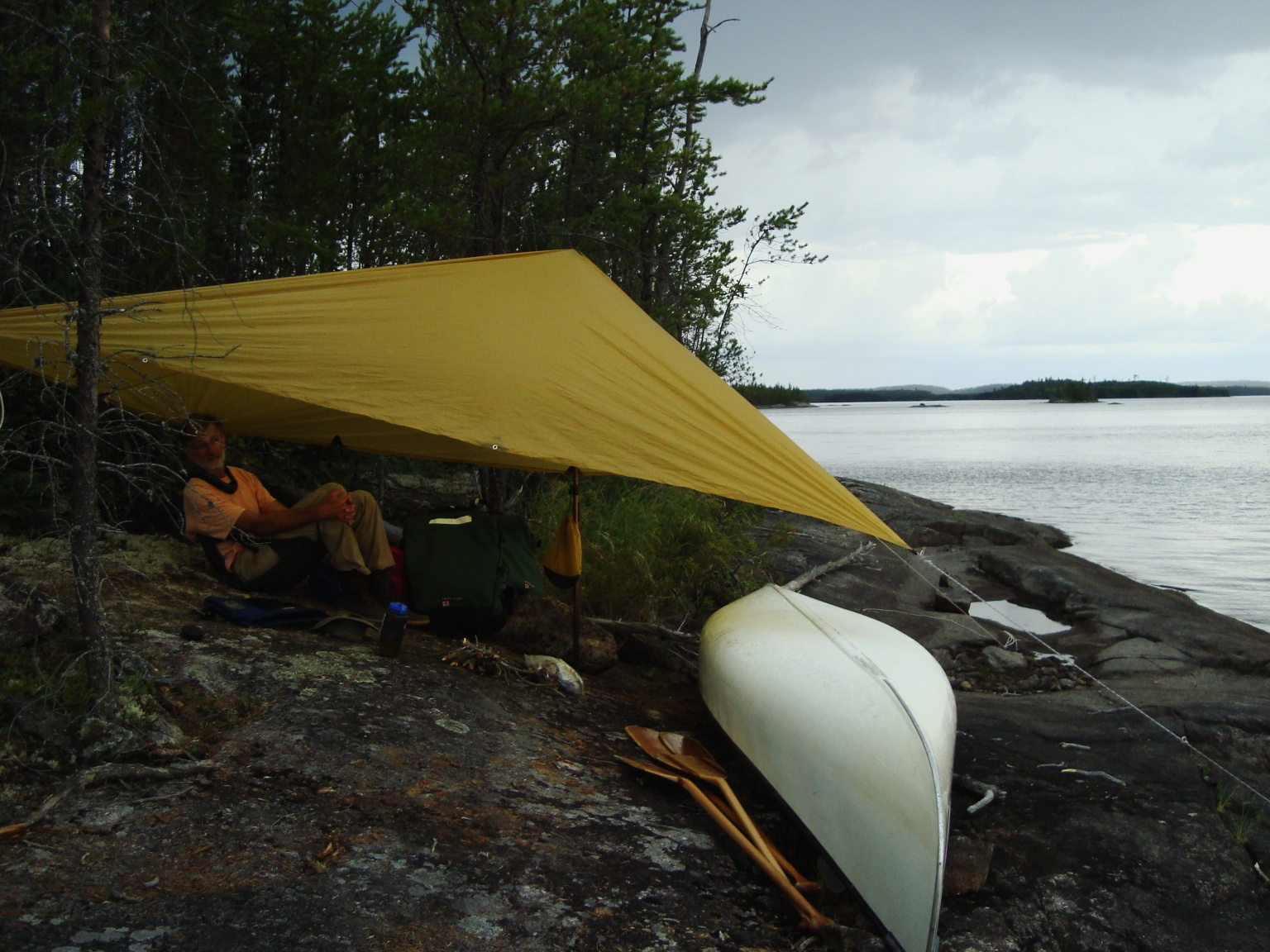
we sit out an afternoon shower at our campsite on the west arm of Smoothrock Lake.
Near the bottom of the West Arm, we ended up on the island campsite indicated on the map above. Our decision was the result of a storm that was moving in. It got dark very quickly and we got the tent up just in time. After some thunder and an hour’s worth of rain, things cleared up again and the sun came out.
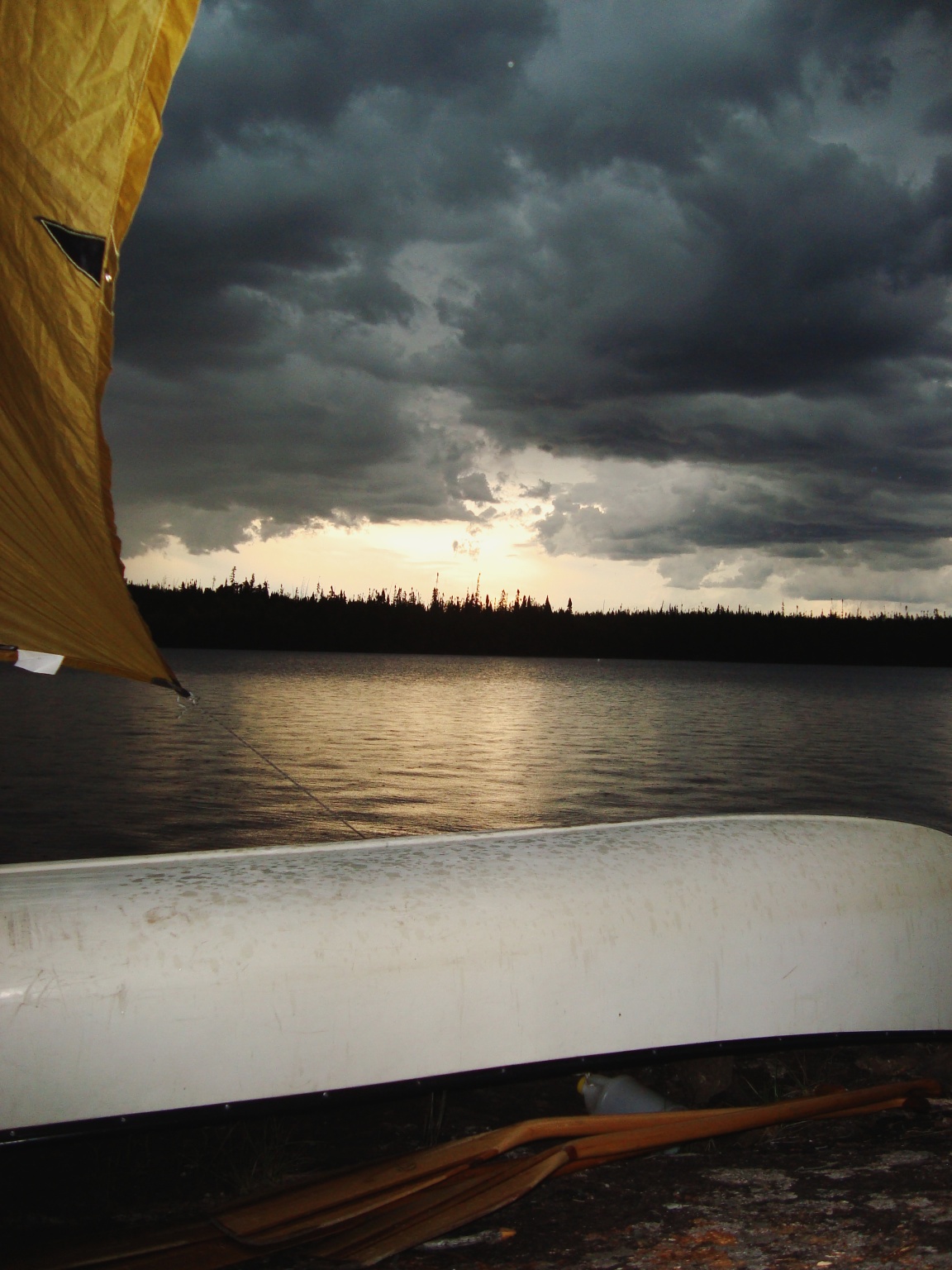
looking east from our island campsite on the west arm of Smoothrock Lake
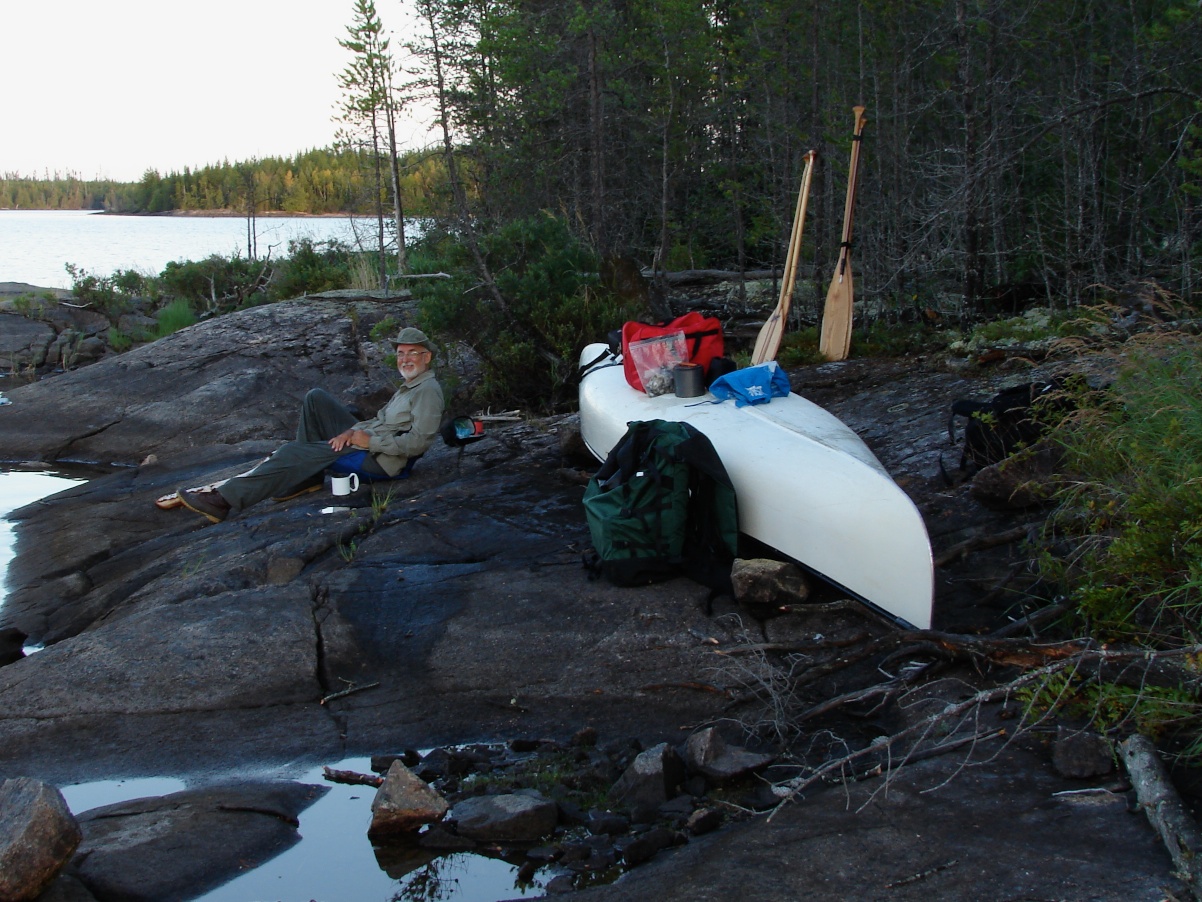
a post-supper cup of tea on the rocks- the afternoon storm has come and gone

sunset on the water

more end-of-day reflections
————–
Day 12: From Smoothrock West Arm to Boiling Sand R. (Tamarack L.)
distance: 19 km.
Map of the S end of Smoothrock & up the Boiling Sand


We had three days before our train ride back to Toronto from the Collins VIA stop on the morning of the 4th day. Collins was only 30 kilometres away and, if pressed, we could have knocked it off in one day. Instead, we had to stretch it out to fill three!

Day 12- CS to Boiling Sand River
Our day up the Boiling Sand River would be the last of the normal tripping days. We left our island campsite around 9:00 and by 11:00 had paddled the 10 kilometres to the mouth of the Boiling Sand River, the last three kilometres up Smoothrock Lake’s narrow southeast arm. Coming up were the last two longer potential portages.
————–
The Boiling Sand Portages

———–
Portage From Smoothrock Lake up The Boiling Sand
 There we would have to deal with our last major potential portage (our P42); some trip reports indicate a 500+ meter carry here on river left. (See here.)
Our Spot Connect track 646 shows us at the bottom at 11:10 and close to the top ten minutes later. Not having kept notes and unable to recall exactly what we did here, I can only conclude that we tracked the canoe upriver. Your experience may be different. Drop me a line on how you dealt with it.

———–
The Portage Into Tamarack Lake
Once beyond the constriction at its mouth, the river widens and takes an S-shaped curve up to the next portage (P43), the one into Tamarack Lake. We would spend about thirty minutes on the river left (our right-hand side since we were coming up) portage. The trail showed signs of some use.

Portage into Tamarack Lake -Boiling Sand River – satellite image
After P43 we stopped for lunch on the side of the river.
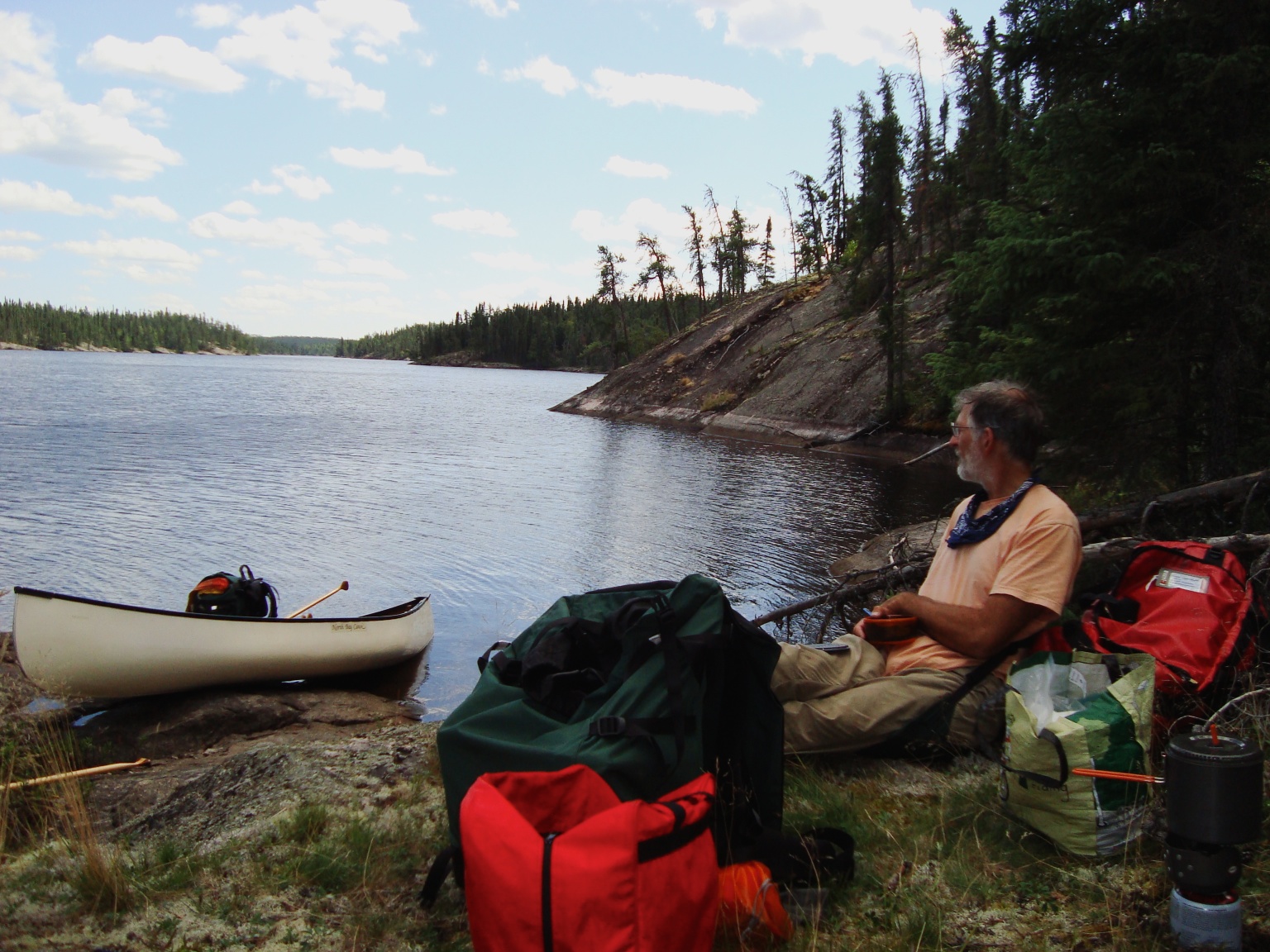
lunch break on the Boiling Sand River- we had three days to do about twenty kilometres! Easy does it!
Then we paddled for a bit up Tamarack Lake to what looked like a decent campsite. It was only 2:00 but we decided to end the day here. We were right across from an outpost (Mattice Lake Outfitters?). We were also 11 kilometres from the Collins Via train stop.
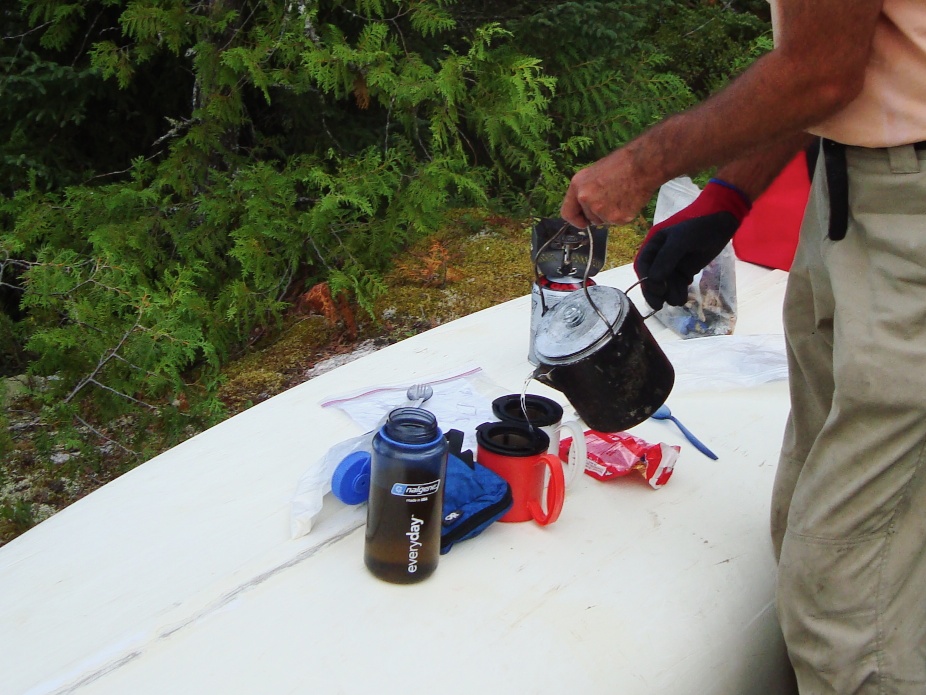
fresh coffee being made at our Tamarack Lake campsite
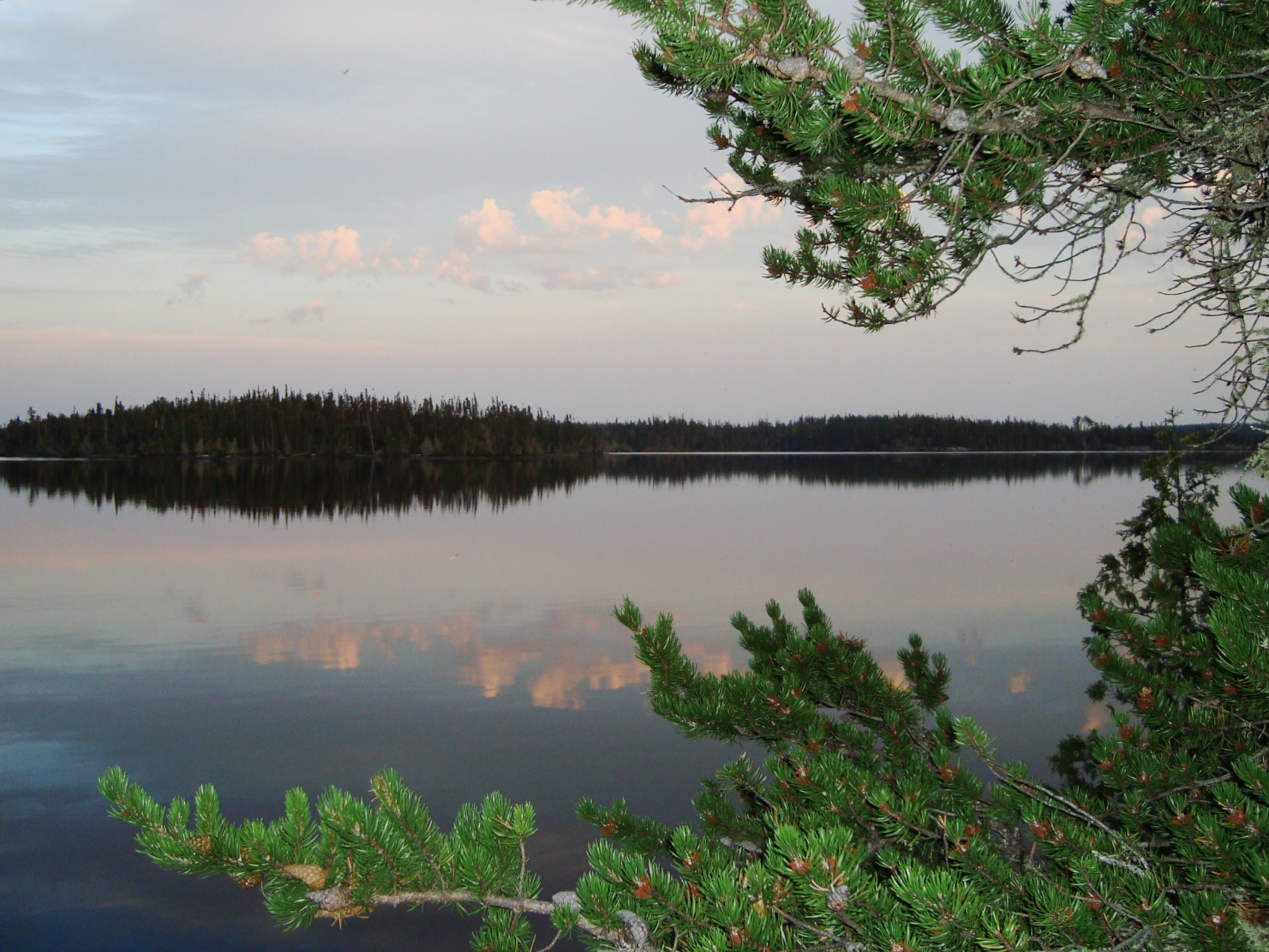
the evening view from our Boiling Sand River campsite just north of Tamarack Lake
Our tickets for that VIA train ride back to Toronto Union Station had a fixed date. We now had two days to kill at the top of the Boiling Sand River. Not being fishing aficionados, we contented ourselves with taking photos, drinking coffee, and picking blueberries, lots and lots of blueberries!

With blueberries all around and lots of time to kill, we start picking- and eating.
In our youth in the Abitibi, in the summer we’d go into the bush surrounding the mining town we grew up in and pick blueberries – and then knock on doors with our four-quart baskets hoping to make a sale that would get us Spiderman comics and creamsicles. 25¢ for a basket!!
However, on days 13 and 14, there were no potential takers – other than the bears we did not want to tempt to our campsite – for the ridiculous amount of blueberries we picked! Still, it was a soothing thing to do – Zen and The Art of Picking Berries! – and brought back memories!
———————
Days 13 & 14: Tamarack Lake to Bath Lake
distance: 8 km. + 3 km. = 11 km.!
From Tamarack Lake to Collins Lake, there are four short portages.
- P44 90 meters from Tamarack Lake into Gnome Lake
- P45 175 meters from Gnome Lake upriver (still the Boiling Sand)
- P46 105 meters into Bath Lake
- P47 200 meters from Bath Lake across the CN tracks into Collins Lake

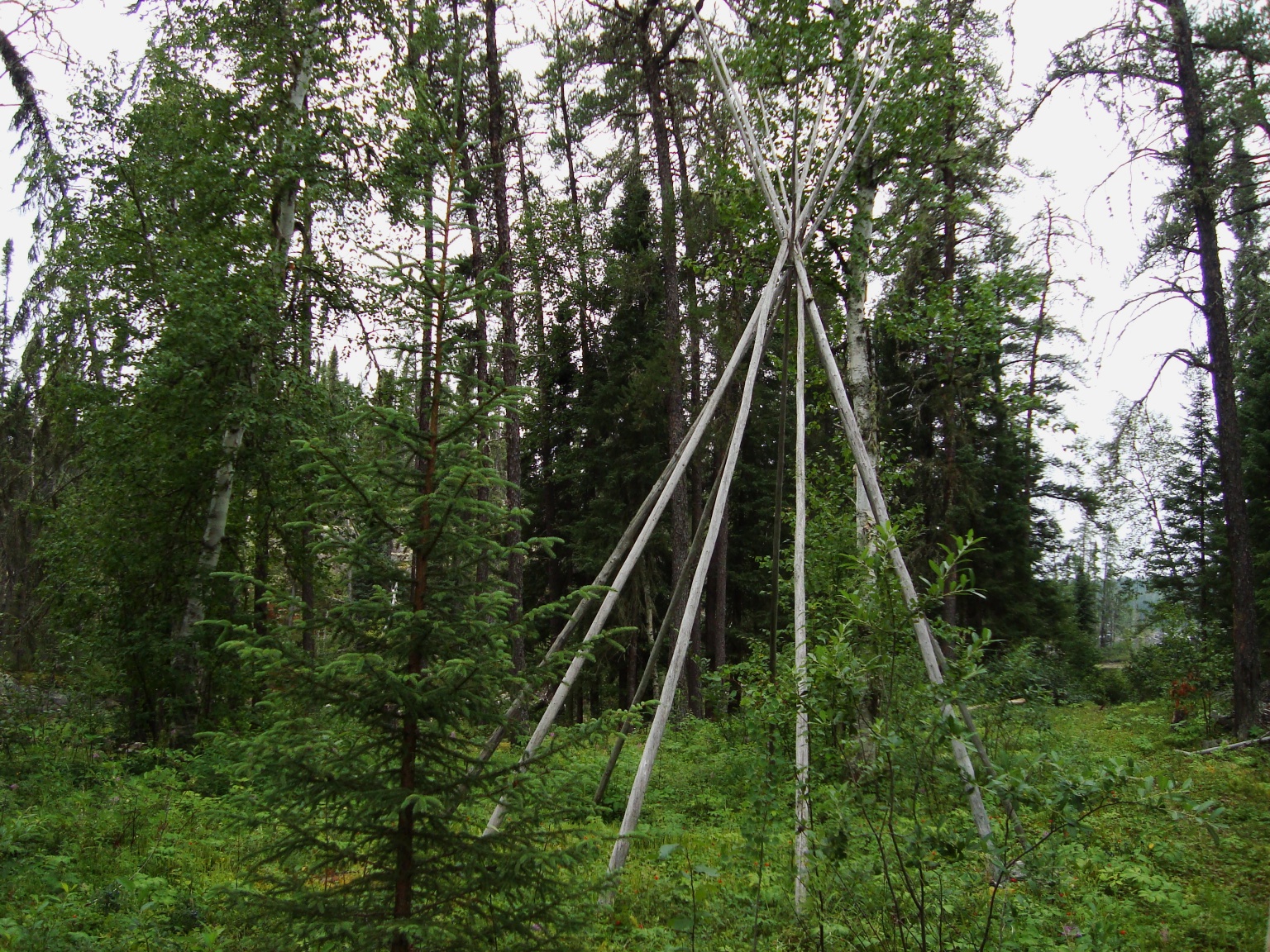
teepee poles on the side of a portage trail
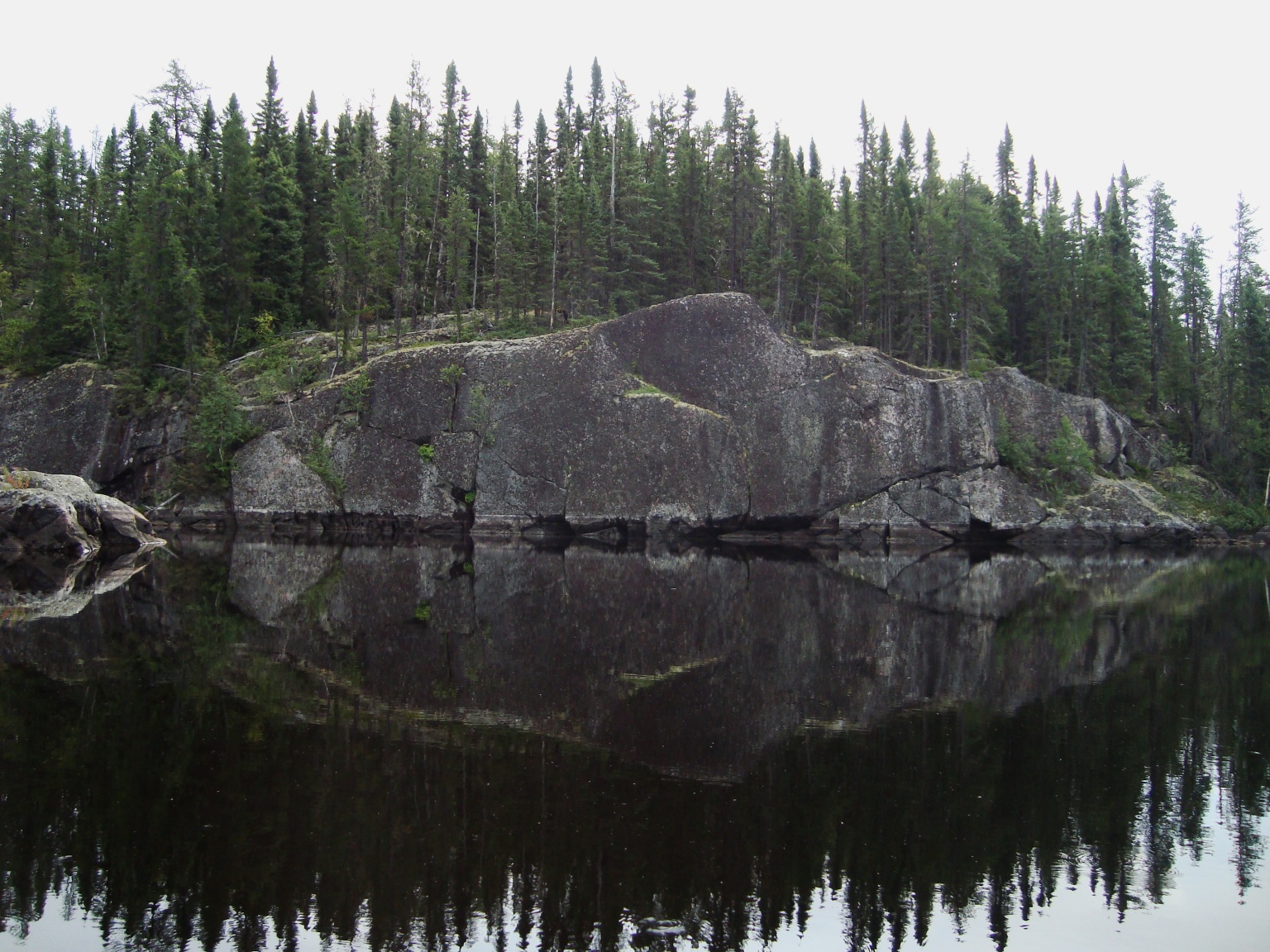
We’re suckers for shoreline reflections.
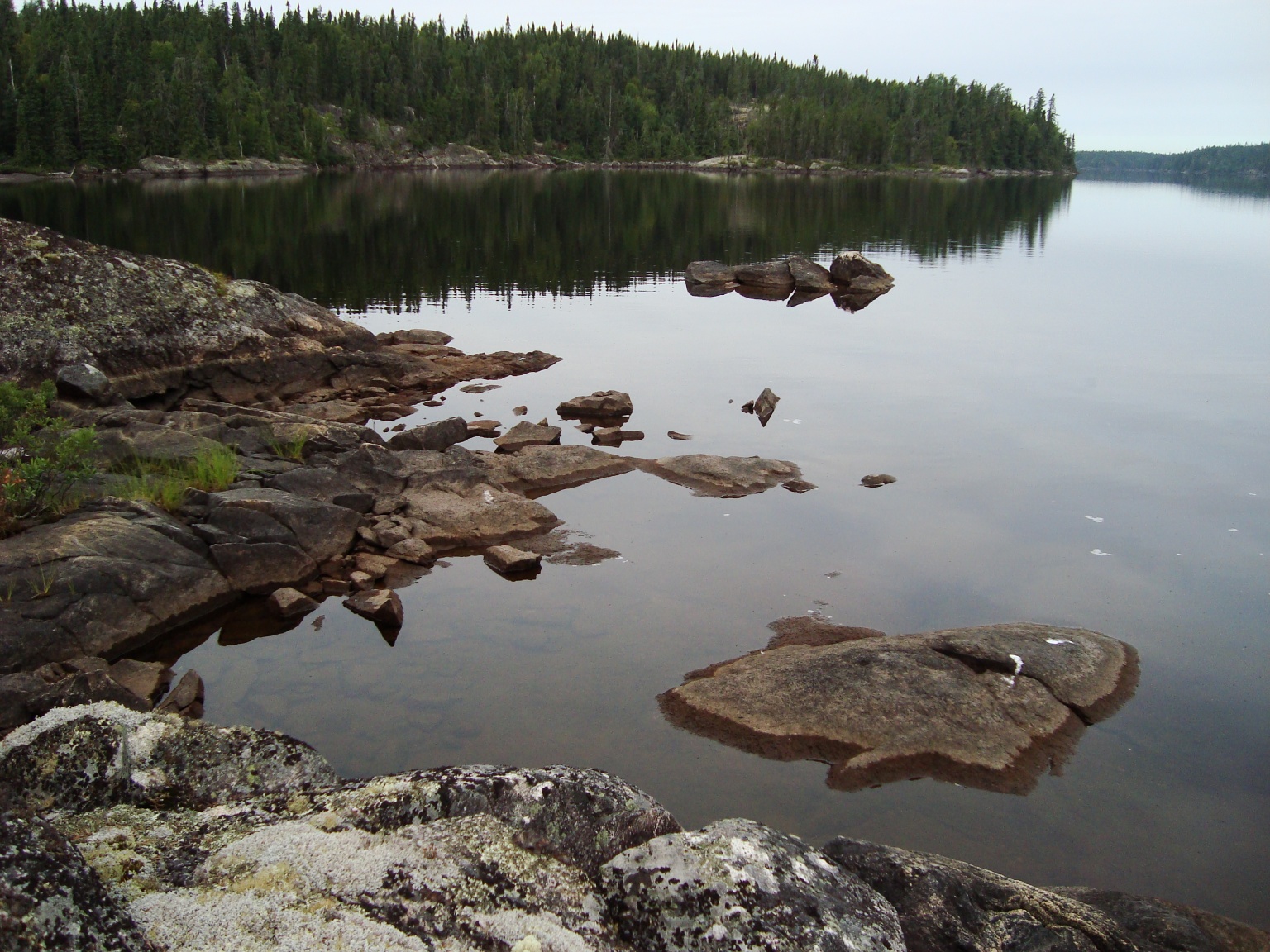
morning on the Boiling Sand River
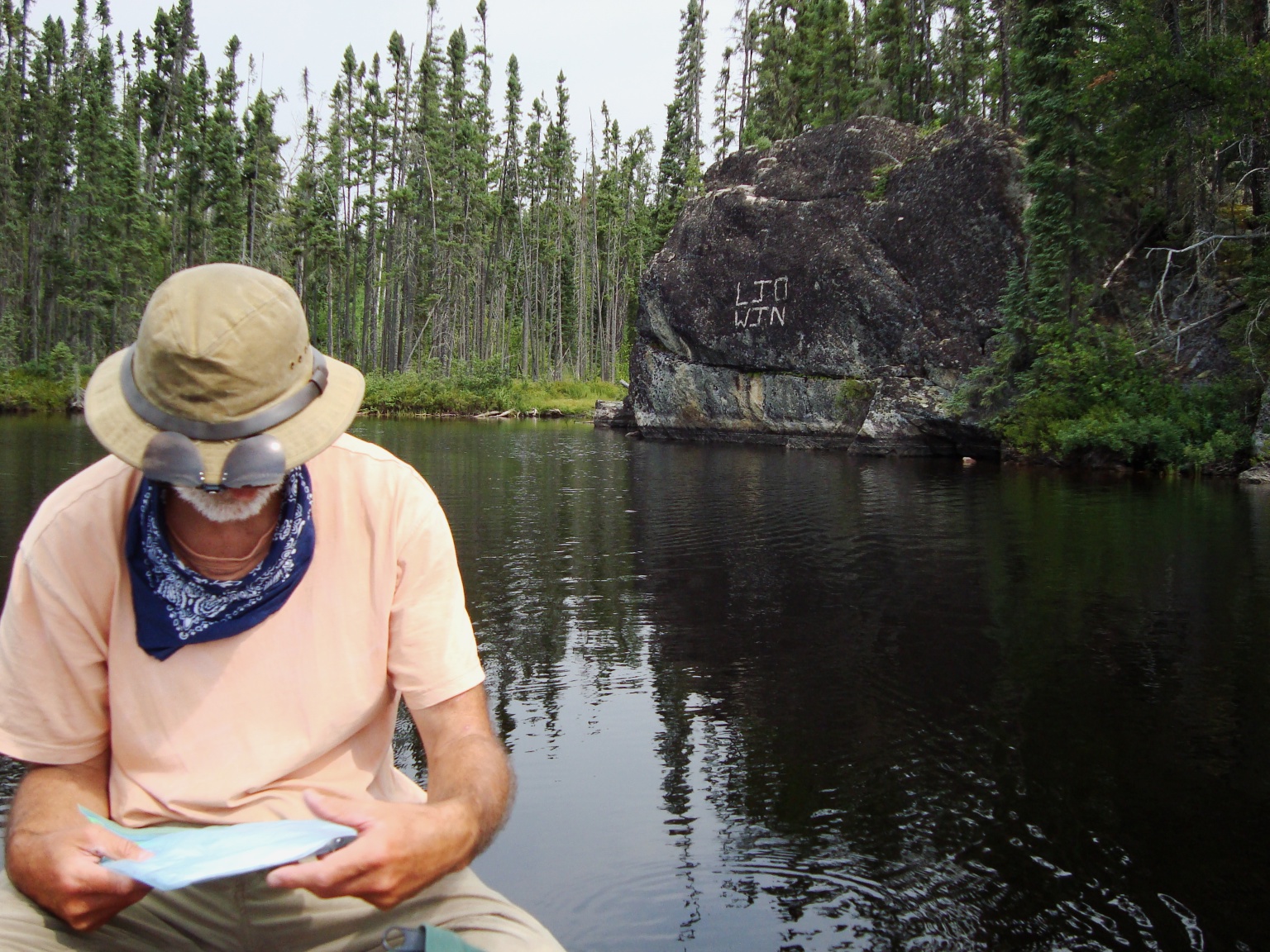
a public service announcement on a rock face near the boundary of the park
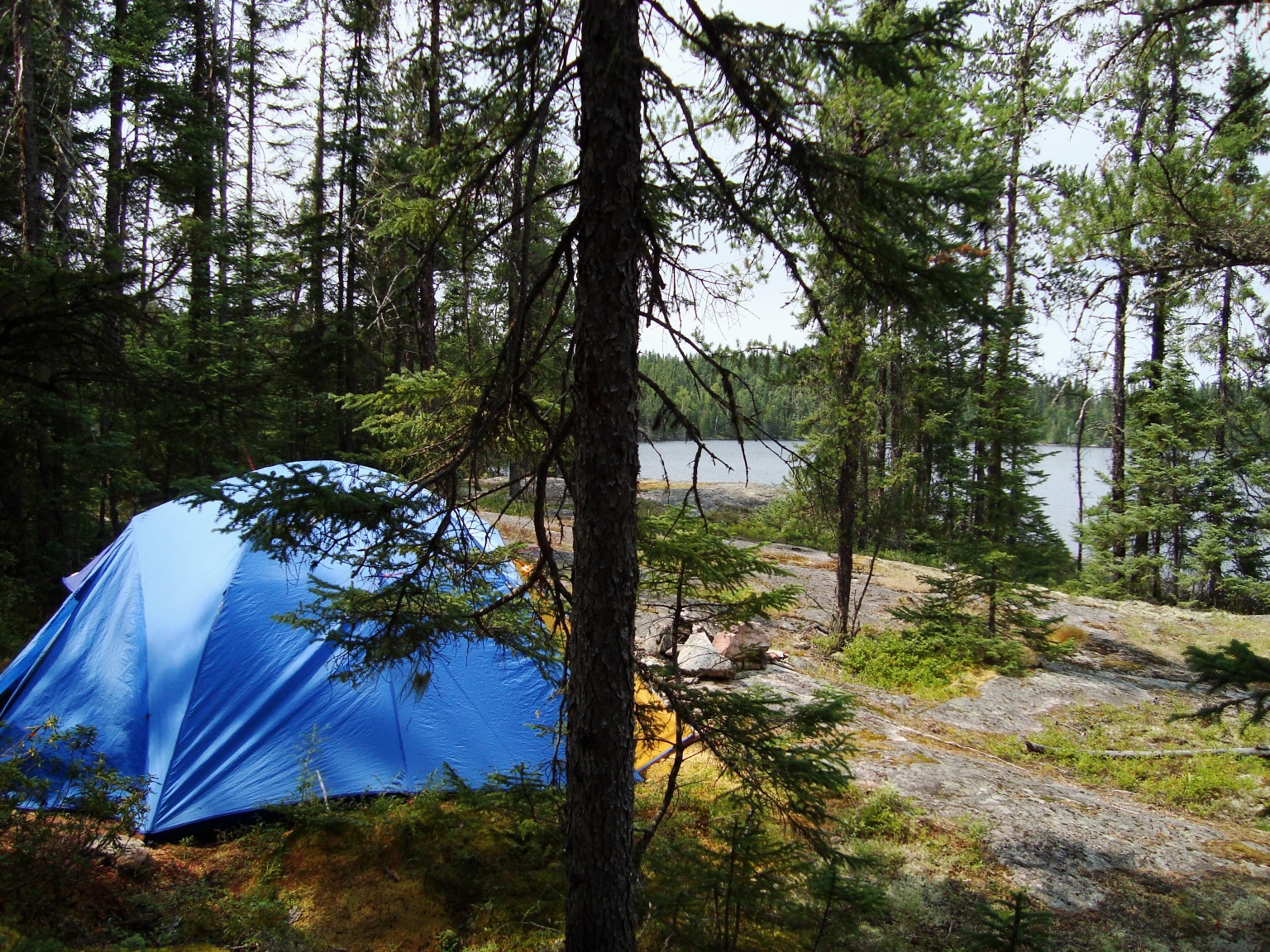
our second-last campsite
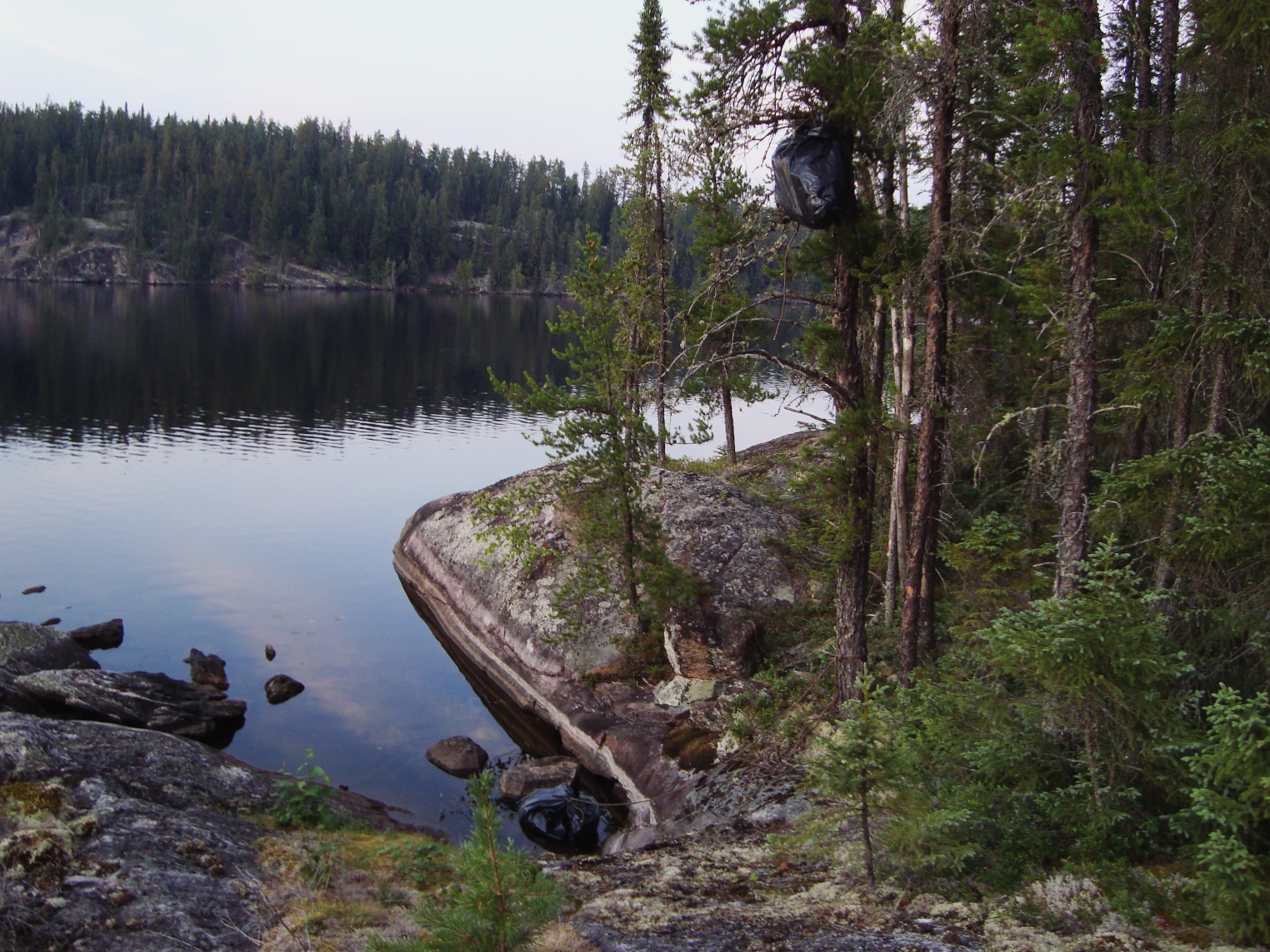
the bit of food we had left was up in the tree and down in the bay were the eight quarts of blueberries. We wanted to keep them cool- we just managed to get them wet!
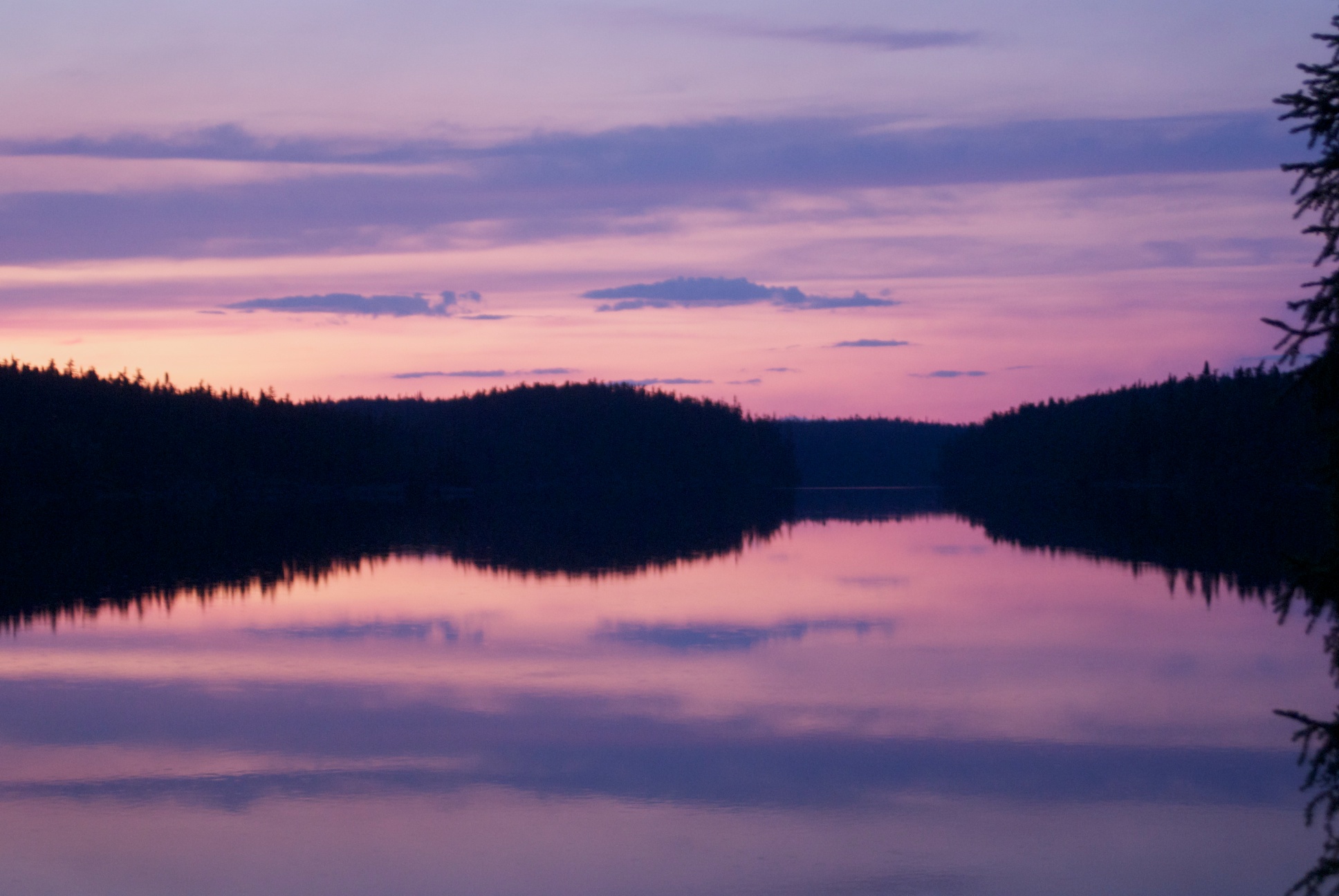
sunset on the second last night

same sunset a few minutes later!
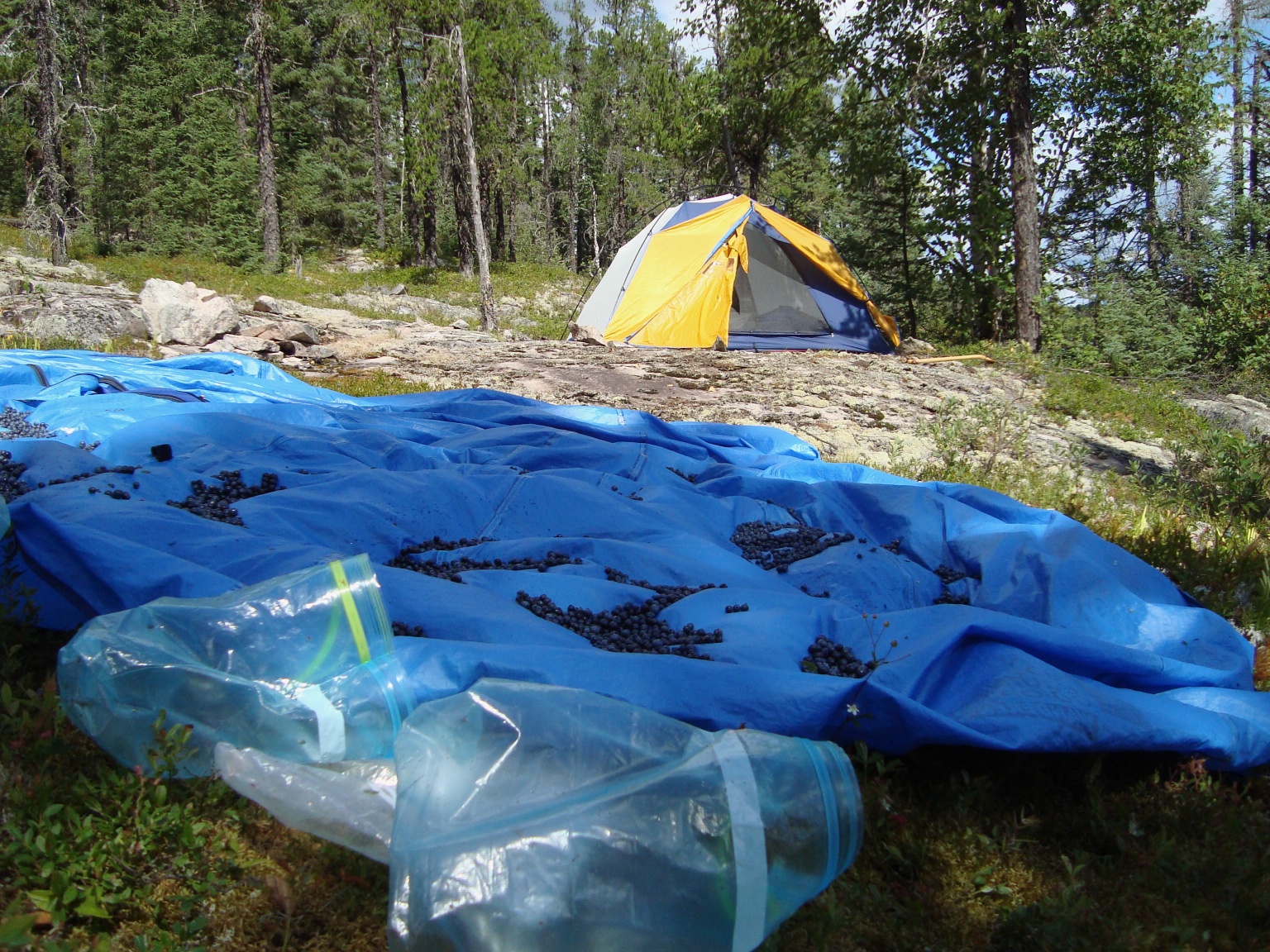
a failed attempt at drying out 15 liters of blueberries- we would later dump them all into Bath Lake! It was a painful experience!
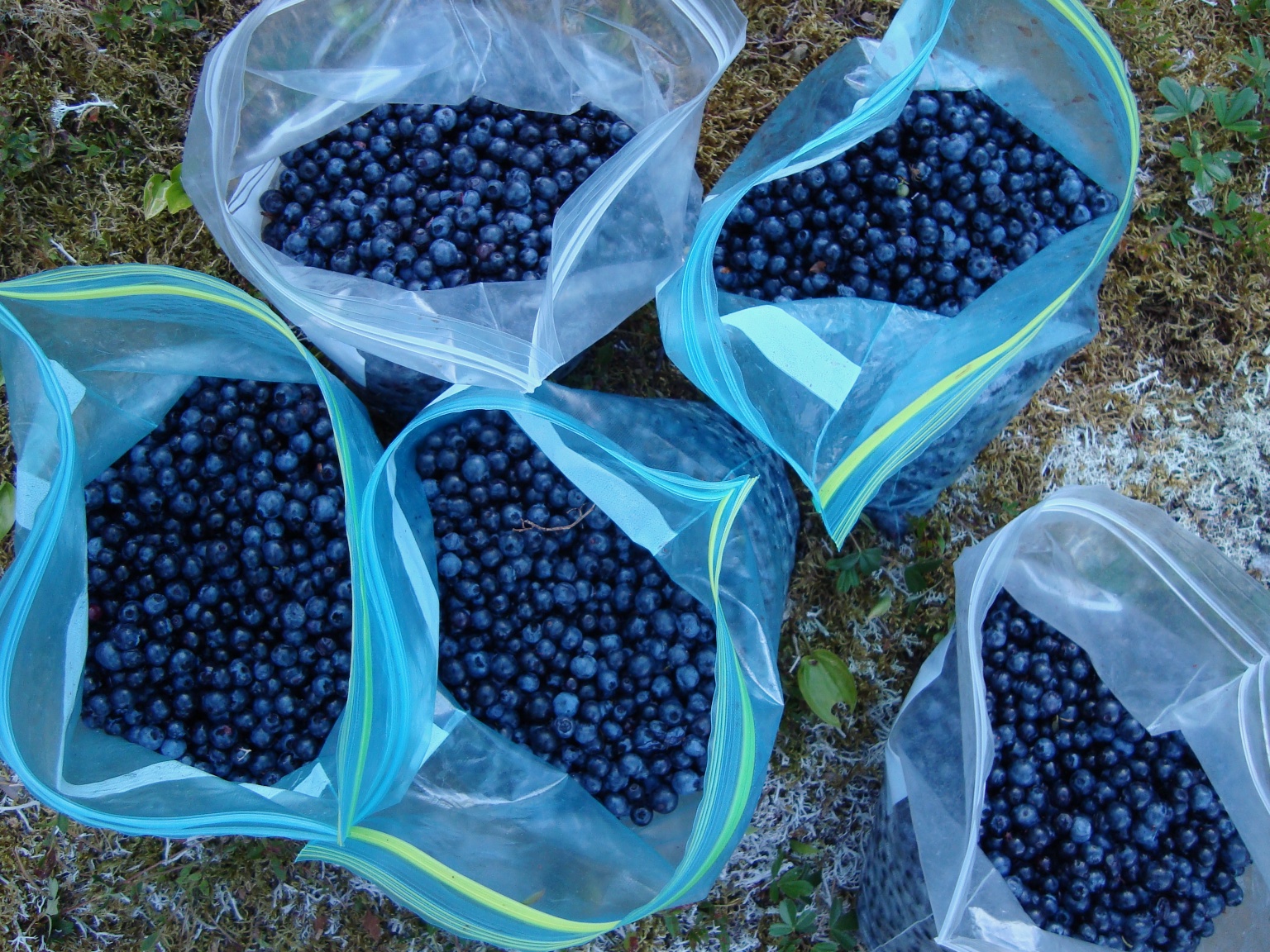
our handiwork on display- all for naught
———————
Day Fifteen: Bath Lake To Collins
distance: 5 km.

VIA Train Mileage markers For Wabakimi
We got up a little early this day just to make sure we’d be at the Collins VIA stop on time. I really should have found out how to indicate where we wanted to be picked up at the side of the tracks on the portage from Bath Lake. However, the VIA rep in Montreal that I spoke to did not have a clue and, unfortunately, neither did I! I just let the matter drop.
Here is the information I should have had – that is, the mileage marker for Bath Lake –

Wabakimi VIA Mileage Markers for Canoe Insertion/Extraction [See here for the source of the above information and more background.]
With a minimum of 48 hours notice, VIA Rail will make unscheduled stops for canoeists on request. The only two conditions are that there must be visible evidence of direct access to a navigable waterway or a portage trail at the proposed drop-off location and the train crew must be given the exact mileage to the drop-off or pick-up point accurate to the nearest tenth of a mile west of Armstrong. There is no extra charge for an unscheduled stop. The fare charged for insertion at an unscheduled stop is what would be paid to the next scheduled stop; the fare for extraction at an unscheduled stop is what would be paid from the previous scheduled stop. (See here for source)
So – not having the mileage marker and not wanting to risk standing on the side of the tracks and having the train blow past as we tried to flag it down, we portaged into Collins Lake and up to the small settlement on the north side of the lake. It took about an hour – it was no big deal and we got to see Collins!

the rail line runs past Bath Lake from Collins- we would portage over it the next morning. We should have just arranged to meet the train at the portage point instead of paddling to Collins!
————–
Collins: Namaygoosisagagun First Nation
Collins is a settlement without official Band Status but with the name Namaygoosisagagun First Nation. It is a railside Anishinaabe community of perhaps forty people that may have transitioned from being a summertime gathering spot to a permanent one after the railway line came through in the 1880s.
[See here for the Collins community’s web page. It does include the statement that “Namaygoosisagagun has been in existence since time immemorial “.] Band Status would presumably give the community leaders access to more government money and powers that their current non-status does not.

Collins, Ontario – satellite view
 The community is made of up families who are registered to one of the following Treaties – Treaty #3, the Robison-Superior Treaty, and Treaty #9. Those families living on the north shore of Collins Lake itself at that time would have been included in the Robinson-Superior Treaty of 1850 since Collins Lake is a part of the Superior drainage basin. Its outlet at the south end of the lake – the Collins River – drains into the Kopka River system which ends up in Lake Nipigon. Any Indigenous families living a few kilometres northeast on the Boiling Sand River or Smoothrock Lake would have been registered to Treaty No. 9 (signed in 1905) since they were in the James Bay drainage basin.
On the beach where we landed, were three unoccupied tourist/visitors’ cabins. A local came down the road on his ATV while we were carrying our gear from the beach up towards the VIA waiting room – perhaps the most dilapidated building in the community, it looked like local youth had taken it over and turned it into a clubhouse! See the images below. It was also one of those closest to the tracks and most likely to be seen by those VIA passengers staring out of their windows. A can of paint would do wonders.

the Collins signpost on the side of the tracks – the waiting room behind
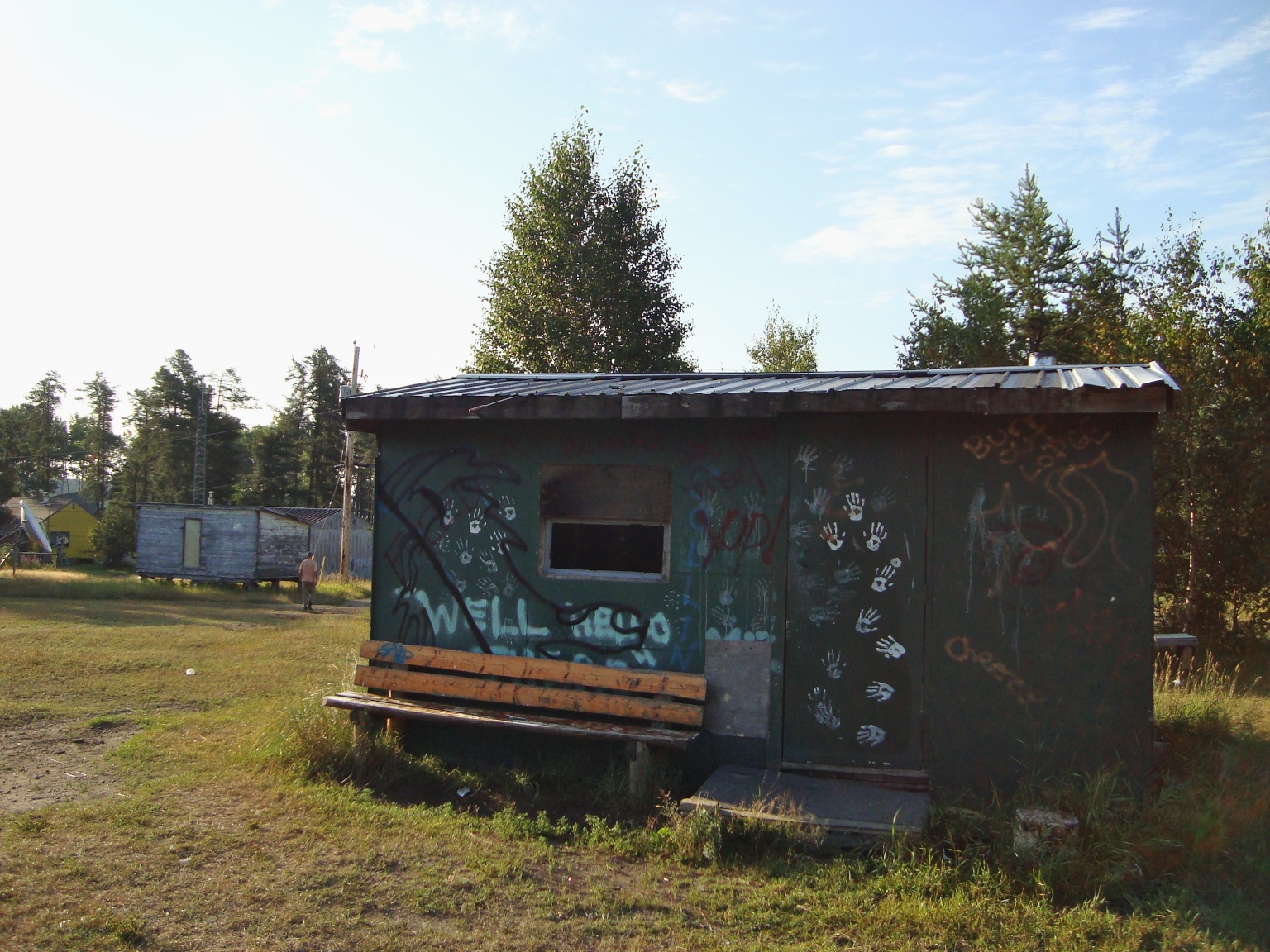
the waiting room at the Collins unofficial I.R. VIA rail stop
————–
Waiting For the Eastbound Train
We waited for the eastbound VIA train for an hour or so and, once we got the canoe and the gear into the baggage car, hopped on board and headed for the dining car and our first non-oatmeal breakfast in two weeks! A day later – just a couple of hours late – we would be rolling down the Don Valley and into Toronto’s Union Station.

the eastbound VIA- just a little bit late!

the breakfast table in the VIA dining car – plush!
If you have any questions about the logistics of the trip, suggestions on how to make the post more useful or corrections we need to make, or general comments on what you’ve read, please drop me a line at true_north @mac.com
Route Planning, Logistics, and Maps
Days 1 and 2 – Down The Flindt River From the CN Tracks
Wabakimi Canoe Trip- From Flindt Landing To Collins Via The Flindt,: Days 1 & 2 – Flindt River
Days 3 and 4 – The Flindt and Ogoki Rivers
Wabakimi Canoe Trip- From Flindt Landing: Days 3 and 4 – The Flindt and Ogoki Rivers
Days 5 and 6 – The Ogoki, the Palisade, and the Grayson Rivers
Days 7 and 8 – The Grayson River and Whitewater Lake
Wabakimi Canoe Trip: Days 7 and 8 – The Grayson River and Whitewater Lake
The Ogoki Lodge and The Beckwith Cabins: “All Things Must Pass”
Days 9 and 10 – McKinley Bay To Smoothrock Lake
Wabakimi Canoe Trip: Days 9 and 10 – McKinley Bay to Smoothrock Lake


